
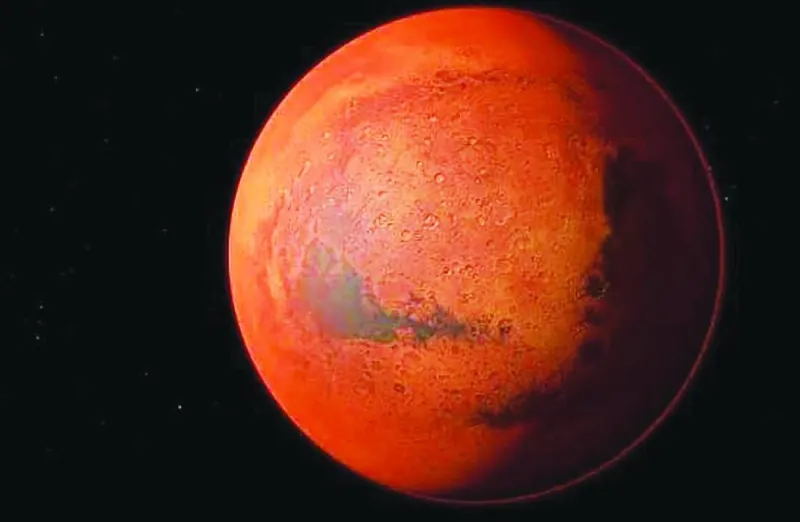
Scientists have discovered ancient channel systems deep within Mars that play a role in recycling molten rock, according to the University of Oxford press office. The scientists focused on a region located approximately 24 kilometres beneath the Martian surface, according to RT. Below this boundary, rocks rich in iron and magnesium but poor in silica were found.
According to the scientists, this layer formed in areas where molten rock accumulated and gradually separated into distinct components: dense crystals settled at the base of the crust, while lighter magma rose upward.
Dr Tobermory Mackay-Champion, a planetary scientist at the University of Mars, said: "We have traditionally assumed that volcanic activity on Mars is relatively simple compared to Earth. But this discovery suggests that the planet can support large, long-lived magmatic systems capable of evolving and recycling molten rock throughout its crust."
Scientists speculate that the magma layer may extend for hundreds to thousands of kilometres across the northern hemisphere of Mars, suggesting the existence of interconnected magmatic systems rather than isolated volcanoes. This phenomenon, known as "trans-crustal magma," was previously considered exclusive to Earth.