
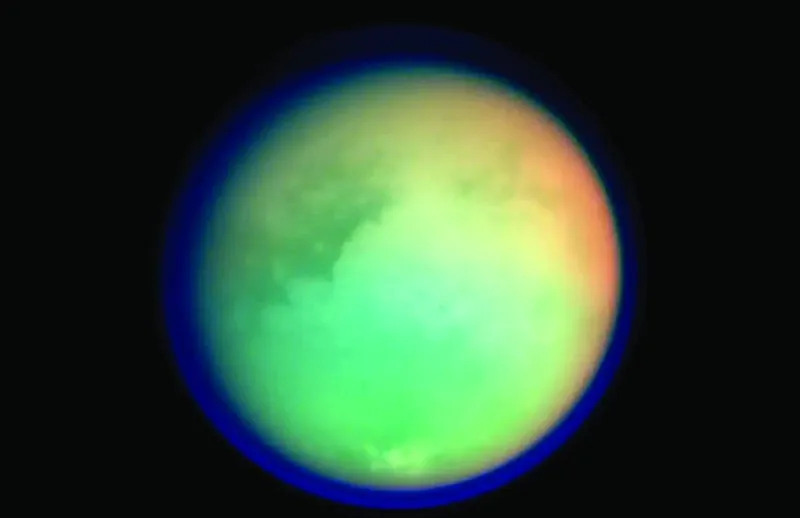
Scientists have detected a mysterious light-absorbing material on Titan, Saturn's largest moon, and on Pluto. The discovery may help explain how biologically significant molecules form in environments beyond Earth, and could also assist in planning future space missions. The scientists noted that the surfaces of these celestial bodies are covered with compounds that absorb light in unusual ways.
Using spectroscopic analysis techniques, scientists were able to detect signs of unusual chemical activity on the moon that may indicate the presence of a previously unknown type of organic material. They confirmed that the discovery could contribute to understanding chemical processes in the outer solar system, bringing humanity closer to identifying conditions that may be conducive to the emergence of life.
The study's findings are expected to support the planning of future space missions by helping to identify targets that will be subject to direct analysis on the surfaces of these celestial bodies.