
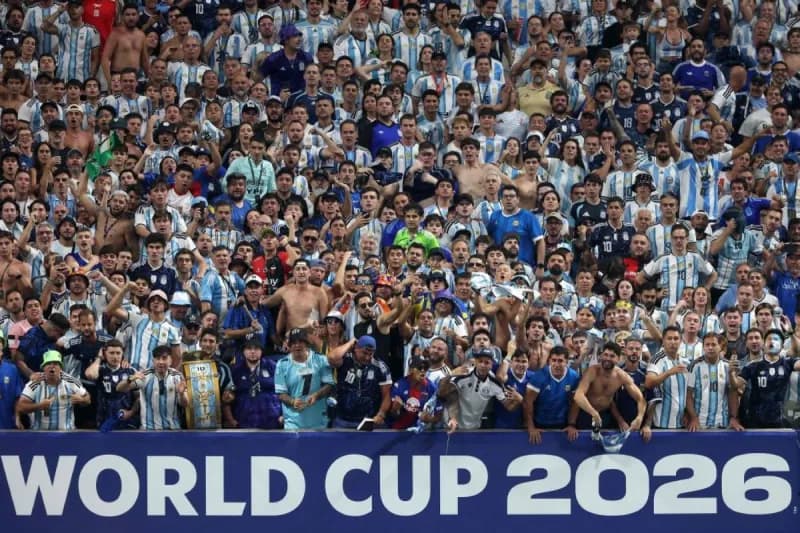
The impact of the chants of fans supporting the national teams competing at the 2026 World Cup extends far beyond the stadium and the stands, becoming part of the collective memory of the event. These chants help create a uniquely charged atmosphere and add a human dimension to global sport, transforming every match into an unforgettable experience. They are not merely chants — they are emotions, tears, anger, and joy. They are, in truth, the pulse of the World Cup, the living artery through which enthusiasm and energy flow. These chants, which some may dismiss as mere noise, are in reality deep expressions of loyalty, passion, and even a form of psychological tactics during matches.
Fan chants at the World Cup have evolved into part of the psychological strategy of national teams, playing a decisive and influential role in shaping the tournament's memory. The chants of supporters at the 2026 World Cup vary enormously: some are simple and rhythmic, such as repeating the name of a star player or the national team, while others are more complex, incorporating lyrics and melodies that reflect the history of the team or the country. Some chants are motivational in character, aimed at lifting the players' morale and pushing them to deliver their very best.
Others may be defensive in nature, seeking to unsettle the opponent's concentration and undermine their self-confidence. What distinguishes these chants is their capacity to unite crowds, as thousands — indeed tens of thousands — join in unison, creating a massive sound wave that heightens the intensity of the match.
From another perspective, these chants take on a global dimension at the World Cup. Every national team brings to the tournament not only its star players and its badge, but also the songs and chants that define it. These vocal expressions become part of the identity of the national team and help shape the cultural image of the participating country. They are moments in which the sporting spirit and the passion for football reveal themselves in their finest form, as the voices of the fans interweave with the referee's whistle and the commentary to create a unique footballing symphony — one that is not limited to supporting the players on the pitch, but is also a means of expressing belonging, displaying strength, and even exerting psychological influence on the opponent. Understanding the interplay between the stands and the field of play, moreover, is the key to grasping the depth of the relationship between fans and the stars of the World Cup.