
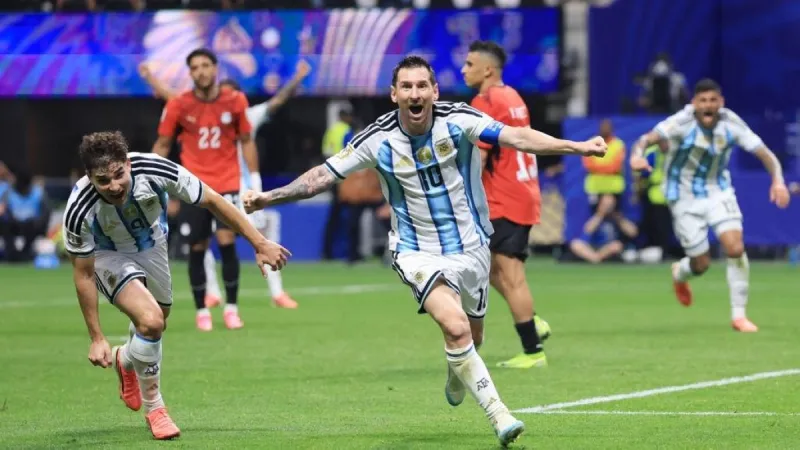
Three refereeing moments during the Egypt–Argentina match ignited protests following the Egyptian national team's elimination in the round of 16 at the 2026 World Cup, after losing 3-2 despite leading 2-0 as late as the 79th minute, amid widespread criticism of the on-field referee and the video review room.
A number of refereeing decisions affected the course of the match and contributed to changing its outcome before Argentina advanced to the quarter-finals.
The first decision involved the disallowance of a goal scored by Mustafa Abdel Raouf "Ziko" in the second half, after the referee ruled a foul against Marwan Attia — a goal that would have given Egypt a commanding advantage and brought them close to sealing the match.
The second decision came immediately before Argentina's third goal, when the referee did not consult the video assistant referee to review a passage of play that preceded the goal, despite two penalty appeals in Egypt's favour — one involving Mohamed Salah — while Ziko's earlier goal had been disallowed for a similar foul against Marwan Attia.
The report noted that the similarity between the two incidents amplified the protests, given that the foul had been called against Egypt in one case while the incident preceding Argentina's third goal went unreviewed.
The third decision concerned the failure to show a red card to Argentine defender Nahuel Molina after he struck Imam Ashour away from the ball — an incident that warranted a dismissal for unsporting behaviour and which was not shown in television replays during the live broadcast.
These decisions had a direct impact on the match, as Argentina successfully capitalised on set pieces and player movement to overturn a two-goal deficit and win 3-2, booking their place in the quarter-finals, while Egypt brought their historic tournament participation to a close.