
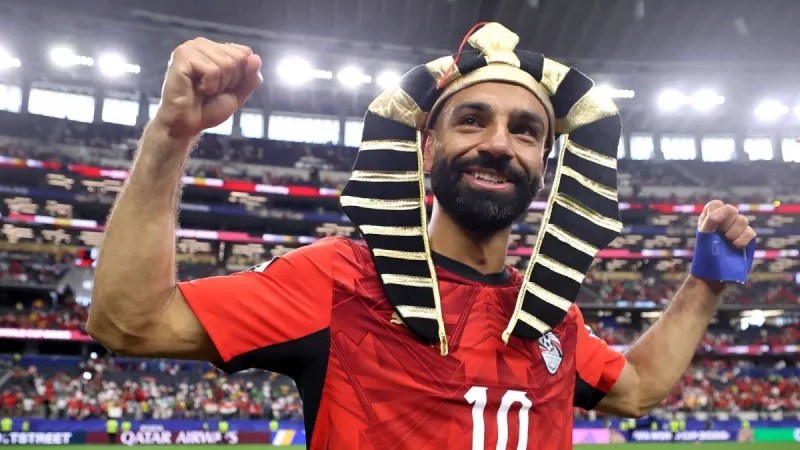
Egypt's Mohamed Salah has spent most of his international career carrying the expectations of a football-obsessed nation, while enduring World Cup disappointments, Africa Cup of Nations heartbreaks, and public disputes with the Egyptian Football Association.
Now, whatever the outcome of Tuesday's round-of-16 match against Argentina, the former Liverpool striker has achieved something that long eluded both him and his country.
By leading Egypt to the knockout stages for the first time, Salah has secured a place in Egyptian football history. Before this tournament, Egypt had never won a single match at the World Cup.
The joy of that achievement was plain to see after Friday's penalty shootout victory over Australia in the round of 32.
At the final whistle, tears streamed down Salah's face before he embraced his teammates and thanked supporters, lifting years of repeated failure and criticism of Egypt's inability to translate his individual brilliance into tournament success.
"This is history," Salah told reporters after the match.
"I told the players before the game: this is the biggest stage you can play on in your lives, so just enjoy it. Don't let the pressure affect you and stop you from enjoying the moment," he added.
Raucous celebrations
Outside the stadium, the celebrations were unrelenting.
After each Egypt victory, Salah was at the heart of the festivities, holding a portable speaker while his teammates sang and danced in the dressing room, before taking the celebrations into the street outside the team's hotel.
Those scenes have become one of the defining images of Egypt's World Cup campaign, vividly reflecting the captain's enjoyment of long-awaited international success.
Salah has matched his leadership with distinguished performances on the pitch. Despite suffering a hamstring injury during the group stage, he scored 1 goal, provided 2 assists, and created 16 chances across 4 matches, underscoring his enormous influence on Egypt's campaign.
Against Australia, the 34-year-old played the full 120 minutes before calmly converting a Panenka penalty in the decisive shootout.
When asked how he kept his composure before taking the kick, Salah said: "If there was going to be someone doing that in the game it was going to be me. I have more experience than the others, and I just want to give them confidence.
"But, you know, I made the decision at the last moment. I don't know if this is my last World Cup or not, but I had to do it."
Salah's international career with Egypt has long been viewed as underwhelming despite his status as one of the best forwards in the world.
He scored the penalty that qualified Egypt for the 2018 World Cup after a 28-year absence, but arrived in Russia nursing a shoulder injury sustained in the Champions League final just weeks earlier, and the team was eliminated in the group stage.
Egypt also lost the Africa Cup of Nations final in both 2017 and 2021 during his time with the squad, while Salah had limited disputes with the Egyptian Football Association over matters including image rights, travel arrangements, and team management.
His willingness to play through injury against Australia drew widespread praise in Egypt, and he now has another opportunity to enhance his legacy when he faces Lionel Messi's Argentina.
Whatever the result, Salah has succeeded in reshaping the prevailing perception of his international career, leading Egypt to a successful World Cup run that generations of his predecessors failed to achieve, and delivering the international success that had long eluded one of football's most decorated club careers.