
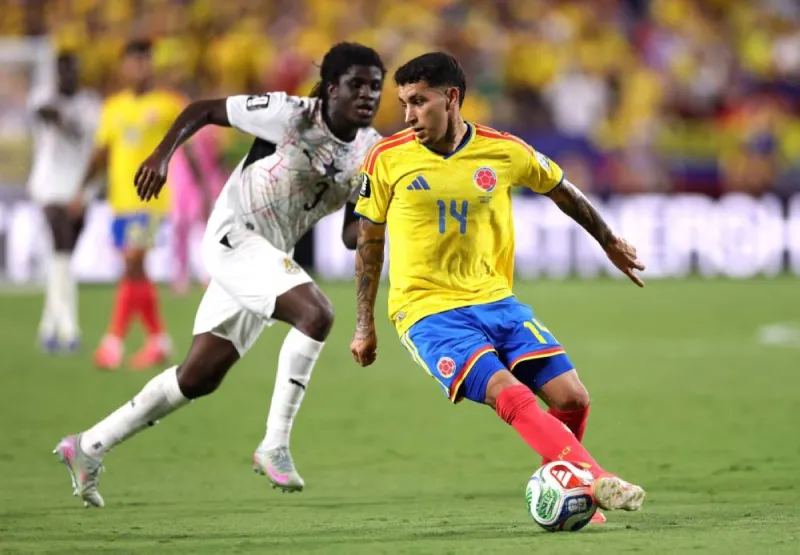
Colombia have imposed themselves as a genuine dark horse at the 2026 World Cup through their powerful performances and high tactical discipline. Despite this sustained excellence, attention and predictions have always gravitated towards the big nations that enjoy enormous media prestige — such as France and England, who possess an arsenal of stars active in the strongest European leagues — while Brazil and Argentina benefit from an established historical advantage that automatically places them at the top of the favourites' list in any tournament. This intense media focus on the big four has obscured Colombia's remarkable journey. The team entered the current World Cup free of the pressure that comes with classic favouritism, exploiting that indifference to work in the shadows and build a solid system that has proven its worth on the pitch.
Colombia have delivered a stunning collective performance in which ferocious attacking power has been balanced with strict defensive discipline. The team's results were no accident; they are the continuation of an upward trajectory that began with their runner-up finish at the 2024 Copa América. During the current World Cup campaign, the team topped Group 11, overcoming Portugal, before continuing their steady march in the knockout rounds with a deserved victory over Ghana thanks to a goal from Jhon Arias — announcing themselves as one of the most difficult opponents in the tournament.
Colombia's true strength lies in the ideal blend of youthful star quality and experienced leadership. Luis Díaz leads the attack with his disruptive movement and blistering pace, supported by the vision of veteran captain James Rodríguez, who provides the team with a rare equilibrium in midfield. This harmony, alongside the solidity offered by players such as Daniel Muñoz and Jefferson Lerma, proves that football does not bow to famous names or pre-tournament predictions, but to effort and commitment — which makes Colombia strong contenders to advance further in the World Cup and overcome Switzerland in the round of 16.
Colombia are tactically and statistically superior thanks to a system that combines positive possession with rapid attacking transitions, making them a genuine match for Europe's strongest sides at the 2026 World Cup. Coach Néstor Lorenzo relies on a balanced tactical blueprint that gives the team great flexibility: defensive depth is secured by Jefferson Lerma, while James Rodríguez is given the freedom to orchestrate play and create chances through crosses — 12 of which he delivered.
The statistical picture shows a clear Colombia dominance in terms of control. In their most recent match against Ghana, the team's possession reached 62%, with an exceptional passing accuracy of 90% — 523 successful passes — figures that place the team on the same level as Europe's elite sides, such as Spain and France, who rely on positional possession philosophy. Beyond that, Colombia demonstrated frightening attacking efficiency, averaging 20 shots per match, including 8 on target, while maintaining outstanding defensive solidity led by defender Davinson Sánchez, who alone completed 205 passes throughout the tournament, backed by the dependability of the Daniel Muñoz and Juan Cuadrado pair, who achieved a 100% success rate in duels and tackles — proof in numbers that Colombia are no less tactically accomplished than Europe's giants, and indeed surpass them in the speed of their transition from defence to attack, led by winger Luis Díaz.