
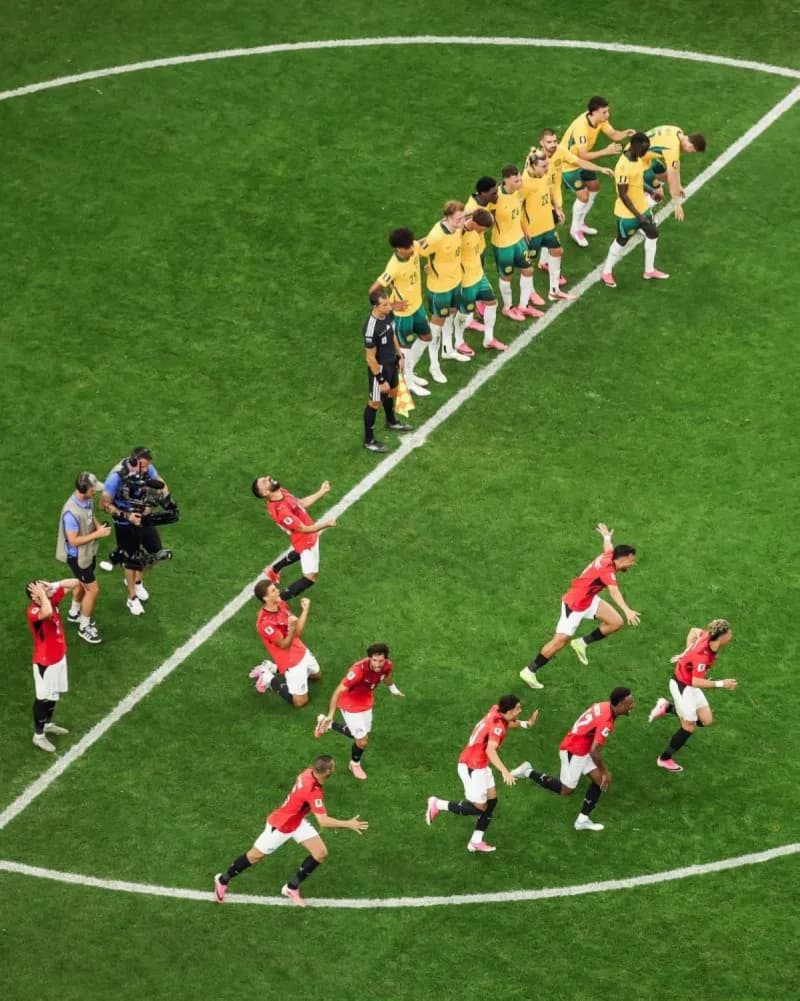
Egypt's victory over Australia came after an epic match by the Pharaohs, ending in a historic passage to the round of 16 of the 2026 FIFA World Cup — a contest that kept fans holding their breath all the way to a penalty shootout.
Egypt secured the win thanks to several factors that gave them the edge for most of the match, despite the original and extra time ending in a 1-1 draw and the result ultimately being decided by a penalty shootout — which went in favour of Mohamed Salah's teammates. The most prominent of those factors were tactical discipline and patience in pursuit of the goal.
The Egyptian side deserved to beat Australia based on their performance over 120 minutes, during which the players successfully applied tactical ideas that evolved gradually as the match progressed. Egypt eventually imposed their own character on the game — particularly during extra time, a phase that had theoretically been considered a strength for the Australian side.
Yet the opposite proved true: Egypt were the better team, and that was clearly evident on the physical, tactical, and mental levels. While Australia relied on their customary approach of rigid defensive organisation, compressing space in depth and using long balls to exploit their players' physical power and height — drawing Egypt in to expose space behind the fullbacks — Egypt had other ideas.
Despite taking an early lead, Egypt did not surge forward recklessly; they maintained their structural cohesion and recycled possession well to force their opponents into continuous running. However, they did unnecessarily retreat in several spells, during which they ceded the initiative to their rivals.
The standout technical point was Egypt's ability to change the shape of the match without altering their philosophy. As Australia's physical output began to decline, Egypt's players maintained the quality of their positioning and counter-pressing after losing the ball.
The introduction of Haitham Hassan gave Egypt attacking solutions at a time when Omar Marmoush's level was dropping, amid question marks over the Manchester City player's performances with the Pharaohs at the World Cup. Hassan's substitution came at the perfect moment — he made the difference and restored Egypt's attacking superiority through his pace and dribbling ability, forcing the Australian defence to retreat and opening spaces that had not existed in normal time.
The introduction of Hossam Abd El Majeed also added greater defensive solidity, particularly in dealing with aerial balls and the physical duels at which the Australian side excel, allowing Egypt to maintain their balance during the most difficult spells and preventing their opponents from regaining control.
Egypt's performance was marked by an elevated attacking tempo during extra time — contrary to expectations. Instead of settling for holding the result, the team continued to press high; off-the-ball movement improved in quality, attacks were built with greater variety between the centre and the wings, and they came close to snatching a winner, only to be frustrated by Australia's defence and their goalkeeper.
In the end, tactical discipline and patience decided the outcome — even if that decision came via the penalty shootout, in which Egypt prevailed, breaking the jinx that had plagued them in recent shootouts and writing a new chapter in their World Cup history.