
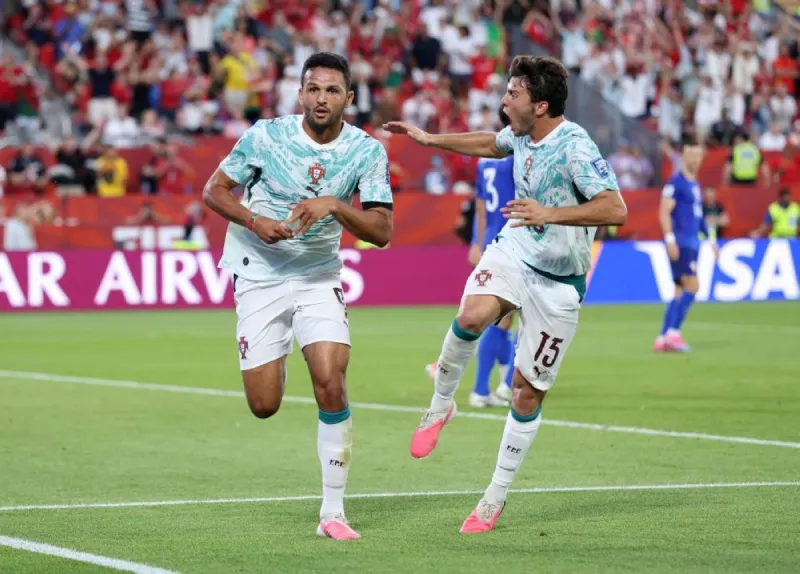
The match between Portugal and Croatia, which the Portuguese side settled 2–1, featured a high-level tactical contest in which the two coaches traded control and imposed their respective styles across both halves. While Portugal held an overwhelming advantage in the first half through a suffocating grip on the flanks, Croatia rose in the second half, shedding its defensive constraints to flip the momentum — yet the final word went to tactical flexibility and the ability to manage complex transitions, the precise technical details that ultimately decided the contest.
In the first half, Portugal imposed its dominance through a direct attacking approach built on stretching play across the wings. The Portuguese strategy centred on activating two attacking channels: Pedro's runs down the right flank and Rafael Leão's along the left, combined with long balls played in behind the opposing fullbacks to exploit the pace of the two wide men in one-on-one situations. Bruno Fernandes took charge of build-up play from deep, forming a textbook link between the lines, allowing Portugal to assert control over the central zones.
Despite this attacking pressure, Portugal failed to find the net and convert their superiority into goals, owing to a predictable pattern in the final third. Cristiano Ronaldo remained isolated, waiting for through balls and crosses, which made it easier for the Croatian defence to keep close tabs on him. Portugal also lacked creative solutions in dealing with the large number of corners they won, with smart movement inside the penalty area absent, rendering them easy to anticipate.
Croatia, by contrast, were hampered by a clear gap between their three lines, leading to complete isolation of the forward line and a lack of organised attacking preparation. The team failed to create any threat on the Portuguese goal throughout the opening half-hour, aside from an individual effort by striker Ante Budimir, who seized on a rebound and fired narrowly wide of the post.
The second half saw a radical tactical transformation in Croatia's identity. They emerged looking entirely different after shedding their defensive shackles, pushing forward boldly and adopting a high press on the ball carrier in Portugal's territory, which allowed them to compress their lines and generate genuine attacking momentum in the final third.
Quick crosses and forward runs from midfield proved Croatia's most potent source of danger, threatening the Portuguese goal on multiple occasions before the team translated their superiority into a goal that ignited the contest.
Portugal, meanwhile, struggled considerably to absorb this Croatian surge during the opening quarter of the second half, as the output of their midfield dropped defensively and they temporarily lost control of the central zone. Even so, Portugal's tactical character asserted itself through their capacity to absorb pressure and swiftly reorganise, as the team gradually returned to their approach of activating the flanks and intensifying counter-attacks. They recovered their attacking effectiveness by penetrating a Croatian backline that had pushed high, eventually drawing level and then snatching the winning goal to close out a victory that confirmed their tactical flexibility in handling difficult shifts in the game.