
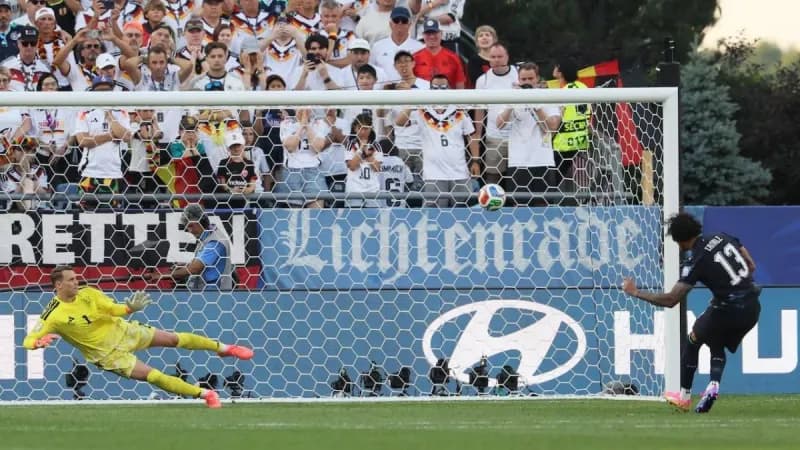
Penalty shootouts have imposed themselves early on the knockout rounds of the 2026 World Cup, having decided 2 of the first 6 matches in the Round of 32, reigniting debate about the immense psychological pressure experienced by players and goalkeepers at the tournament's most crucial moments.
The Round of 32 saw Morocco vs. the Netherlands and Paraguay vs. Germany both settled by penalty shootouts — an early indication that the current edition could witness more of this scenario as the tournament progresses and the gap between national teams narrows.
Geir Jordet, a professor at the Norwegian School of Sport Sciences and author of a book on penalty shootout pressure, described situations of this kind as sometimes reaching "inhumane" levels, stressing that the greatest burden falls on the penalty taker, who steps up under an obligation to score above all else.
Jordet, in comments reported by the Associated Press, said: "In our research, anxiety was the one feeling that everyone agreed was present," adding: "Expect more penalty shootouts, more pressure, and more anxiety."
Research cited by the Norwegian expert showed that players who shoot immediately after the referee's whistle miss more often than those who wait between 2 and 5 seconds before striking, attributing this to some players' desire to escape the ordeal as quickly as possible.
Christian Pulisic, the United States national team striker, said that taking a penalty requires tremendous courage, stating: "Stepping up to take a penalty requires a lot of courage — it's not easy, and goalkeepers get better year after year."
Noni Madueke, the England winger, also stressed the importance of this aspect as the knockout rounds get under way, noting that penalty shootouts have become an essential element in elimination matches and that teams therefore work on improving in them just as they do with any other part of the game.
The early appearance of penalty shootouts at the 2026 World Cup recalled some of the most famous moments in the competition's history. The 1994 final between Brazil and Italy was the first World Cup final to be decided in this manner, and featured one of the most iconic images in the tournament's history when Italy's Roberto Baggio sent the final kick sailing over the crossbar, handing Brazil its fourth title.
Styles of taking penalties also differ among players: some shoot immediately, while others prefer to pause, take deep breaths, use a stuttered run-up, or wait for the goalkeeper's movement before choosing the angle — all in an attempt to overcome the pressure that accompanies these moments.
The 2022 World Cup in Qatar set the record for the highest number of matches decided by penalty shootouts, with 5 such contests, including the final in which Argentina claimed the title at France's expense.