
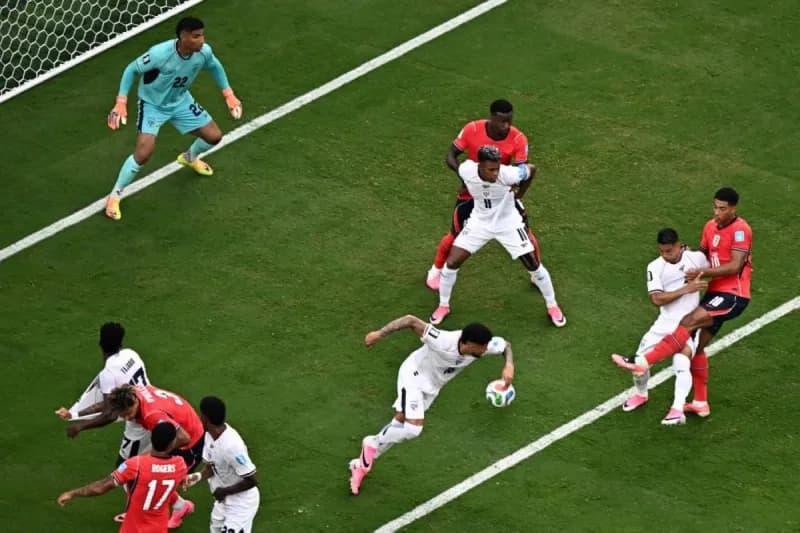
England faced significant difficulties breaking down Panama's defence in a match that ended 2-0 in favour of the Three Lions, concluding the group stage of the 2026 World Cup.
The match exposed several problems within the England squad. The team began the tournament well against Croatia, but their subsequent fixtures against Ghana and then Panama confirmed that England need greater intensity — particularly as the road to competing for the World Cup title will not be easy.
Changes
Manager Thomas Tuchel made 5 changes to the starting lineup, handing opportunities to Nico O'Reilly, Jarell Quansah, Morgan Rogers, Bukayo Saka, and Marcus Rashford, while resting a number of key players including Declan Rice, Anthony Gordon, and Noni Madueke. Reece James and Djed Spence were absent through injury.
The changes reflected Tuchel's desire to rotate the squad and maintain player readiness ahead of the knockout rounds, but they had a relative impact on attacking cohesion — particularly in the first half, where England lacked the quick rhythm between midfield and attack.
England dominated possession for most of the first half, but that possession was unproductive, with insufficient movement in the final third and little variety in their approaches to goal.
Neither Marcus Rashford nor Morgan Rogers managed to establish consistent individual superiority, while Harry Kane was forced to drop deep to receive the ball, reducing his presence inside the penalty area.
Counter-attacks
Panama, for their part, did not merely defend — they pressed at times and attempted to rely on quick, direct counter-attacks with the minimum number of passes, and came close to punishing England through attempts by José Rodríguez and Carlos Harvey.
The Panamanian side packed their defensive depth with numerical density, forcing England to play through the wide areas, while their defenders dealt calmly with crosses throughout the first half — rendering England's possession advantage effectively meaningless in terms of the scoreline.
Set pieces
The picture changed in the second half as England maintained control, but the difference came through the pace of play and the exploitation of set pieces. The half saw greater urgency from Jude Bellingham, with Saka taking on a more effective role in creating space on the right flank.
The turning point came in the 62nd minute, when Bellingham converted a corner kick to score the opening goal — a goal that gradually forced Panama to abandon their defensive caution, opening up the spaces that had been absent for over an hour.
Just 5 minutes later, England capitalised on that shift in the best possible way, as Bellingham created the second goal with a cross that Harry Kane headed into the net, effectively ending Panama's resistance and settling the match.
Defensive block
Despite the victory and top spot in the group, the last 2 matches against Ghana and Panama showed that England still struggle against opponents who rely on a deep, massed defensive block — particularly when quick tempo and constant off-the-ball movement are absent.
The team also appeared to rely heavily on individual solutions or set pieces when matches become complicated, which may not be sufficient against higher-quality sides in the knockout rounds, whether in terms of pressing or attacking transitions.
The win will give Tuchel a morale boost ahead of the knockout stage, but it simultaneously places clear indicators before his coaching staff to work on — most notably increasing the pace of play, adding more variety in chance creation, and moving away from passive possession.