
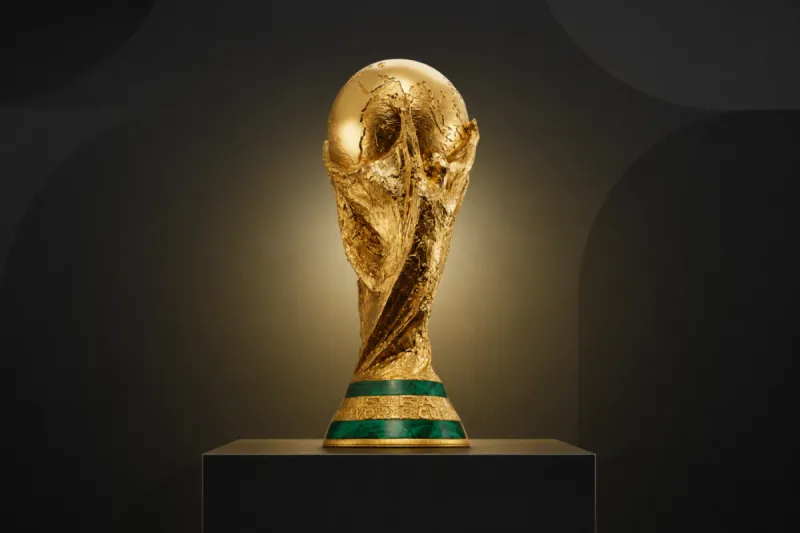
The expanded edition of the World Cup has delivered entertaining matches, seen top-tier stars shine and smaller nations emerge, but has at times suffered from a lack of competitive edge. As the lengthy group stage draws to a close ahead of the knockout rounds, the expansion of the tournament to 48 teams — applied for the first time at the 2026 edition — remains a subject of debate.
FIFA president Gianni Infantino said in 2017, when the controversial reform expanding the tournament from 32 to 48 teams was adopted: "Every nation has the right to dream. Football is not just about Europe and Latin America." With this development, FIFA pushed the tournament towards ever greater scale.
The number of groups rose to 12 from eight, and the number of matches to 104 from 64, with three vast nations — the United States, Mexico and Canada — co-hosting and 16 stadiums used to accommodate the enormous programme.
FIFA, which counts 211 national associations — more than the 193 member states of the United Nations — sought to involve as many geographical regions as possible, driven by financial and political motives as well, with Infantino preparing to stand for re-election as federation president in 2027 in Morocco.
Vincent Chaudel, founder of the Sports Business Observatory, told Brut: "This is part of a broader FIFA strategy aimed at promoting the globalisation of football. It is not merely a sporting choice, but also a tool for development and influence at the global level. More matches also means more broadcasting rights and greater commercial revenues."
The greatest success of the expansion remains the inclusion of nations that had previously been shut out of the global showpiece.
Teams such as Curaçao, Cape Verde, Haiti, Jordan, Uzbekistan, and even Scotland (last qualified in 1998) and New Zealand (2010), for example, might not have reached the finals under the previous system. Cape Verde's progression to the round of 32 also represents a powerful argument in favour of the participation of these "smaller" teams.
Lack of excitement
Yet their participation has also produced lopsided, if spectacular, matches that have delighted the game's stars seeking to pad their statistics with ease. Eight-time Ballon d'Or winner Lionel Messi of Argentina, aged 39, scored 5 goals in 2 matches, simultaneously setting the all-time record for World Cup finals goals with 18.
France's Kylian Mbappé inflicted a heavy blow on the Iraq national team by scoring twice, closing in on the Argentine's record with 16 goals across three editions, while Portugal's Cristiano Ronaldo, aged 41, used the match against Uzbekistan to score twice and put on a noteworthy display.
Meanwhile, the excitement has faded; no surprise has enlivened the start of this edition, with a format that eliminates only 16 of the 48 teams during the group stage.
This gives critics further ammunition to argue that the sporting value of FIFA's flagship competition has declined. After a flood of matches in the first round, Portuguese manager José Mourinho appears far from convinced of the merits of the change.
The new-old coach of Real Madrid said on the Best Mode On podcast: "In some matches I stop watching after ten minutes. The World Cup is the pinnacle. I understand it is a wonderful thing for some countries to participate, but scorelines like 7-1 or 5-1 at a World Cup are unacceptable. I will actually start watching from the knockout rounds."
While some speak of a decline in quality, others believe the new format gives a greater number of countries the chance to appear on the world stage.
Cameroon legend and current federation president Samuel Eto'o told the BBC: "This gives Africa the opportunity to finally play the role it deserves on the world stage."
But opponents of this edition may not, in the end, have seen everything yet — Infantino still has in his drawer a proposal to expand the World Cup to 64 teams.