
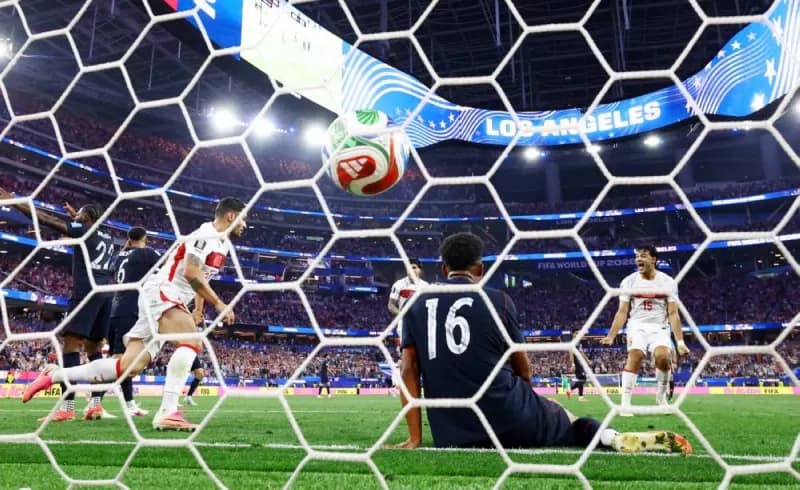
The United States national team's 2-3 defeat to Turkey had no direct bearing on the group standings, yet it carried significant tactical implications that could leave their mark on the team's trajectory in the knockout rounds.
Despite having already secured top spot in the group and an early qualification, the last-minute loss exposed certain performance inconsistencies — particularly after the decision to rotate in younger, less experienced players, which affected defensive balance at critical moments.
Turkey, for their part, delivered a spirited performance despite their early elimination from the tournament, successfully exploiting the spaces and defensive disorganisation on the American side to score a stoppage-time winner — a moment that lent their World Cup campaign a measure of redemption.
Technically, the match demonstrated that the United States, despite possessing a variety of attacking solutions, still struggles with fragility in defensive organisation under counter-pressing, particularly when dealing with crosses and quick transitions.
A notable observation also emerged regarding the drop in America's attacking tempo following the substitutions, even as Christian Pulisic's return gave the team a clear boost in the second half — individual performances improved, but not enough to alter the final result.
Set pieces once again proved to be one of the United States' most prominent weapons, having contributed to both danger creation and goals — an element that could prove a decisive strength in the rounds ahead.
Ultimately, this defeat is best read as a tactical warning bell rather than a negative result in isolation, revealing the need to recalibrate the balance between squad rotation and maintaining defensive solidity before entering the far more unforgiving knockout stage.