
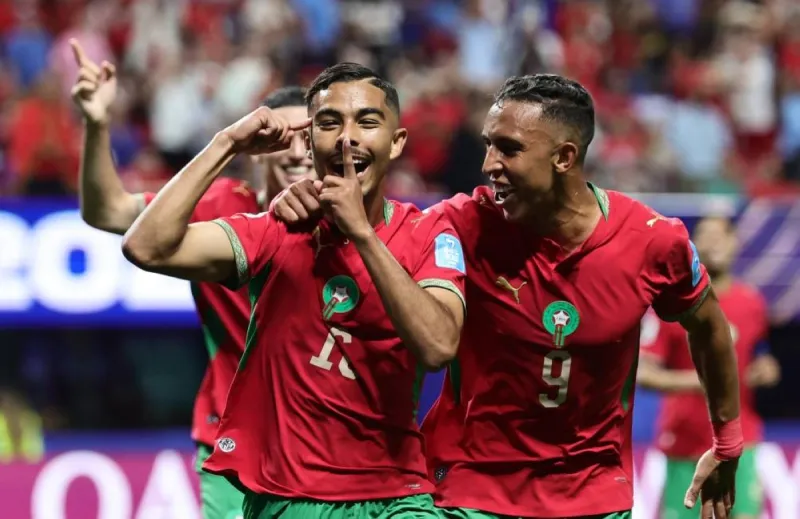
Morocco succeeded in achieving their goal of reaching the round of 32 at the 2026 World Cup, despite some notable details in their match against Haiti in the third round, which ended in favour of the Atlas Lions and revealed tactical astuteness in handling a scenario that twice required them to chase the result.
Morocco coach Mohamed Wahbi fielded a relatively different lineup against Haiti compared to the Brazil and Scotland matches, choosing to rest a number of key players after securing an advanced position in the group — a decision that gave several fringe players a chance but affected defensive cohesion early on.
The two goals Morocco conceded exposed problems in positioning and marking more than they reflected sustained attacking superiority from Haiti, particularly in quick transitions and direct balls into the spaces behind the defensive line.
The Moroccan national team demonstrated, however, a clear ability to regain control after each goal conceded, maintaining their mental composure despite falling behind and continuing to execute their attacking ideas.
Morocco imposed their rhythm on most of the match through high possession and quick counter-pressing after losing the ball, forcing Haiti to retreat for long periods and defend close to their own penalty area.
Yet what marred Morocco's performance early on was the chaos and haste that dominated their numerous attacking attempts in the first half, alongside a carelessness and lack of focus in finishing moves effectively.
Registering 12 shots on goal reflected the scale of Morocco's attacking superiority. They benefited from Achraf Hakimi's movement on the right flank, where the full-back became a constant source of numerical advantage and chance creation, whether through penetrating runs, crossing, or attacking support.
Meanwhile, Ismail Saibari showed a different face after an inconsistent start, continuing to seek spaces between the lines and remaining undeterred by wasted opportunities — something that was reflected in his growing presence in the final third.
The coach's intelligent use of substitutions in the second half played a major role in the victory, as Wahbi succeeded in injecting greater attacking energy at a moment when Haiti's defence was beginning to gradually lose its cohesion.
Soufiane Rahimi gave Morocco's attack a different dimension through his movement inside the box and on the flanks, while the substitute players provided faster and more dynamic solutions compared to what had been on offer in earlier stages of the match.
The substitutes' contributions to the third and fourth goals reflected the coaching staff's success in reading the flow of the match; the changes did not merely maintain the tempo but directly contributed to sealing the result.
Through this match, the Moroccan national team confirmed that their strength is not tied solely to their key names, but to their ability to rotate the squad while maintaining attacking effectiveness — a point that could prove significant as the knockout rounds begin.
The comeback and the scoring of 4 goals remain a positive indicator for the Atlas Lions, yet the match equally underlined the necessity of correcting and addressing defensive errors, particularly given that Morocco will face tougher opponents in the knockout rounds.