
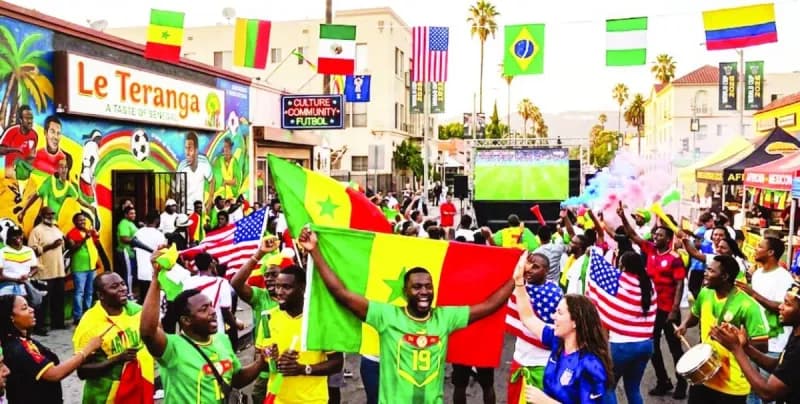
The current World Cup, hosted in the United States, is turning into a living mirror of the country's unique demographic diversity, with immigrant and diaspora neighbourhoods playing a pivotal role in shaping the spectating landscape — transforming American cities into showcases of multiple football cultures. These neighbourhoods, stretching from Little Senegal in New York to the Latin districts of Los Angeles and Houston, stand out as vibrant hubs of fan support that give national teams the feeling of playing on home soil and before their own crowds, drawing on the presence of millions of residents who carry within them the passion of their home countries alongside their new identities.
American media reports have taken note of this exceptional wave of popular enthusiasm. The New York Times and broadcast networks such as NBC have noted that immigrant neighbourhoods have become "alternative fan zones", where local community associations organise giant screens and street celebrations in cafés and shops — compensating for the shortfall in fans travelling from abroad, particularly given the strict visa restrictions and the soaring cost of match tickets at official stadiums. According to a report by Middle East Eye and local coverage in New York, neighbourhoods such as 116th Street in Manhattan saw thousands of supporters pour in from across the country to back the Senegal national team, affirming that the local community had taken it upon itself to fill the void left by fans unable to travel from Dakar.
At the same time, American media coverage has not shied away from tracking the political and human rights dimensions accompanying this fan momentum. Reports from the Migration Policy Institute and human rights organisations such as Human Rights Watch have highlighted the anxiety pervading some of these neighbourhoods due to the presence of federal law enforcement agencies — including Immigration and Customs Enforcement (ICE) — around stadiums and busy areas. This prompted some stadium workers' unions and local organisations to voice concerns about the impact of these measures on families and immigrants, linking the sporting passion within those neighbourhoods to a collective and cautious awareness around civil rights, personal safety, and combating discrimination.
Despite these structural and logistical challenges, sports analysis across American media broadly agrees that diaspora neighbourhoods have lent the World Cup a fully global character on American soil, going beyond the traditional notion of hosting. Restaurants and public squares in major city centres have transformed into carnivals celebrating cultural pluralism — reinforcing the idea that the current World Cup represents not merely a sporting competition between nations, but a vast human gathering in which communities settled inside the United States play the true starring role in igniting enthusiasm in the stands and on the streets alike.