
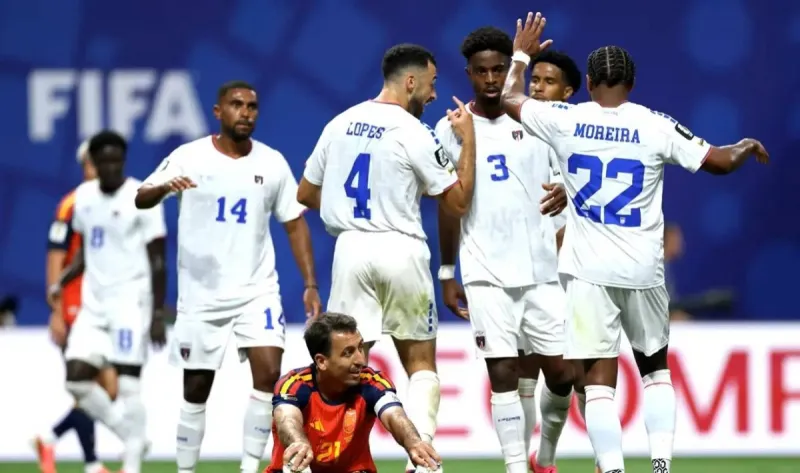
The expanded 48-team FIFA World Cup format has faced sharp criticism as a recipe for imbalance that would produce meaningless group-stage matches, but the opening round of fixtures offered a compelling counter-argument: the gap between the elite teams of the game and their ambitious challengers has never been smaller.
European champions Spain were held to a goalless draw by Cape Verde, appearing at the World Cup for the first time, while Cristiano Ronaldo's Portugal had to settle for a single point against the Democratic Republic of Congo. Egypt frustrated Belgium, and France struggled for more than an hour against Senegal before Kylian Mbappé came to their rescue.
Rather than the expansion weakening the competition, it has given rising football nations a larger stage on which to demonstrate how much the sport has developed globally.
Cape Verde's draw with Spain was perhaps the clearest illustration of that. Spain dominated possession with 74% of the ball but struggled to create genuine chances against a disciplined opponent, with striker Mikel Oyarzabal becoming the first player since 1966 not to touch the ball in the opening 30 minutes of a World Cup match.
Remarkable discipline
Portugal's frustration was similar. Roberto Martínez's side completed 740 passes against the Democratic Republic of Congo but managed only one shot on target, while the African team — appearing at the World Cup for the first time in 52 years — executed their game plan with remarkable discipline.
Spain captain Rodri said: