
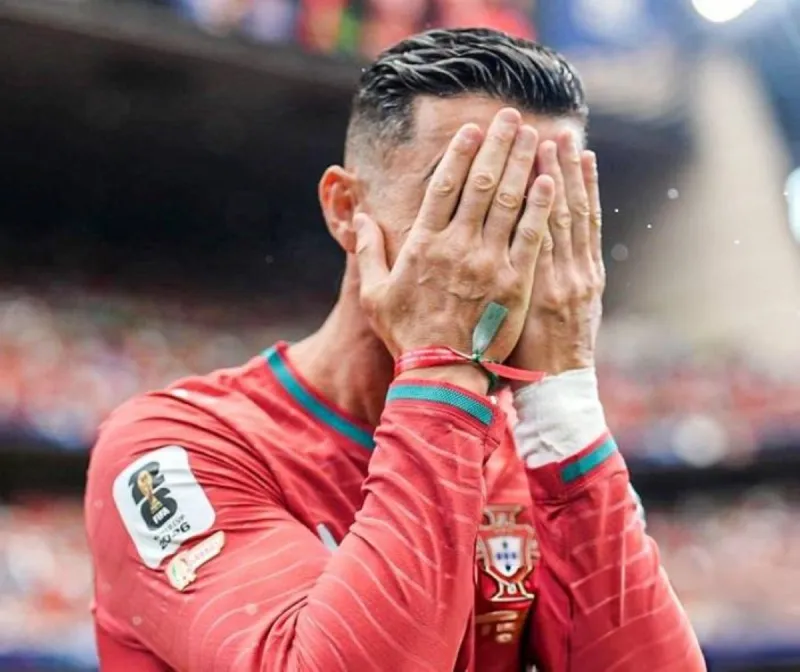
A sense of shock and deep frustration dominated the headlines of the Portuguese press published today, following their national team's resounding stumble into a 1-1 draw against the Democratic Republic of Congo in the opening match of their group at the 2026 World Cup. Portuguese media described the result as a violent jolt for one of the tournament's leading title contenders, criticising the strange dip in performance after João Neves' early goal and the descent into disorganisation and strategic inertia that paved the way for the "Leopards" to snatch a deserved historic equaliser in the final moments of the first half.
Portuguese newspapers, led by A Bola and Record, directed scathing criticism at the attacking line led by the legendary Cristiano Ronaldo, who appeared as a "frustrating" and isolated figure on the pitch, unable to capitalise on the chances that fell to him in the second half to end a complicated scoring drought that has plagued him in major tournaments. Analysis focused on the absence of the mental sharpness and customary effectiveness of "The Don" in front of goal, noting that his record-breaking feat as the oldest player to start a match in World Cup history was not enough to obscure the reality of his declining attacking output and his failure to leave a positive mark befitting an opening-match occasion.
On the global stage, the scope of press comparisons and analysis widened in a dramatic and striking fashion, capitalising on the shocking temporal coincidence with the brilliance of his traditional rival Lionel Messi, who had led Argentina to a 3-0 victory over Algeria just hours earlier. Major international outlets headlined their reports with stark numerical comparisons embodying the two extremes: while Ronaldo was shooting wide and shaking his head in frustration in Houston, Messi was celebrating in Kansas City a new historic record as the oldest player to score a hat-trick in World Cup history — a record he snatched, pointedly, from the goal-starved Portuguese star himself.
The international sports press did not miss the opportunity to link the two scenes. Analytical articles argued that the night in Houston signalled a historic shift in the balance of power between the two legends within their eternal rivalry at World Cup tournaments. The papers maintained that Ronaldo's drought and his continued failure to find the net for a 10th consecutive match in major tournaments places him under suffocating psychological and media pressure, particularly as the global sporting world watches with caution the final chapter of his international career, which has begun to be visibly affected by the factor of time versus the absolute attacking potency of his rival.
In the same vein, the Congolese side received widespread international celebration, as global newspapers focused on the historic significance of the equalising goal scored by striker Yoane Wissa — the first goal and first point ever snatched by the Democratic Republic of Congo in their World Cup history in 52 years. Reports also devoted extensive space to discussing the traditional "Ndombolo" dance with which the player celebrated, viewing it as a cultural statement of pride that reflected the spirit of African dignity and resilience on American soil, and how that dance succeeded in transforming pressure into collective joy that shook the foundations of the Portuguese camp.
International sports reports concluded their coverage by noting that the group's opening round has placed the Portuguese national team and their manager Roberto Martínez in an early tactical predicament that demands a reassessment of strategy and a clearing of the air before the coming fixtures — especially as concern mounts over the attacking unit's ability to free itself from the burden of its historic captain's scoring drought, on a unique and thrilling World Cup night in which Portuguese tears of frustration blended with the sounds of joy and traditional African dance that will remain etched in the minds of football fans for a long time to come.