
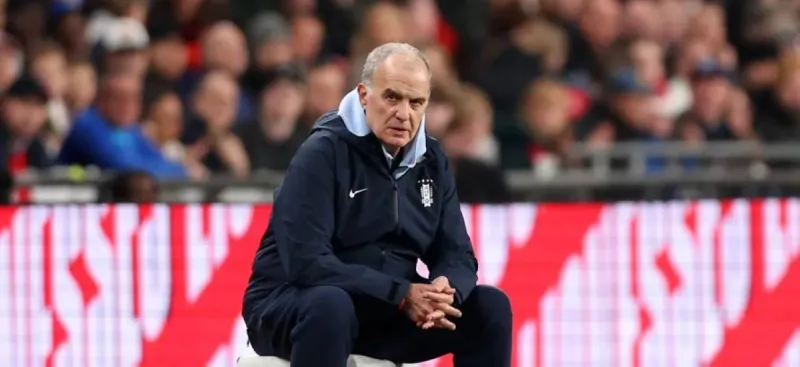
Recent remarks by veteran Argentine coach Marcelo Bielsa, manager of the Uruguay national team, have sparked a wide wave of controversy in media and fan circles, after he expressed sharp and stern displeasure at the mocking wave of comments targeting his official photograph approved by the organising committee of the current World Cup.
The angry response from the coach nicknamed "El Loco" came during a press conference he held to discuss his team's preparations, where Bielsa cut short questions attempting to delve into social media reactions, remarking coldly and with unmistakable severity that he was not a fashion model to be asked to explain his facial expressions or to care about public opinions regarding his personal appearance. He stressed that his focus was entirely on the technical and tactical aspects on the pitch, not on the marketing or media sideshows that accompany the World Cup.
The background to the episode lies in sports fans across the digital sphere taking the coach's official portrait — which featured an unusually stiff and peculiar expression — and turning it into rich material for jokes and satirical memes, something that did not sit well with a coach widely known for his sharp temperament and intense seriousness toward his profession.
Sports critics argued that Bielsa's reaction clearly reflects the generational and intellectual gulf between his strict classical school, which holds pure footballing work as sacred, and the nature of the modern World Cup, which has come to blend football with digital entertainment content production — a coach who categorically refuses to allow his coaching authority or stern demeanour to become a source of public amusement.
In a related development, the veteran coach's stance received broad support and backing from the leadership of the Uruguayan football association and the squad's players, who considered that any attempt to distract the technical staff with such peripheral matters would not deter the team from its primary goal of competing strongly in the knockout rounds.
Those close to the "La Celeste" camp believe that Bielsa's public anger reflects a state of positive charge and an overwhelming desire to prove himself and respond on the pitch in practical terms, channelling the public pressure and mockery into an additional motivating force for his players to deliver a strong performance that affirms the true value of his system lies in results and complex tactical plans, not in the promotional photographs that precede matches.