
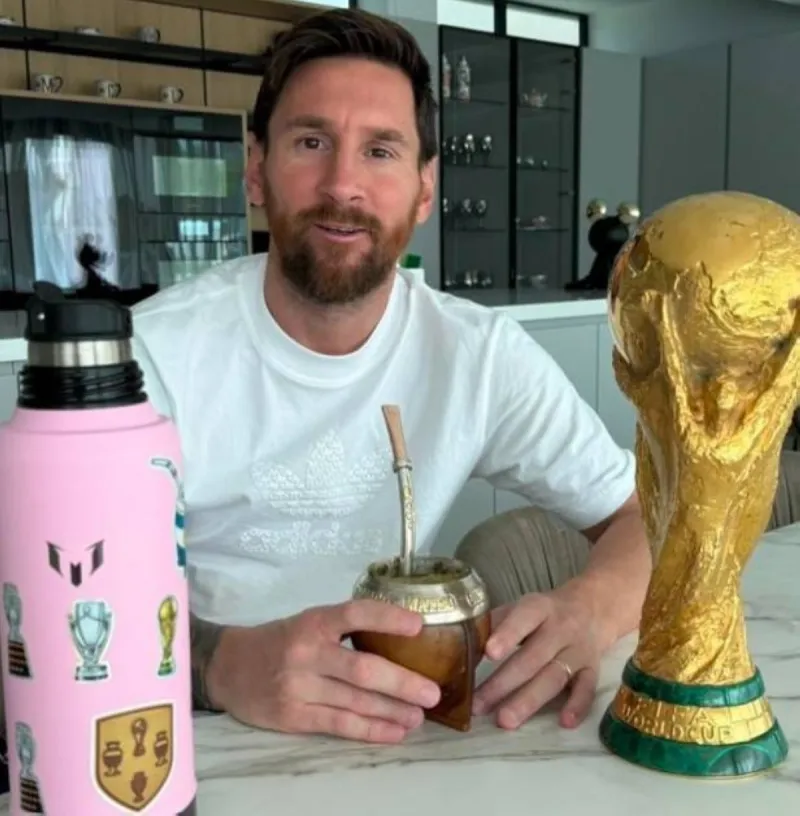
Latin football culture in South America carries a unique visual and traditional identity that extends far beyond the pitch, and mate stands out as one of the most important cultural and everyday symbols accompanying the region's national teams on their World Cup travels — most notably Argentina and Uruguay. This traditional herbal drink, whose history stretches back more than 200 years, is no longer merely a passing social ritual; it has become a constant companion for global football stars and an essential part of their official luggage on trips and in training camps. So embedded is it that, in recent World Cup editions, the Argentine Football Association has shipped hundreds of kilograms of mate herbs to ensure players enjoy a home-like atmosphere and maintain their psychological and physical stability throughout the tournament.
This close relationship is most vividly embodied in the lifestyle of Argentine legend Lionel Messi, who has become an unofficial global ambassador for the drink. Rarely is he photographed on team buses, in dressing rooms, or even arriving at World Cup stadiums without the traditional mate cup — the matero — and its metal straw, the bombilla, in hand.
Messi and his Argentina teammates regard mate as the magical bond that strengthens team spirit and helps dissolve the immense psychological pressures of matches. Mate-drinking sessions bring players together in warm, informal circles that foster harmony, cohesion, and the exchange of tactical opinions away from the rigidity of formal technical plans — a dynamic that reflects positively on their collective performance and high fighting spirit on the pitch.
On the physical and medical side, the drink is no longer merely a folk tradition but a recovery and physical preparation tool that Argentina's World Cup stars rely on to raise concentration and endurance levels, given its balanced content of caffeine and antioxidants, which help reduce muscle fatigue after gruelling training sessions and long, intense matches.
With the current World Cup taking place on North American soil and players present in cities such as Miami and Seattle, this Latin culture has transplanted itself entirely to American beaches and residences, piquing the curiosity of global media and fans alike, who now watch with fascination as Messi and his teammates indulge in a tradition that blends two centuries of history with the ambition to claim footballing glory and lead their country to the world championship podium.