
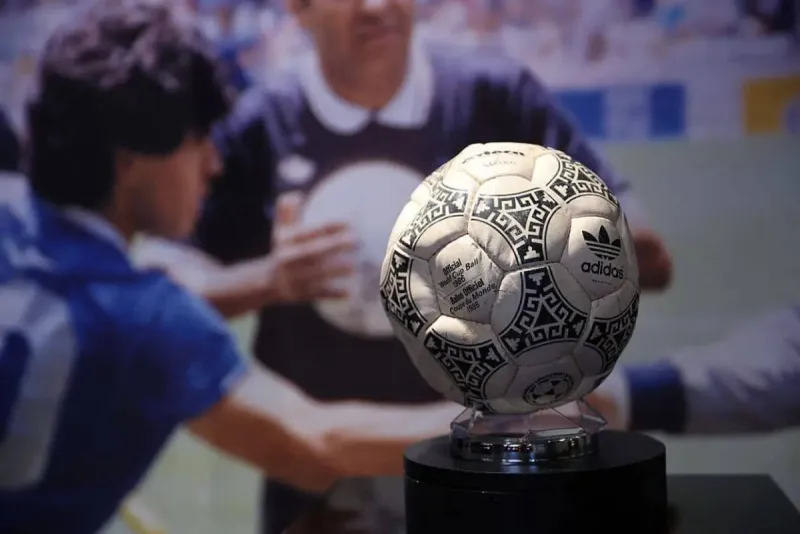
The ball with which Argentine legend Diego Maradona scored in Argentina's match against England at the 1986 World Cup is heading to a new public auction, with expectations that it could fetch around $10 million, in one of the most notable transactions in the history of football memorabilia, according to a report by The Athletic.
The ball carries exceptional value as the one with which Maradona scored two of the most famous goals in World Cup history against England: the first, which he scored with his hand, and the second, famously known as the "Goal of the Century".
Heritage Auctions is scheduled to put the ball up for sale in late July, with the auction closing between 21 and 23 August, at an undisclosed reserve price. The auction house believes its value could equal or even surpass that of Maradona's historic shirt from the same match.
The shirt Maradona wore in that match sold for $9.28 million at a 2022 auction, making it the most expensive football shirt ever sold publicly — a figure Heritage Auctions is using as a benchmark for the ball's expected value.
Mike Provenzal, director of production at Heritage, said the ball brought work in the memorabilia department to a halt the moment it arrived, adding that its value extends beyond football because it is associated with two moments recognised even by those who have no interest in the game.
This will not be the first attempt to sell the ball. It was offered at auction in 2023, with the highest bid reaching $2.04 million, but it went unsold after the price failed to meet the reserve set by the owner to complete the transaction.
The ball acquired its historic significance on 22 June 1986 at the Azteca stadium in Mexico City, when Maradona first scored his controversial hand goal against English goalkeeper Peter Shilton, with the referee failing to notice the infringement.
Just 4 minutes later, the Argentina captain set off from the centre of the pitch, beating 6 English players before scoring a goal that FIFA subsequently declared the "Goal of the Century", leading his national team to victory and ultimately to the World Cup title.
After the match, the ball remained in the possession of Tunisian referee Ali Bin Nasser, who officiated the game, before later passing to a private owner who chose to wait until visual verification technology had advanced sufficiently to confirm its use in both historic goals.