
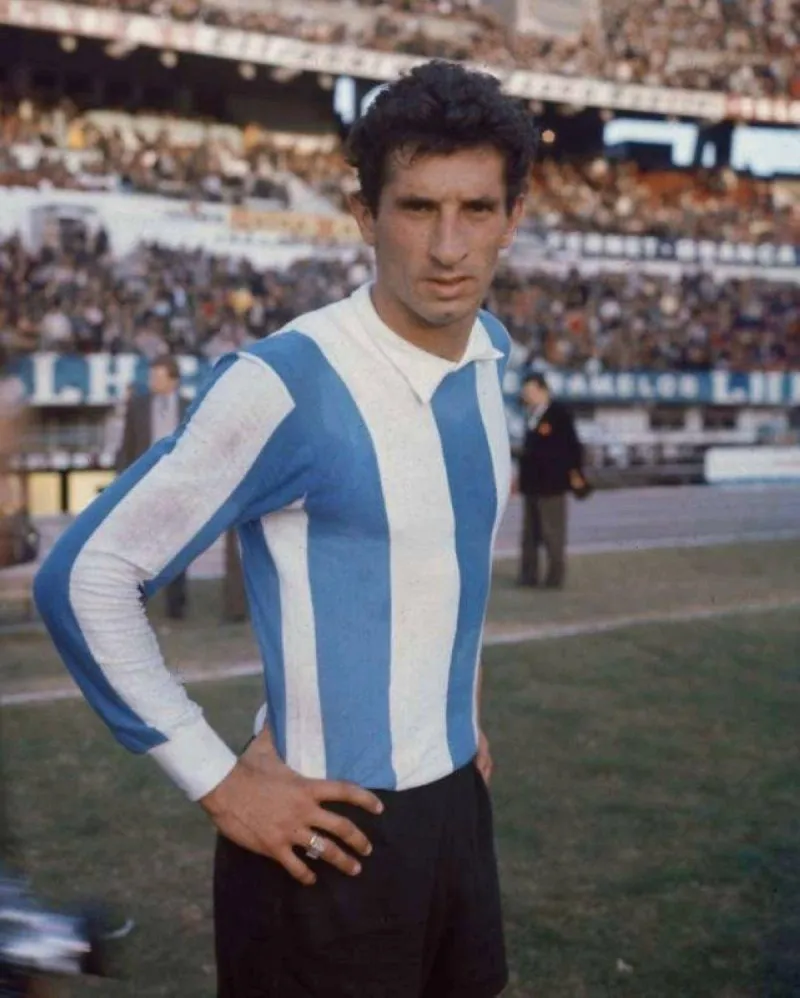
The Argentine Football Association announced on Saturday the death of Argentine Antonio Rattín, former Boca Juniors player, whose defiant behaviour while representing Argentina at the 1966 World Cup contributed to the introduction of yellow and red cards. Rattín was 84 years old.
Rattín died in Buenos Aires, according to the Argentine Football Association, which expressed its deep sorrow at the passing of a historic symbol of Boca Juniors and the national team, with whom he played in two editions of the World Cup.
Known for his robust, physical style of play, the defensive midfielder won 6 Argentine league titles with Boca Juniors, as well as a runners-up finish in the Copa Libertadores in 1963.
The club said: "Rattín was one of us, and he loved these colours so much that he chose them alone to defend throughout his football career, which spanned 14 years. A captain, an Argentine, and he will always be one of Boca Juniors' own."
With the Argentine national team, Rattín participated in the 1962 World Cup in Chile and the 1966 World Cup in England, and twice finished as runner-up in the Copa América.
In the quarter-finals of the 1966 World Cup, Argentina faced England at Wembley Stadium. In the 36th minute, Rattín protested a foul and was sent off for "verbal dissent". At the time, referees did not use cards but communicated dismissal decisions to players verbally.
As he was leaving the pitch, Rattín tore one of the corner flags, which bore the design of the English flag, and then sat down on the red carpet reserved for the late Queen Elizabeth II.
These two acts of protest drew a barrage of projectiles thrown at him by fans in the stands.
In the wake of this bewildering incident, and amid growing concerns about escalating violence in the game, refereeing authorities at FIFA concluded that a practical and universally understood system for communicating cautions and dismissals was necessary.
Kenneth George Aston, who chaired FIFA's refereeing committee, drew inspiration for the system from traffic lights, and in 1967 introduced yellow and red cards, which remain in use to this day.
Rattín's bold gesture at Wembley also marked the beginning of the football rivalry between Argentina and England, which reached its peak in the quarter-finals of the 1986 World Cup in Mexico, when Argentina won thanks to Diego Maradona's two famous goals — one scored with his hand without the referee noticing, and the other following a magnificent solo run.