
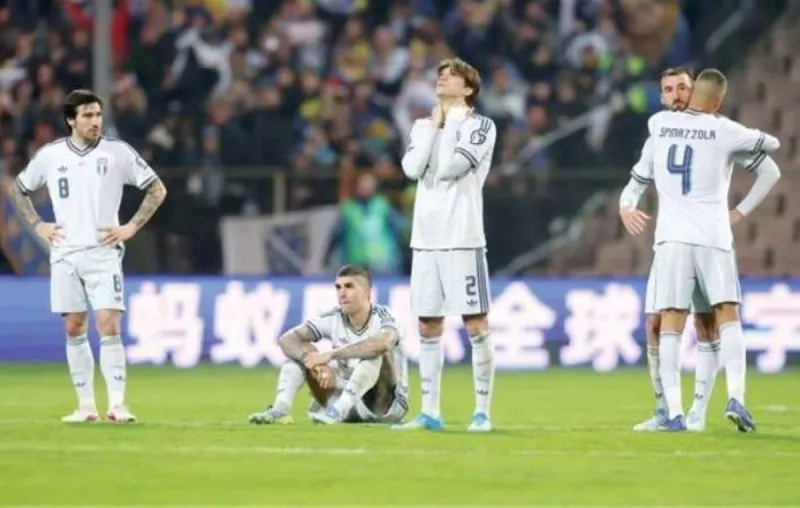
Italian Giovanni Malagò, the former president of the Italian Olympic Committee and the organising committee for the Milan-Cortina 2026 Winter Olympics, has been elected as the new president of the Italian Football Federation, amid a crisis gripping the national team following its failure to qualify for the World Cup for the third consecutive time.
Malagò's election came during the federation's extraordinary general assembly, held at a major hotel in the capital Rome, where he secured 68.58% of the votes against 29.17% for his rival Giancarlo Abete, a representative of amateur football who served as federation president between 2007 and 2014.
Malagò succeeds Gabriele Gravina, who had held the presidency since 2018 before submitting his resignation following Italy's loss in the European play-off final for the 2026 World Cup against Bosnia and Herzegovina (1-1 after extra time, 1-4 on penalties) on 31 March.
Malagò, aged 67, is one of the most prominent sports figures in Italy over the past two decades. A former futsal player, he was involved in organising several major sporting events in the country, as well as Rome's bid — abandoned in 2016 — to host the 2024 Summer Olympic Games.
He served as president of the Italian Olympic Committee between 2013 and 2025, led the organising committee for the most recent Winter Olympic Games, and is a member of the International Olympic Committee. Even before formally announcing his candidacy, his name had garnered wide support within Italian football, particularly from Serie A and Serie B clubs, as well as players' and coaches' associations, which represent 54% of the votes.
The new president will face a number of complex issues, most notably the selection of a new coach for the national team to replace Gennaro Gattuso, with speculation pointing to the possible return of Roberto Mancini, who previously led the Azzurri between 2018 and 2023.
He will also face challenges related to reforming the youth player development system, which has been blamed for the national team's decline and absence from three consecutive World Cup editions, as well as the matter of Euro 2032, which Italy will co-host with Turkey, against a backdrop of infrastructure crisis and the deteriorating state of Italian stadiums.