
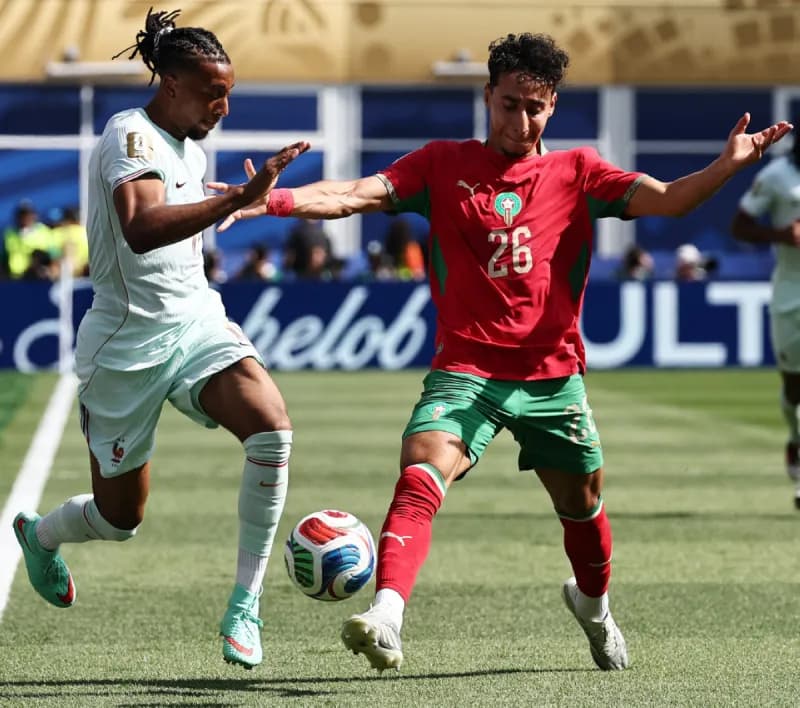
The 2026 FIFA World Cup witnessed a number of surprises, as lower-ranked nations succeeded in challenging traditional footballing powers, amid growing discussion about the role played by artificial intelligence tools in narrowing the technical and tactical gap between competing nations.
Analysing opponents and upcoming fixtures is no longer limited to assessing differences in resources, playing styles, and factors surrounding a team such as fatigue, travel, and high temperatures. It has now extended to technology that has entered meeting rooms and technical analysis centres, providing coaching staffs with real-time information to help them make more precise decisions.
The Football AI Pro platform, built on generative artificial intelligence, stands out as one of the most prominent innovations used during the tournament. FIFA made it available to all participating nations without exception, regardless of their size or resources.
The platform enables analysis of individual and collective performance, evaluation of tactical plans, and the provision of technical recommendations based on an opponent's style of play, drawing on millions of data points that FIFA has gathered over recent years.
Santiago Manso, head of the sports division at Lenovo — the tournament's technology sponsor — told the Spanish newspaper AS that the platform represents a "super assistant", adding: "It helps analysts understand their teams' performances and tactical changes in order to make decisions, and I am confident that some of these smaller nations, who are delivering truly remarkable performances, are gaining a significant advantage thanks to this tool."
Manso noted that artificial intelligence is no longer merely a means of analysing matches after they end, but has become an influential element in preparing plans and making tactical adjustments during the tournament. The platform relies on a vast database fed by performance data and statistics, enabling it to produce advanced analyses within seconds — something that previously required analysts to work for many hours.
The platform also benefited from three-dimensional scans conducted on all participating players before the tournament, creating precise digital replicas — known as "Digital Twins" — that assist in evaluating players' physical and technical performance.
Manso confirmed that the system was designed so that all its outputs are traceable and reviewable, with every conclusion grounded in clear criteria and data, thereby enhancing the reliability of analyses and reducing the likelihood of errors. He added: "We like to think that we are making AI accessible to everyone," referring to the provision of the technology to all nations regardless of their resources or the size of their technical staff, whether large or small.
The platform's developers believe this approach gives nations with limited resources the opportunity to access analytical tools that were previously the preserve of major federations and the highest-spending clubs. Technical staffs can now access detailed reports after every match, containing performance indicators, chances created, movement patterns, and rapid tactical recommendations. According to officials at the company behind the platform, these capabilities have helped create a competitive level playing field among nations by granting everyone access to the same knowledge, regardless of the size of their technical teams or financial capacity.
The tournament produced notable results and some surprises achieved by nations that were participating for the first time or were expected to suffer heavy defeats. Cape Verde and the Democratic Republic of Congo both advanced from the group stage and succeeded in embarrassing more fancied opponents — most notably Egypt, which came close to eliminating the defending champion in the round of 16 — reinforcing debate about the impact of AI tools in narrowing the gaps between teams.
The use of artificial intelligence is not limited to technical matters. The developing company also operates an intelligent tournament control centre that uses digital models of stadiums to predict operational needs and improve the spectator experience, according to Fox Business.
The solutions also include technologies for guiding crowds inside stadiums, referee cameras, and operating systems that rely on real-time data analysis, raising the efficiency of match and tournament management as a whole. Brianna Rider, the company's director of communications in North America, said the partnership with FIFA came after lengthy discussions to demonstrate the company's ability to meet the tournament's standards.
Company officials told Fox Business that the technologies used at the 2026 World Cup will serve as a foundation for developing more advanced solutions at the 2027 FIFA Women's World Cup in Brazil, drawing on the experience gained during the current edition.
Following these developments, football may be entering a new era in which data analysis and artificial intelligence become essential elements in players' success on the pitch, as the influence of AI on team performance has become increasingly evident in recent times.