
In a previous article we discussed the immortal Iraqi song 'Khadri Al-Chai Khadriyah', with lyrics attributed to Abdul Karim Al-Allaf (and, according to some, to Mullah Suleiman Al-Shukurji), music composed by the brothers Saleh and Daoud Al-Kuwaiti, and performed by Salima Pasha Murad. We highlighted the lofty status of tea in Iraqi culture and in the daily rituals of Baghdad's inhabitants in particular — as the Iraqis' drink of choice, a symbol of generous hospitality and affection, and an attachment that surpasses even that of Indians and Sri Lankans for the beverage.
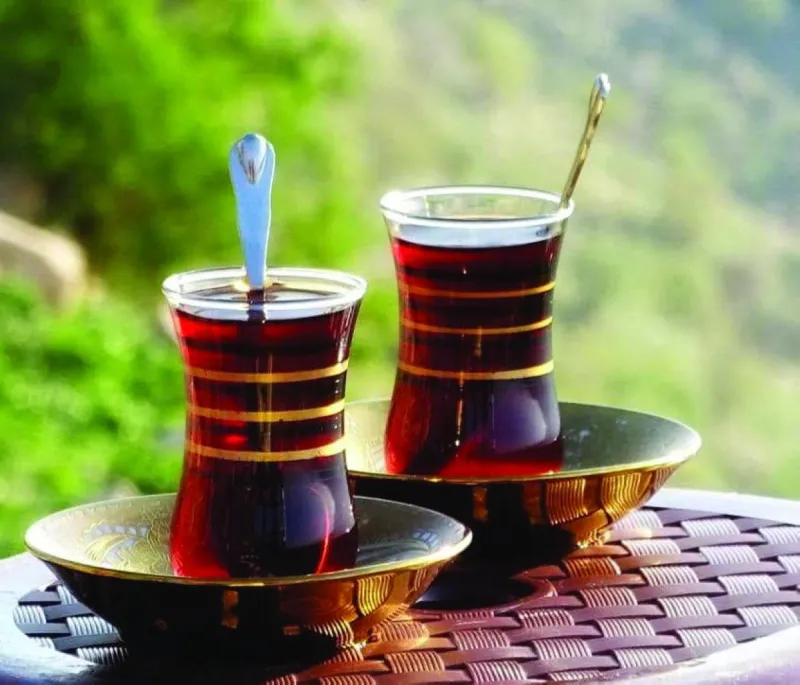
For Iraqis, tea is 'chai', with the Arabic 'sh' sound shifted to the Persian 'j', and it is drunk only in an 'istakana' — a special crystal glass — never in ordinary cups as in Egypt. For Baghdadis, tea is unacceptable unless it is 'sankin': thick and properly brewed.
A year before his death — that is, in 2021 — Iraqi researcher, historian and politician Tariq Harb published a file on tea and the traditional Baghdadi songs associated with it. It noted that tea has had a permanent presence on Iraqi tables since the Ottoman era, though some link its elevated status and the Iraqis' love for it to the British entry into Baghdad in 1917. The British were known for their habit of drinking tea at set times of day and according to particular rituals, even though they — unlike Iraqis — drink it light and mixed with milk.
These same observers add that tea's place in Iraqi culture was consolidated from that point on, becoming the constant companion of Iraqis at all times and in all places — day and night, summer and winter. Failing to serve tea to a guest came to carry a specific social meaning, and an Iraqi guest who does not drink tea became a rarity and an exception.
Beyond all this, tea acquired among Iraqis its own dedicated tools for brewing and preparation: the 'samovar', the 'qouri', and the 'kettle', along with small round ceramic saucers and elegant gilded teaspoons. Iraqi women even came to take pride in owning these utensils in their kitchens.
Returning to Iraqi songs that celebrate tea, we find that 'Khadri Al-Chai Khadriyah' is merely one entry in an Iraqi musical heritage rich with songs that speak of this drink from many different angles and in many different ways.
Among them is a song whose opening line runs: 'Come by, my love, come and drink — come to our people and drink chai.' This was recorded by the popular singer of abouziyyat and bastat, Masoud Al-Amaratli (1898–1944), in Baghdad in the 1930s.
There is also a song performed by the late rural singer Hudhairi Abu Aziz (1909–1973) during the Second World War, when tea was being distributed to the public on rationing cards. Its opening lines say: 'Uncle, you of the rations office, take this petition — the dark-skinned woman has fallen ill for want of chai,' meaning: hurry up with the rations, for the dark-skinned woman is sick because of the tea shortage.
Beyond these, Iraqi musical heritage also contains works that pit tea — associated with the Persians — against coffee, associated with the Arabs and Yemen. One example is the 'basta' whose opening line goes: 'O spice merchant, tell me what you have brought — you are of Persian stock and I am Yemeni.' This is a dialogue between tea and coffee, performed by Hudhairi Abu Aziz and other Iraqi maqam artists.
In a similar vein, another song stages a dialogue between tea and coffee: tea declares, 'I am the sweet chai, my vessels gleam bright — of crystal and brass and Chinese metal,' meaning: I, tea, am distinguished by sweetness and resplendent vessels made of crystal and precious metals. Coffee replies: 'I am the daughter of Yemen and the hostess of Hatim Al-Ta'i's gatherings — from the house of generosity and nobility and people of distinction,' meaning: I am the coffee whose beans grow in the soil of Yemen and are drunk in the assemblies of Hatim Al-Ta'i, the symbol of generosity and magnanimity. This song was written by the folk poet Sheikh Hammoud Abu Khazina Al-Sudani (d. 1920), following the entry of tea into Iraq and its spread at the expense of Arabic coffee, and it was performed by more than one singer.