
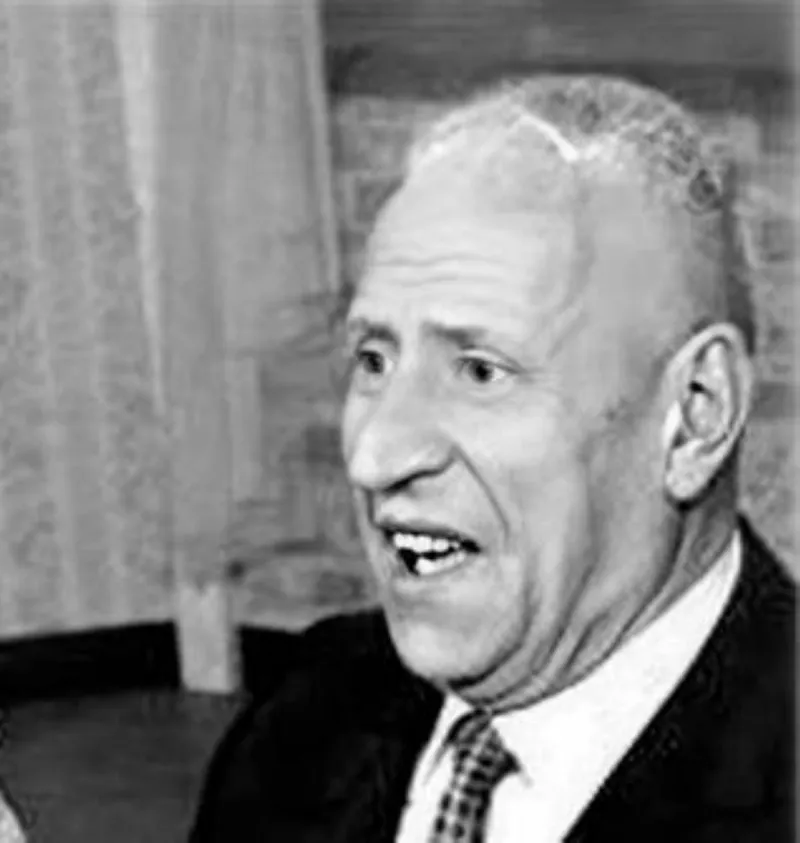
In Lebanon's golden age — the 1950s and 1960s — the name Najib Hankash filled the airwaves, graced the pages of magazines and newspapers, and was on everyone's lips. The man was not merely a multifaceted figure who combined poetry, writing, media work, musical composition, and the crafting of comic anecdotes; he was a Lebanese social, cultural, and artistic phenomenon. Celebrities, the wealthy, intellectuals, and politicians sought his company; people jostled to knock on his door; and wherever he was present, silence gave way to joy, merriment, and laughter. It was no surprise, then, that the great journalist Saeed Frayha bestowed on him the title of "Lebanon's wit." Hankash was, in brief, a cheerful and beloved personality wherever he went, possessed of a remarkable ability to coax smiles and laughter from those around him — yet he concealed within himself a deep sorrow over the long years in which he had known orphanhood, poverty, and deprivation in his homeland, and exile, isolation, and hardship abroad.
He was born in the Mar Elias neighbourhood of Zahle in 1899, and lived a life that was half rural, half urban. Poverty drove him to leave his homeland for Brazil in 1922, while still in the prime of his youth, in the hope of improving his circumstances. There began the epic of his struggle, which claimed long years of his life. He moved from one profession to another: he sang, he wrote for the press, he composed jokes and comic tales, and in 1934 he founded a newspaper in São Paulo under the name Jaridат Lubnan (Lebanon Newspaper). He worked as a street vendor, carrying his wares in a box on his back and walking from place to place to sell them to shopkeepers. During that same period he also worked distributing the Egyptian film "The White Rose" among the Arab community in Brazil, and participated by singing and telling jokes at some musical gatherings.
After 25 years of exile and hardship, he managed to accumulate enough money to establish his ventures and realise his ambitions for a dignified, settled life in his homeland, which he had never stopped longing for and to which he returned periodically. Through those visits to Lebanon he succeeded in building warm relations with the political and high-society classes, winning his way into their circles by dint of his gifts for wit and charm, his refined manner, and his eloquent tongue.
In 1947 he decided to leave Brazil and settle in Lebanon, assured that his reputation had spread widely in political, financial, social, and journalistic circles as a self-made Lebanese man from the Latin diaspora. Hankash chose to invest part of the fortune he had accumulated through his own efforts in Lebanon, specifically in the tourism sector — at the time Lebanon's most powerful asset. He came to own, or hold a stake in, luxury establishments such as the Auberge restaurant, the Casino Al Wadi restaurant, and the Chtaura Park Hotel. Through these venues, frequented by celebrities and high society, he consolidated his social ties until he became a friend to every star and a star at every gathering.
He broke into Lebanese journalism, writing first news stories and striking tales seasoned with his personal touch, along with humorous anecdotes in the colloquial dialect, for the newspapers Zahle Al Fatah and Al Telegraph, and later for the weekly Al Sayyad, founded by his friend Saeed Frayha, who was no less celebrated, witty, elegant, or spontaneous than he was. From journalism he made his way into Lebanese television, appearing on its black-and-white screen to present several programmes, among them a weekly show in which he hosted a select group of his country's artists, including Sabah, Wadih El Safi, Fairuz, Nasri Shamseddine, the Rahbani Brothers, Farid Al Atrash, and Abdel Salam Al Nabulsi.
In addition to the above, he published, in stages, a number of works bearing titles such as Hankashiyyat Mutanawwia (Various Hankash Pieces) and Dhikrayat Hankashiyya (Hankash Memoirs), into which he gathered his anecdotes, articles, the distilled lessons of his life experience, and his recollections of his years in the Brazilian diaspora. The introductory pages of these works were written by his celebrated colleagues and friends — sometimes by Mikhail Naimy, sometimes by Saeed Frayha, and so on.
Among the achievements credited to him is his adaptation of the well-known Argentine tune "La Cumparsita" as the melody for the song "Give Me the Flute and Sing," whose lyrics were written by Kahlil Gibran, a song that would become one of Fairuz's musical icons.
Hankash bid farewell to this world in Beirut on 17 April 1979, and Lebanon lost its witty Hankash.