
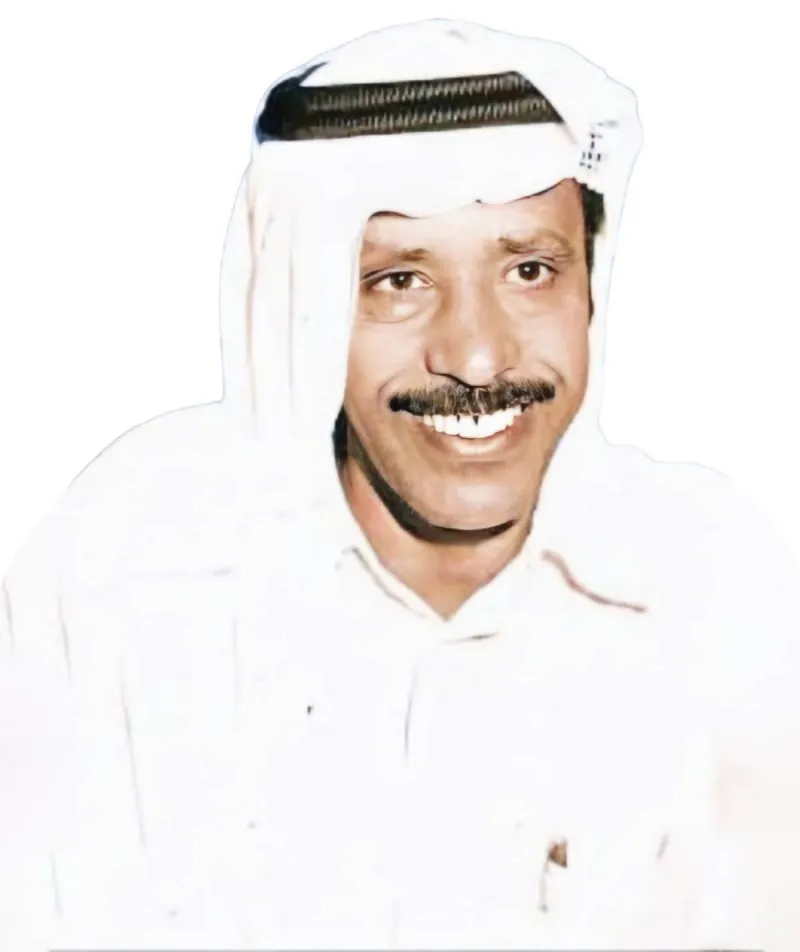
The theatre movement in Kuwait represents a story of passion, struggle, study, talent, and relentless work, written by an elite group of the country's men who believed in theatre as a purposeful mission — one that conveys social, cultural, political, and everyday reality, reflects hopes and ambitions for reform and change, and serves as a means of education, awareness, and guidance before it is a means of entertainment and enjoyment.
These individuals exerted extraordinary efforts over the years of their lives from the time they were young; they devoted themselves to their work, persevered, and nurtured their talents with knowledge, training, and mutual support, overcoming every obstacle and challenge until they achieved the impossible and became pioneers in their field at both the local and Gulf levels.
They achieved an artistic and theatrical renaissance recognised for its pioneering brilliance. That pioneering status could not have been realised without the generous official support of the state as it took its first steps after independence toward construction and development on all fronts.
Many names emerged in the Kuwaiti theatrical and artistic movement — some excelling in acting, others in directing, and others in scriptwriting. Some were led by their multiple talents to combine all of these, and thus inscribed their names in golden ink in the register of immortal theatre pioneers. Theatre is considered the father of the arts, the oldest of them since the time of the Greeks and Romans, and yet relatively the most recent literary form compared to poetry in Arab societies.
One of these figures is Abdulrahman Al Duwaihي, whose biography and creative journey we document here as a pioneer of Kuwaiti theatre — particularly as he combined directing, acting, and scriptwriting, and extended his activity from theatre to cinema, radio, and television, in addition to his prominence as one of the poets of what is known in Kuwait as the Zuhairiyyat, the short form of popular vernacular poetry.
It was therefore no surprise that some dubbed him the dean of Kuwaiti directors, while others named his Zuhairiyyat poems the "Duwaihiyyat." Beyond all this, the man witnessed the beginnings of the theatrical movement in his country, accompanied its development, growth, and flourishing, until his absence from the scene with his passing — God rest his soul — on 26 July 1996.
He also knew closely all or most of the pioneering Kuwaiti artists, such as Khaled Al Nafisi, Ghanem Al Saleh, Abdulhussein Abdulredha, Saad Al Faraj, Ali Al Mufidi, Ibrahim Al Salal, and Uqab Al Khatib.
Abdulrahman bin Suleiman bin Duwaihи Al Duwaihи — known by his nickname Abu Dahi — was born in 1934 in the Al Qibla district, in the Freej Al Sanad neighbourhood, but spent most of his life in the Al Salhiya district on Fahad Al Salem Street.
He was born to a father belonging to the Al Duwaihи family, which had emigrated to Kuwait in the nineteenth century from the Najdi town of Julayjil and settled in the Jibla and Salhiya neighbourhoods of the capital, forging marital ties with many well-known Kuwaiti families including Al Shayji, Al Bukhait, Al Issa, Al Marjan, Bu Rahma, Al Hawal, and Al Eid, according to the Kuwait History Forum website.
He grew up under the care of his parents alongside his six siblings — Abdulaziz, Abdulmohsen, Abdullah, Abdulrazzaq, Munira, and Fatima — but suffered the loss of his father at the age of 6 when his father died in 1940.
He enrolled for study at the traditional Quranic school of the religious teacher Mulla Muhammad bin Sharaf in the Al Qibla area, where he studied the Holy Quran, then transferred to Al Qibla School, where he completed kindergarten with notable success and distinction. He continued at that school through the third grade, then transferred to Al Mubarakiya School, where he stayed only two weeks in the fourth grade before completing his education at Al Ahmadiyya School.
Signs of his brilliance, intelligence, and aptitude began to emerge while he was at Al Qibla School, where he was a constant participant in school activities, including reciting the Holy Quran in the morning assembly with his beautiful voice and performing short dramatic sketches on the school stage — something that caught the attention of the school's headmaster at the time, the educator Abdulmalik Al Saleh.
It was customary then for schools to hold a celebration at the end of the academic year featuring a historical play and a comedy play. The headmaster chose him to participate in a historical play he was directing, entitled "The War of Al Basus." Al Duwaihи performed his assigned role with skill at the age of 9, and also participated in the comedy play alongside Saleh Al Ujairi (later a well-known astronomer), Khaled Al Jassar (later a minister), and Uqab Al Khatib (the well-known theatre artist).
From that participation onwards, Al Duwaihи developed a passion for acting — evidenced by the fact that he encouraged the boys of his residential neighbourhood, including Abdulaziz Mustafa and Yousuf Muhammad Rashid, and cooperated with them to bring a number of rocks to build a stage, then borrowed men's and women's clothing from their homes to use in performances, and even made entrance tickets from their school exercise books to sell to those who wished to watch.
Al Duwaihи told us about his professional beginnings, saying that in 1956 he was in Lebanon, and when he returned to Kuwait he found awaiting him a letter from director Muhammad Al Nashmi inviting him, in his capacity as director of the Popular Theatre, to join the troupe — which had previously been known as the "National Scout Troupe." He hastened to respond and joined the Popular Theatre in September 1957.
At the time he was working at the Public Health Directorate as a cashier, joining others who had preceded him such as Abdullah Khuraibat, Abdulrazzaq Al Nafisi, Khaled Al Nafisi, Hussein Ghuloom, and others. He thus participated in a group of Kuwait's earliest theatrical productions — improvised works authored and directed by Muhammad Al Nashmi — including "Qar'a wa Salboukh," "Dha' Al Malaf," "Dha' Al Amal," and "Sharbaka."
In 1964, Al Duwaihи moved to co-found the "Arab Theatre" with Khaled Al Nafisi, Abdulhussein Abdulredha, Saad Al Faraj, Ghanem Al Saleh, Hussein Yaqoub Al Ali, Hussein Al Saleh, Abdulwahab Al Sultan, Jafar Al Moumen, and Adnan Hussein. He appeared as an actor on its stage in 4 serious plays in classical Arabic, directed by the great Egyptian theatre director Zaki Tulaimat:
"Saqr Quraish" by Mahmoud Taymour, "Fataha Al Qitar" by Tawfiq Al Hakim, "Mudhik Al Khalifa" by Ali Ahmad Bakathir, and "Adam wa Hawwa" adapted by Fotouh Al Nashhati.
This was before he resigned from the Arab Theatre in the year of its founding and returned once again to the Popular Theatre to rescue it from improvisational and disorganised work. That same year he presented his first true personal experiment in scriptwriting and directing with the successful play "Sakanah Miratah," in which he assembled a constellation of the troupe's stars.
This was followed by a series of successful productions for the Popular Theatre as director, author, and actor. Building on his successes, he also adapted or Kuwaitised a number of plays, including:
"Al Junoun Funoun" and "Ghalat Ya Nas" in 1964; "Casino Umm Anbar" in 1966; "Intakhibouni" and "Harami Akher Model" in 1967; and "Ruznamah" in 1970 — all directed by him, except "Al Junoun Funoun," which was directed by his colleague Khaled Al Suqaibi.
In addition, he authored the play "Isbir wa Tishoof," directed by the Egyptian Hamdi Farid in 1965, which is considered the first Kuwaiti theatrical work set within a framework of fantasy and comedy.
Beyond the above, Al Duwaihи directed plays written by others, including: "Yuhmil wala Yuhmil" in 1966, "Cowboy fi Al Dabdaba" in 1970, "Ibrahim Al Thalith" in 1973, "Sakhkhna Al May wa Tar Al Deek" in 1974, "Wartat Kharij" in 1976, and "Al Imara Raqam 20" in 1978.
His activity also extended to television drama: he portrayed the blind Kuwaiti poet Fahad Al Askar in the trilogy "Al Rihla wal Rahil," produced in 1979, and participated in the series "Al Aqdار" in 1978 alongside Abdulhussein Abdulredha, Saad Al Faraj, Ghanem Al Saleh, Ibrahim Al Salal, Khaled Al Eid, Abdulaziz Al Namesh, and Samir Al Qallaf, brilliantly performing the role of "Al Nakhudha bin Aidan."
Among the other achievements credited to Al Duwaihи in the history of Kuwaiti art is that he wrote the first locally produced television play produced by Kuwait Television in 1964, entitled "Itha Fat Al Fout ma Yanfa' Al Sout." Starring Saad Al Faraj, Abdulwahab Al Sultan, and Hussein Al Saleh Al Dousari, Kuwait entered it in the Television Festival in Alexandria. He subsequently wrote other television plays, including "Al Tofan" and "Ma Lak Illa Khoshmak."
In 1975 he wrote the story, screenplay, and dialogue for the film "Al Samt" (Silence), directed by Hashem Muhammad Al Shakhes — considered Kuwait's second cinematic experiment after the film "Bas Ya Bahar" by director Khaled Al Siddiqui.
He also contributed early to Kuwaiti radio by writing and directing a play entitled "Tabeeb Yudawi Al Nas wa Huwa Aleel," which was presented live on air. On another front, Al Duwaihи was behind the discovery of a number of Kuwaiti talents who later gained wide recognition in theatrical, dramatic, and radio productions, including:
Maryam Al Ghadhban, Jassim Al Nabhan, Tayyiba Al Faraj, Ahmad Al Saleh, Ibrahim Al Salal, Abdulaziz Al Namesh, and Abdulaziz Al Masoud. He was also behind the Kuwaitisation of a number of plays, among them "Al Muharrej" in 1980, authored by Muhammad Al Maghout and directed by Ahmad Musa'ad, and "Hakmat Mahkamat Al Sultan" in 1982, directed by Najm Abdulkarim.
As noted, Al Duwaihи wrote the short vernacular poetry known as Zuhairiyyat and became renowned for it, to the point that his Zuhairiyyat were named "Duwaihiyyat." His first attempt came in 1962 while he was in Cairo, when he wrote a Zuhairiyya opening with the line: "Ya Adhili ma ara fi sahibik sulwa."
Those who examined his Zuhairiyyat and wrote about them unanimously agreed that they are diverse in terms of subjects and purposes — a diversity that enriched his poetic experience and lent it distinction — and that he succeeded in blending authenticity, heritage, and contemporaneity, using a mixture of old and new synonyms drawn from both classical and colloquial Arabic, which gave his Zuhairiyyat strength and richness.
From another angle, his Zuhairiyyat can be viewed as emanating from a poet of refined sensibility and sincere expression, and from a cheerful, sardonic man who aimed to correct and reform his society and urge it toward noble character and adherence to authentic values and principles.
Among his Zuhairiyyat — published in collections, and published before that on the back page of the Kuwaiti newspaper Al Anbaa from 1994 — is one entitled "Half Solutions" ("Ansaf Al Hulool"), in which he wrote:
أنصـاف الحلول مو كل حال فيها أنصـاف
والأثـلاث يا ذا الربـع ما تستوي أنصـاف
وما يطير طير إنّتف ما يطيـر الا إن صـاف
هيهـات مـا يجتمع حاضـر معـا ماضـي
مشعـاب في محزمك مـو خنجـرٍ ما ضـي
وسـمي مـا يلتفـت لا صـوّتـوا ما ضـي
وِرقيّـه مـا تلتفـت لا صـوّتـوا انصـاف
And another Zuhairiyya entitled "Ya Dahi," in which he wrote:
ضـاحي تشَـرّهت وما في الشره شي يبنـي
ضـاحي تعبـت بـربـاك وشـوف شيّبنـي
ضـاحي انـا معك شـي يهـدم وشي يبنـي
خلنـا نتفـاهم يا ضـاحي خـل يقـوم البنـا
الـوقـت مـا ينلحــق يالله تــرى ولبنـا
جــدّك لاجلنــا يعـاف إحْليْبتــَه ولْبِنـَه
مـا قـال ولّيـن إلهـالـدنيـا إشّيّـيبـنـي
Al Duwaihи was honoured on more than one occasion: the Arab Theatre troupe honoured him on "Arab Theatre Day"; he was honoured at the Gulf Theatre Festival in Qatar in 1990; and the honour was repeated on 4 June 1996 by the Kuwaiti Artists Association.
As he was at the time ill in Al Sabah Hospital, then-Minister of Information Sheikh Saud Al Nasser Al Sabah, accompanied by the president of the Kuwaiti Artists Association Abdulaziz Al Mufarraj (Shadi Al Khalij), went to the hospital to honour him there. He was also commemorated within the activities of the seventh "Saifi Thaqafi" (Cultural Summer) festival at the Kuwait National Library in 2012, where a cultural tribute was held for him with the participation of critic Dr Ibrahim Ghuloom and the literary poet Mubarak Amro Al Amari from the Kingdom of Bahrain.
Despite all this, some believe that Al Duwaihи did not receive the recognition he deserved, as his contributions to his homeland and his art went beyond acting, writing, and directing, founding and managing theatres, contributing to radio and television drama, discovering talents, and composing vernacular poetry — extending to mastery and artistry in the language of theatre and drama, and the revival of archaic vocabulary in the colloquial Kuwaiti dialect.