
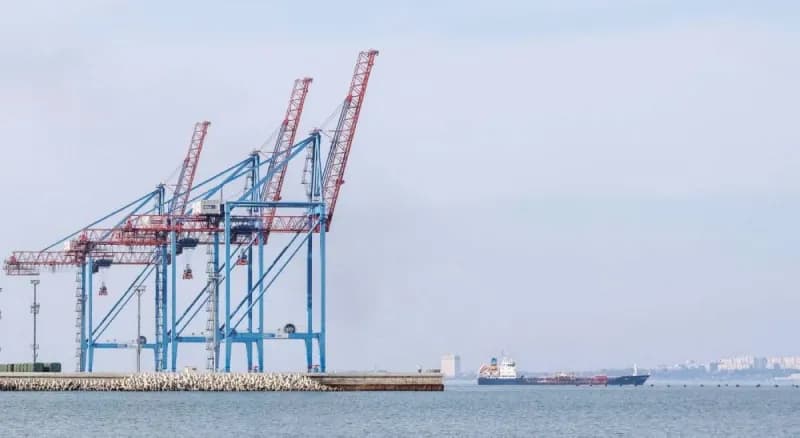
The confrontation between Russia and Ukraine has moved to a more dangerous level in the Black Sea and the Sea of Azov, as mutual attacks have expanded to include commercial vessels, tankers, ports, and military installations. The escalation has disrupted major grain export routes and pushed global wheat prices higher, amid Turkish warnings that the war could spill over into the vital maritime corridor.
Ukraine announced yesterday that its drones had targeted at least 11 Russian vessels, including oil and gas tankers, cargo ships, and tugboats, bringing the total number of ships Kyiv says it has targeted since the beginning of July to 147 in the Black Sea and the Sea of Azov.
In response, the Russian Ministry of Defence announced strikes on Ukrainian military and industrial facilities in Kyiv, as well as port infrastructure in Odesa and Pivdennyi.
Moscow said its forces destroyed a Ukrainian military vessel and a speedboat as they headed toward the port of Odesa — a claim Kyiv did not confirm.
The escalation reflects Ukraine's shift from targeting Russian energy infrastructure and military units to attempting to disrupt the maritime transport network Moscow uses to move fuel, grain, and cargo between Russian ports and the Sea of Azov and Black Sea.
Russian authorities imposed restrictions on navigation in the Sea of Azov following a series of Ukrainian attacks, temporarily halting vessel transit through the Don–Azov Canal and suspending acceptance of transit requests through the Kerch Strait, before rerouting some shipments to other ports in the Black Sea and the Baltic Sea.
The region is of particular importance to Russian grain exports: approximately one quarter of Russia's grain export traffic passes through the Sea of Azov and its associated maritime corridors, while Russia is the world's largest wheat exporter.
The attacks and navigation restrictions have driven European wheat prices up by around 7%, while US futures contracts rose by roughly 5%, as concerns grew over supply disruptions from two of the world's largest grain producers.
On the Ukrainian side, Russia has intensified its attacks in recent days on the ports of the greater Odesa region — which encompasses Odesa, Chornomorsk, and Pivdennyi — the main gateway for Ukraine's maritime exports.
More than 90% of Ukraine's agricultural exports pass through these ports, along with virtually all of its iron ore exports, making their continued operation essential for the Ukrainian economy and for the flow of grain to global markets.
Ukrainian authorities said Russian attacks have eliminated approximately one third of the country's grain export capacity and caused a number of major terminals to shut down, while the port of Chornomorsk has reduced its grain shipment intake, and all three ports are no longer operating at full capacity.
Russian ballistic missiles also struck areas of Kyiv, killing at least 2 people and injuring at least 6 others, according to local authorities, setting fire to warehouses and causing damage to vehicles and storage facilities.
Alongside the military escalation, Turkish Foreign Minister Hakan Fidan, during a visit to Kyiv, warned against the war spreading more broadly into the Black Sea.
Speaking at a press conference with his Ukrainian counterpart Andrii Sybiha, Fidan said: