
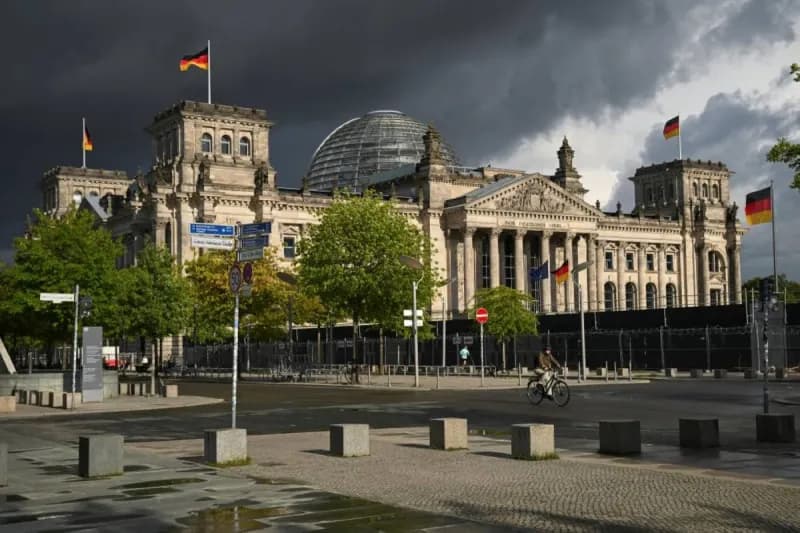
The German cabinet is scheduled to approve the federal government's draft budget for 2027 on Monday, along with the financial plan extending through 2030.
Finance Minister Lars Klingbeil managed to close funding gaps estimated in the billions of euros in next year's budget, but will be forced to draw approximately 6.8 billion euros from financial reserves to do so, according to the draft resolution submitted to the cabinet.
Klingbeil leads the Social Democratic Party, a partner in Germany's ruling coalition, and also serves as deputy to German Chancellor Friedrich Merz.
When the budget's key indicators were presented at the end of April, the government had flagged a funding gap of 21 billion euros.
Klingbeil obliged all ministries to cut their spending by 1%. The coalition government also approved increases to tobacco taxes, the introduction of a plastics levy, and reductions in federal contributions to social insurance systems.
Nevertheless, the financial plan for subsequent years still contains funding gaps running into billions of euros.
According to the budget draft, the federal government intends to spend 555.4 billion euros in 2027, with net borrowing of 118.7 billion euros. On top of that come new debts arising from the special funds earmarked for infrastructure and climate neutrality, as well as the special fund for the German armed forces.
Total new borrowing next year is therefore expected to exceed 200 billion euros.
Parliament is scheduled to debate the budget draft after the summer recess, with the Bundestag set to give final approval to the budget during the autumn.