
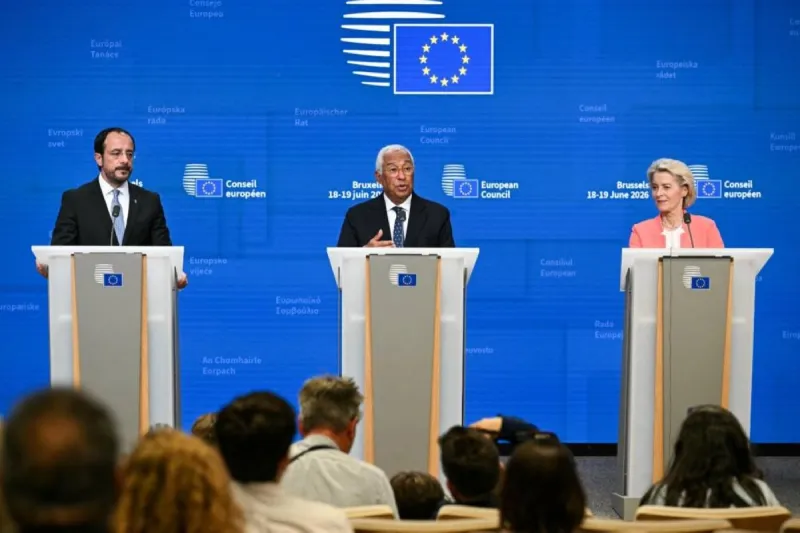
European Union leaders concluded their two-day summit in Brussels today, issuing a package of recommendations focused on the multiannual financial framework, migration, combating illicit drugs, as well as enlargement files and relations with neighbouring countries.
Regarding the next multiannual financial framework, the European Council called on the Irish Presidency to intensify work on the "negotiating box" with the aim of reaching an agreement before the end of 2026, allowing legislation to be adopted in 2027 and ensuring the uninterrupted flow of European funding from January 2028.
Comprehensive partnership
On migration, leaders stressed the need to continue intensive work across all tracks, including the external dimension and comprehensive partnerships, in accordance with EU law and international law, while agreeing to hold an expanded strategic discussion on the issue at the October 2026 summit.
On confronting the phenomenon of illicit drugs, the European Council confirmed the adoption of a comprehensive and integrated approach combining health, social, and security aspects, while strengthening coordination across local, national, and international levels, and supporting prevention, treatment, and reintegration. It also indicated the intention to introduce a new European sanctions regime targeting cross-border organised crime networks, alongside strengthening port security and international law enforcement cooperation.
New momentum
On enlargement, leaders welcomed the new momentum of the process, confirming that a strategic discussion on reforms and enlargement would be held in October. They also welcomed the launch of accession negotiations with the Republic of Moldova and the opening of the first cluster, reaffirming a merit-based approach.
Regarding the Western Balkans, the Council renewed its commitment to supporting these countries' path towards accession and strengthening gradual integration with them, while emphasising that the process remains conditional on reforms and subject to review.
Under other agenda items, the European Council expressed concern over the spread of the Ebola virus in Africa, calling for urgent international coordination and reaffirming EU support for the World Health Organization. It also condemned attempts at external interference in Armenia, reiterating its commitment to supporting its sovereignty and democratic institutions.
Leaders also reaffirmed their support for international institutions and the protection of the independence of international justice, in addition to following up on coastal development issues and island strategies, and the conclusion of the 2026 European Semester.