
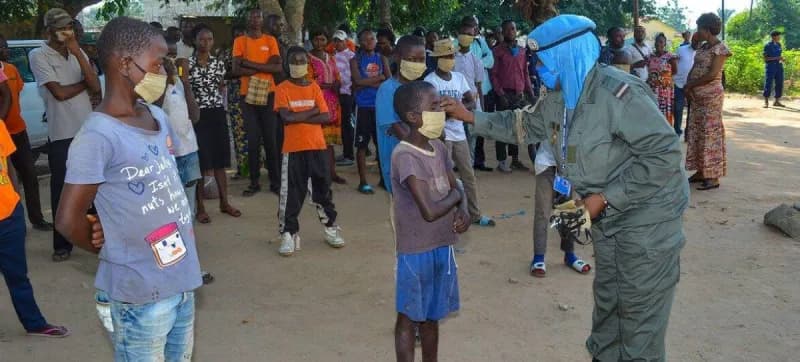
The government of the Democratic Republic of Congo has banned public gatherings in four provinces, including the capital Kinshasa, citing efforts to combat an Ebola virus outbreak in the country's northeast.
The decision comes ahead of a demonstration the opposition intends to hold on 8 July in protest at what it describes as a presidential plan to remain in power.
In a memorandum issued on Saturday, Interior Minister Jackmain Shabani ordered authorities in Kinshasa province and three other provinces to ban "mass gatherings," justifying the move with measures to prevent the spread of the Ebola virus.
More than two years before the next presidential election in the Democratic Republic of Congo, parliament earlier this month passed a bill on organising a referendum on a constitutional amendment.
The law could open the door to a third presidential term for President Félix Tshisekedi, 63, whose second term — his last under the current constitution — ends in December 2028.
An opposition rally in Kinshasa on 12 June to denounce what the opposition described as a "constitutional coup" was met with a crackdown by authorities and pro-government activists.
The office of the United Nations High Commissioner for Human Rights condemned the killing of at least one demonstrator, and the opposition has called on citizens to take to the streets on 8 July to demand Tshisekedi's resignation.
Congo is facing its 17th Ebola outbreak in its history. It has so far claimed the lives of 360 people out of 1,274 infected, though scientists and humanitarian workers believe the true figures may be higher.
No cases have been recorded in Kinshasa, the sprawling city with a population of more than 17 million.