
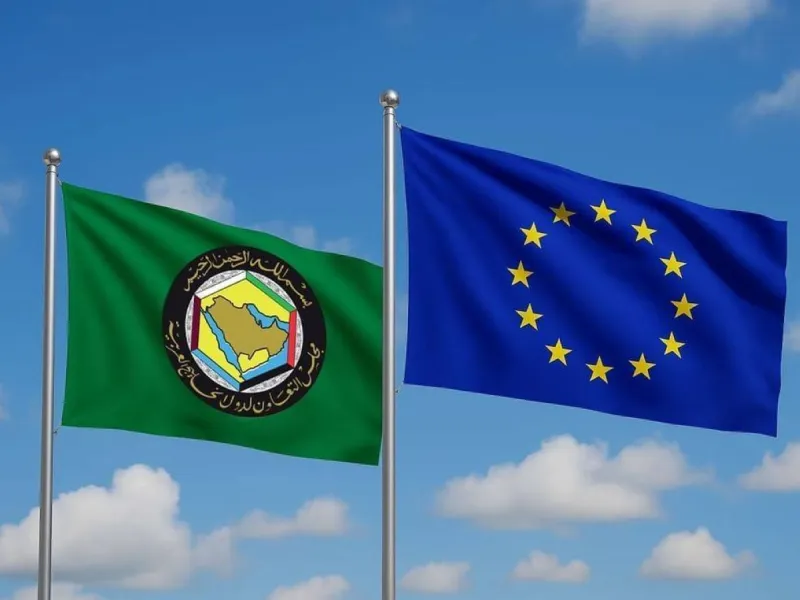
European Union foreign ministers, meeting in Brussels on Monday, stressed the need to preserve freedom of navigation in the Strait of Hormuz and to consolidate the ceasefire following the region's recent escalation, while reaffirming that Iran must not possess nuclear weapons in order to safeguard the security and stability of the Middle East.
On the sidelines of the meeting, ministers held talks with a number of representatives from Gulf Cooperation Council member states, as part of the EU's efforts to deepen political and security cooperation with the Gulf countries.
EU High Representative for Foreign Affairs and Security Policy Kaja Kallas said after the meeting that the European Union is seeking to strengthen its strategic partnership with the Gulf Cooperation Council states.
She confirmed that the European operation Aspides would continue protecting commercial shipping from attacks targeting vessels in the Red Sea, particularly those carried out by the Houthis, describing the security of maritime trade routes as a European priority.
On the Iranian file, Kallas reiterated the EU's position calling for Iran to be prevented from acquiring nuclear weapons, stressing that this constitutes a fundamental pillar for preserving regional stability and reducing the risks of escalation.
Regarding the Palestinian issue, Kallas said the peace process remains at a standstill, but affirmed that the European Union would continue to support the Palestinians.
She noted that the recent international conference in support of Palestine succeeded in mobilising around 900 million euros, reiterating the EU's commitment to the two-state solution as the only path to a just and lasting peace.
The foreign ministers of all 27 member states reaffirmed that Israeli settlements in the occupied Palestinian territories are illegal under international law.