
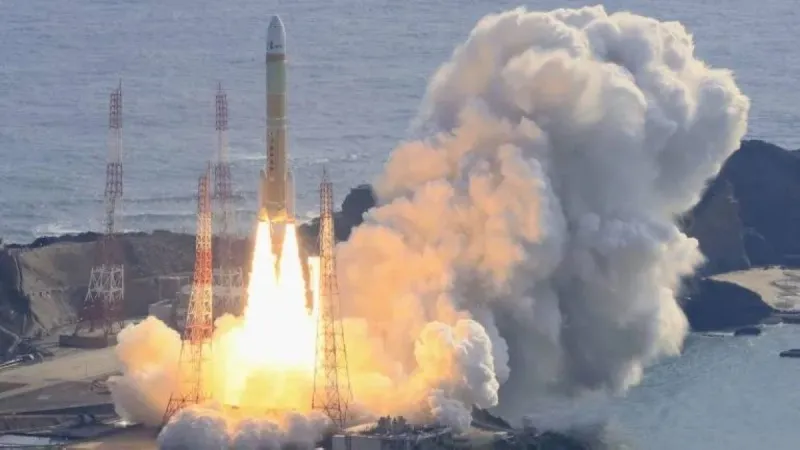
Japan's space agency announced on Saturday that it had successfully launched a reusable rocket and landed it safely for the first time, marking a significant step toward developing a technology that notably helps reduce the cost of space missions.
The prototype, launched from the Japan Aerospace Exploration Agency's test site in Noshiro in the north of the country, rose approximately 10 metres during a test that lasted around 40 seconds.
Takashi Ito, the official in charge of the test, told reporters: "We have dedicated a great deal of time and effort to this, and now that the prototype has taken off and landed without any problems, I must say I feel a great sense of relief."
He added that the space agency still needed to analyse the data to determine the full extent of the success, but expressed confidence that it would yield "very useful data."
Most launch rockets are designed for single use, with their components typically falling into the sea, burning up in the atmosphere, or remaining in orbit as debris.
Developing reusable rockets makes it possible to reduce the cost of launching satellites and spacecraft.
US company SpaceX has been using this technology in its reusable Falcon 9 rocket since 2017.
China also announced on Friday that it had successfully landed a reusable rocket for the first time, challenging American dominance in the sector.
Tokyo is seeking to boost the competitiveness of its space sector, and launched its H3 rocket in June, months after a failed mission to place a satellite into orbit.