
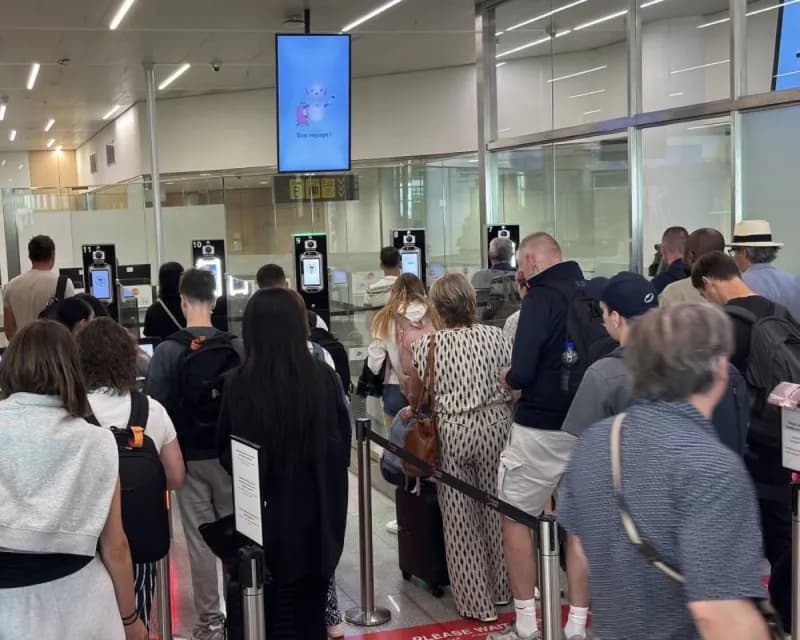
EU Migration Commissioner Magnus Brunner said on Sunday that the bloc will intensify its efforts to resolve problems linked to a new border monitoring system, after airports and airlines blamed the system for disruptions recorded in recent weeks.
Europe's aviation sector warned in a joint letter on Wednesday that the new Entry/Exit System is causing waiting times of up to five hours, calling on the EU to act immediately to spare the travel sector from disruptions during the summer season.
Brunner said the European Commission "will from now on make additional efforts to help member states that are still facing problems."
The new system replaces manual passport stamping and records the personal and biometric data of travellers in order to track cases of overstaying legal residence periods and instances of refused entry.
The Entry/Exit System is used in EU member states, with the exception of Ireland and Cyprus, as well as in other countries within the Schengen free movement area, including Switzerland, Norway, and Iceland.
Brunner's response came in reply to a joint letter signed by Airports Council International Europe (ACI Europe), Airlines for Europe (A4E), and the International Air Transport Association, which represents more than 360 airlines worldwide.
These bodies called for "immediate intervention before a further deterioration of the situation during the peak summer travel season," and urged that countries be allowed to fully suspend the new procedures during periods of severe congestion.
Brunner said the Entry/Exit System rules had anticipated facing challenges and allowed for a degree of flexibility during the 2026 summer holiday season until early September, including the suspension of biometric data registration.
He added that other factors unrelated to the Entry/Exit System may have caused disruptions, such as staff shortages or the absence of adequate infrastructure.
Since October 2025, 110 million people have entered or exited the EU through the new system, with more than 44,000 people denied entry, according to Brunner, who clarified that the overwhelming majority of refusals were due to travellers not holding the correct travel document or appropriate visa.
An EU official said the system is operating without any problems at the vast majority of the 1,500 land, sea, and air crossing points.
Brunner defended the new measures, which "make Europe safer, every day," stressing that they are being implemented "carefully and gradually."
Representatives of the Commission are due to hold a meeting with sector representatives on Tuesday.