
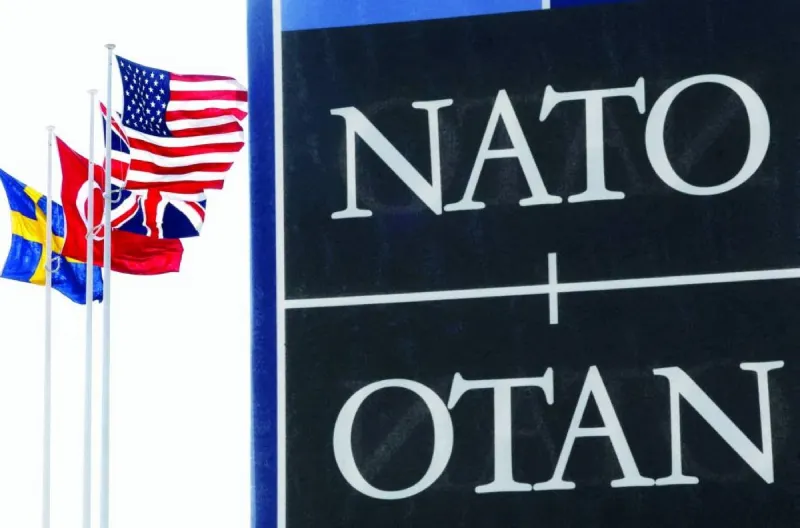
The NATO summit is convening in Ankara on 7 and 8 July, as the alliance seeks to project cohesion in the face of mounting external challenges and internal disagreements that continue to cast a shadow over a number of issues — from support for Ukraine and defence spending to the fallout from the recent military confrontation between the United States and Iran.
According to Reuters, ambassadors of the alliance's member states have approved a draft final communiqué that leaders are expected to adopt at the summit. The text includes an affirmation of an "ironclad commitment" to collective defence under Article 5 of the Washington Treaty, which stipulates that an attack on one member state is considered an attack on all members of the alliance.
This reaffirmation comes after US President Donald Trump posted on Truth Social describing the current relationship between the United States and NATO as "ridiculous and one-sided and not reciprocal" — part of his repeated criticism of the level of European allies' contributions to defence spending, according to AFP.
The draft communiqué, which still awaits final approval by leaders, pledges 70 billion euros in military aid to Ukraine during 2026, while maintaining at least a similar level of support through 2027, according to Reuters.
According to the German news agency DPA, the funding includes contributions from member states alongside a European loan earmarked for supporting Ukraine's armed forces. European countries and Canada are expected to bear the bulk of the financing, against a backdrop of declining US support for Kyiv under the Trump administration.
The draft also carries political messages that go beyond the Ukraine file. According to Reuters, it asserts that Iran must not possess a nuclear weapon and calls on Tehran to respect freedom of navigation in the Strait of Hormuz — marking the alliance's first collective position since the recent military confrontation between the United States and Iran. The statement reflects Western concern over the implications of regional tensions for energy security and global trade.
Files still under negotiation
Despite the summit's imminent opening, several issues remain subject to negotiation among member states. According to Bloomberg, consultations between alliance diplomats are ongoing over the financing of military infrastructure projects, the future of military support for Ukraine, and the mechanisms for sharing the burden of defence spending.
Bloomberg reported that Poland is pressing for funding for military projects in eastern Europe, while Turkey is seeking to include its own project within the alliance's infrastructure modernisation plan. The agency also noted that Italy pushed to soften the language of some commitments relating to the continuation of military assistance to Ukraine, while Polish officials called for caution regarding any increase in financial support for Kyiv.
The defence spending file remains one of the most sensitive issues within the alliance. NATO leaders had agreed at last year's The Hague summit to raise defence spending to 5 per cent of GDP by 2035 — an agreement that AFP referenced in its coverage of Trump's recent remarks on European defence spending.
European responses and American signals
According to Reuters, German Chancellor Friedrich Merz confirmed that his country is working to double its defence budget over the next four years, adding that Germany is "not in a position to hide behind anyone."
In remarks reported by DPA from an interview with Der Spiegel magazine, German Defence Minister Boris Pistorius played down the intensity of the dispute with Washington, describing it as "not a marital crisis" and stressing that strengthening Germany's military capabilities stems from German and Atlantic security considerations.
The summit also coincides with the announced retirement of the commander of US forces in Europe and Africa, General Christopher Donahue, after approximately 18 months in the post. Bloomberg reported that the move raised questions about the Trump administration's inclination to reassess the scale of the US military presence in Europe, while DPA cited a US Defense Department official as saying the retirement decision was a personal one.
The Ankara summit thus appears to be far more than a routine gathering of alliance leaders — it represents an attempt to reaffirm NATO's unity at a time when the war in Ukraine, tensions in the Middle East, and US pressure to increase defence spending all converge. The issues on the table, as revealed by draft communiqué texts and statements from officials, show that the summit will serve as a test of the alliance's ability to maintain cohesion in its positions, even as debate continues over the distribution of defence burdens between the United States and its European allies.