
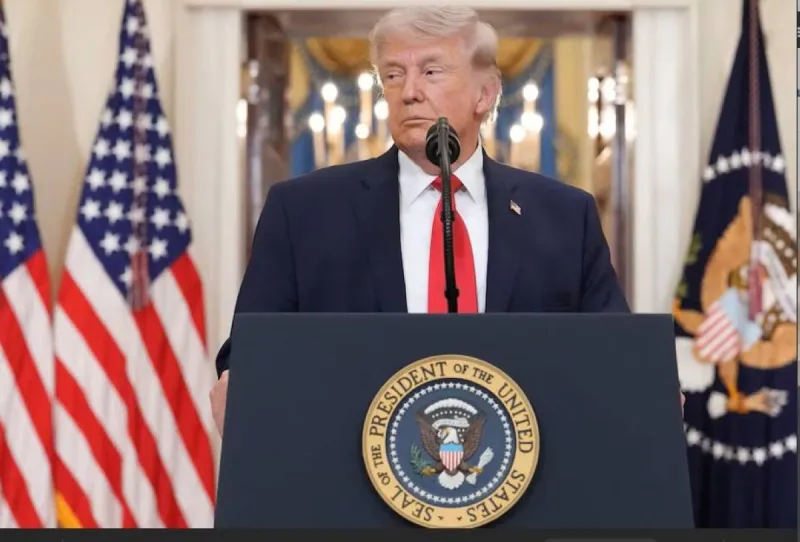
The United States Supreme Court has dealt a heavy blow to President Donald Trump's immigration programme after ruling that his administration cannot use an executive order to end birthright citizenship for the hundreds of thousands of children born on American soil each year, according to a detailed report published by CNN.
Although the decision came as no surprise, it represents a significant defeat for a president who ran for a second term pledging to end so-called "birth tourism" and crack down on immigration. Even so, the ruling did not amount to an outright rejection of all of Trump's efforts as had been anticipated; the 6-3 decision stands as the most closely watched ruling of his current term, which has seen a balance of notable losses and notable victories.
In a decisive 26-page legal opinion, Chief Justice John Roberts authored the majority ruling, affirming that the language of the Fourteenth Amendment to the Constitution is clear and gives no indication whatsoever that its framers intended to limit birthright citizenship to children of permanent residents.
Roberts relied on the written text of the constitutional provision, avoiding interpretation, and drew on the landmark 1898 case United States v. Wong Kim Ark to affirm that the Constitution automatically grants citizenship to nearly all children born in the United States and subject to its jurisdiction, describing them as "citizens from birth" under the Constitution, regardless of their parents' legal status.
Behind the scenes, the court witnessed a sharp divide among its conservative justices: conservative Justice Amy Coney Barrett and only three liberal justices joined the Chief Justice's opinion. The 3 dissenting justices, for their part, expressed their deep frustration across more than 130 pages. Justice Samuel Alito called the ruling a serious error that preserves powerful incentives for illegal immigration. Justice Clarence Thomas criticised the majority, arguing that the text was intended solely to protect formerly enslaved people and their children — a point that Justice Ketanji Brown Jackson sharply rebutted, accusing Thomas of presenting an alternative narrative that pits Black Americans against immigrants.
Justice Brett Kavanaugh filed a separate opinion in which he concurred with the outcome but left open the possibility that Congress could in the future enact legislation imposing exceptions to birthright citizenship for children of undocumented immigrants.
The ruling closes a court term that has seen a tense and mixed relationship between Trump and the judiciary since his return to power. He suffered several losses this year, most notably the curtailment of his authority to dismiss the Federal Reserve chairman and the invalidation of his power to impose emergency tariffs.
Despite these setbacks, the president secured important victories, including the expansion of his authority to remove heads of independent agencies and the approval of the cancellation of temporary humanitarian relief for more than 1 million people. This contrast, according to legal analysis, underscores that the Supreme Court continues to shift the law to the right in line with its own judicial agenda — not necessarily to serve the political wishes and agenda of Donald Trump.