
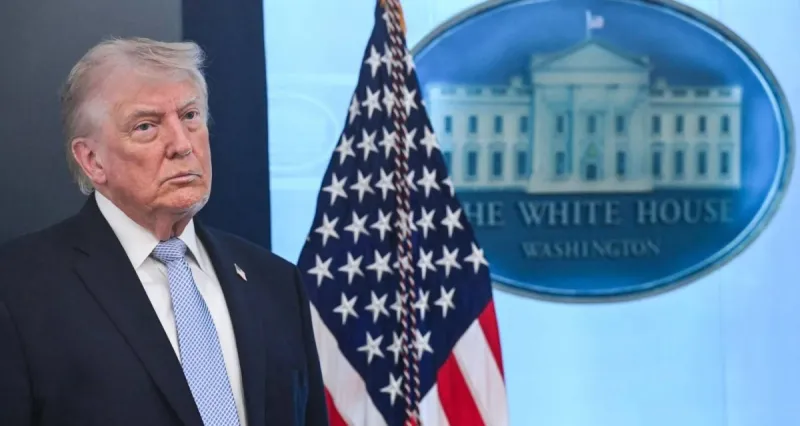
Allies of US President Donald Trump defended him this week before an Israeli public deeply anxious about the interim agreement between the United States and Iran, and before criticism from the White House as well — criticism that appeared to reveal cracks in the alliance that has bound Israel to Washington for decades.
US-Israeli relations have passed through sharp fluctuations, beginning with mutual confidence early on following their joint strike on Iran, and extending to public disagreements between Trump and Israeli Prime Minister Benjamin Netanyahu over how to end the war that has now been under way for four months.
Netanyahu and many Israelis believe that the memorandum of understanding Trump concluded with Iran carries the risk of empowering a state they regard as Israel's sworn enemy, and of constraining their ability to respond to threats emanating from the Tehran-backed Lebanese group Hezbollah.
They also feel that the alliance with the United States — which has long formed the cornerstone of Israel's strategic approach — is coming under pressure, as opinion polls show growing American disenchantment with Israel, and its most powerful defender in Washington appears to be distancing himself from them.
US Ambassador to Israel Mike Huckabee said on Sunday: "The United States and Israel are bound by an unbreakable relationship." Huckabee had earlier acknowledged there was "a tremendous level of concern about the relationship" between the two sides.
The remarks came during a foreign-policy conference in Jerusalem, where concerns about the state of the US-Israel alliance dominated several of the discussions.
Mark Levin, the conservative Fox News commentator and longtime Trump supporter who broke with the president over the nuclear deal with Iran, told those gathered that although he did not like the agreement and believed the "Iranian regime" should be destroyed, he praised Trump for what he described as the president's support for freedom, religious freedom, Christianity, and Judaism.
Beyond their concerns about the wording of the deal with Iran, Israelis are worried about Trump's insistence that Israel agree to a ceasefire with Hezbollah, and are also uneasy about the language he uses in responding to Netanyahu's opposition to the agreement.
In recent weeks, Trump has called Netanyahu a "fucking maniac," rebuked Israel by saying "you don't have to knock down an apartment every time you're looking for somebody," and publicly questioned whether Syria could be asked to replace Israeli forces in Lebanon.
Vice President JD Vance also struck a more critical tone, saying: "Trump is the only head of state in the entire world who is sympathetic to the state of Israel at this particular moment," adding in subsequent remarks that not every criticism of Israel should be considered antisemitism.
The fact that such sharp views are emanating from the Republican Party to which Trump belongs is a source of particular concern for a number of Israelis, especially as American Democrats are criticising Israel far more loudly than was the case in previous years.
Syed Rosenberg, a senior conservative broadcaster in New York, told Israelis that despite all their concerns about Trump, he remains their best option.
"You can have JD Vance. Good luck with that," he added, after acknowledging that "a lot of people in Israel are very upset" with the president. While the vast majority of Republicans aged 50 or older view Israel favourably, younger conservative Americans have become more critical, according to a survey conducted by the Pew Research Center in late March.