
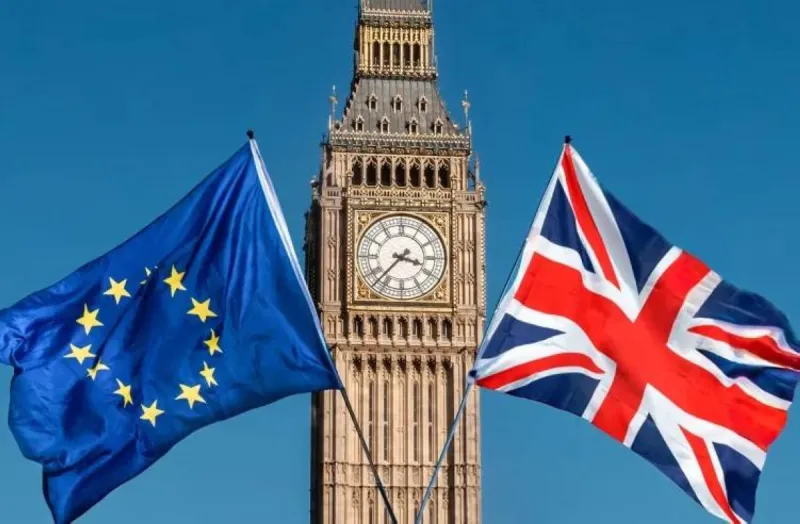
The corridors of politics and media in Britain and across European capitals are witnessing extensive debate as a full decade passes since the historic referendum on the United Kingdom's withdrawal from the European Union — Brexit — amid growing signs of a tangible shift in public sentiment on both sides and rising calls to reassess the shape of the current relationship.
A recent statistical report published by the European Council on Foreign Relations this June showed that dissatisfaction with the results of the separation has become common ground across Britain's political spectrum: 66% of those surveyed believe that leaving the EU has negatively affected the cost of living, while 65% said it has damaged the broader economy and opportunities for young people. Notably, 56% believe that promises relating to control over irregular immigration have not been fulfilled.
On the European side, there appears to be greater openness to the idea of change. The same survey found that around 66% of citizens across 15 European countries support Britain's return to the bloc — a proportion that exceeds those who favour settling for close bilateral ties alone.
London's press coverage has highlighted a clear divergence between the aspirations of ordinary voters and the reservations of the ruling elite. The Times quoted observers as saying that current geopolitical realities and pressures from the international scene are pushing a broad segment of the electorate to favour rapprochement with Britain's European neighbours and to secure economic and defence partnerships, even if that requires accepting some freedom-of-movement conditions that were previously considered a red line.
Other journalistic analyses have noted that the British political arena can no longer absorb major fresh upheavals, following the succession of six prime ministers at Downing Street since 2016 — a factor that explains the extreme caution displayed by political leaders.
On the official level, Prime Minister Keir Starmer, during his participation in the G7 summit, affirmed his government's commitment to not seeking to rejoin the European Union or to return to the single market and customs union. He focused instead on forging a