
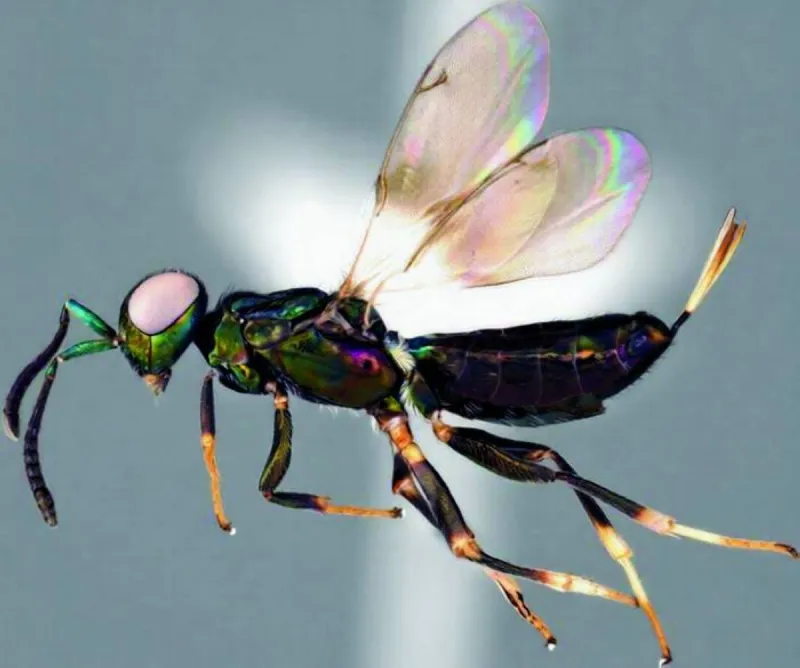
Images posted by ordinary users on a social media platform have led to the first recorded sighting of a rare wasp species, Eupelmus curvator, in Japan — a creature previously believed to exist only in China.
Researchers at the Kyushu University Museum identified the species' unique behaviour through those photographs: the wasp lays its eggs inside the egg sacs of praying mantises, turning them into incubators for its larvae.
In addition to documenting the species' presence, the observations provided the first formal scientific description of males of this genus.
The study, published in the journal Travaux du Muséum National d'Histoire Naturelle "Grigore Antipa", confirmed that social media platforms are playing an increasingly active role in biological research and the discovery of rare creatures. The daily posts of nature enthusiasts and adventurers who enjoy exploring unfamiliar places and documenting their experiences — whether through photographs or video — are contributing a vast wealth of valuable scientific data that is closely followed by naturalists and biologists from around the world.