
The UAE Rain Enhancement Science Programme has announced the launch of its 6th-cycle project, entitled "Enhancing Rainfall Through Land Cover and Topography Modification – RainLand", during an introductory tour conducted across several German cities.
The tour began with the opening meeting to launch the RainLand project, led by Dr Oliver Branch, a senior researcher at the Institute of Physics and Meteorology at the University of Hohenheim in Germany and coordinator of the Land-Atmosphere Interactions Observatory. The meeting marks the start of the scientific and operational implementation phase of the project, which aims to study the feasibility of enhancing rainfall through limited modifications to land surface characteristics and topography.
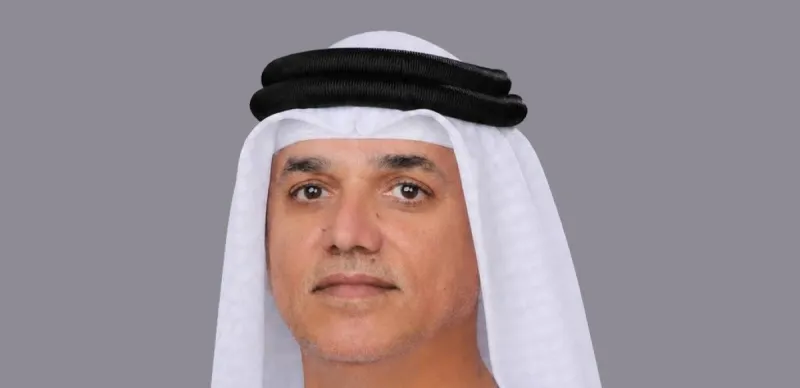
On this occasion, His Excellency Dr Abdullah Al Mandous, President of the World Meteorological Organization and Director-General of the National Centre of Meteorology, said: "This introductory tour comes within the framework of the continuous support provided by the National Centre of Meteorology to the UAE Rain Enhancement Science Programme to expand its research partnerships with leading experts and scientific institutions worldwide.
This enables the programme to continue developing innovative cloud seeding solutions by drawing on advanced international expertise in atmospheric sciences and meteorology. These tours also represent an opportunity to learn about the latest scientific methods and operational practices, and to highlight the UAE's standing as a leading global hub for the development of rain enhancement sciences and technologies."
For her part, Alya Al Mazroui, Director of the UAE Rain Enhancement Science Programme and Director of the Research and Weather Improvement Department at the National Centre of Meteorology, said: "The launch of the RainLand project represents an important step in expanding the scope of research examining land surface–atmosphere interactions and their influence on rainfall patterns.
This is particularly relevant in arid and semi-arid regions. By supporting this type of advanced research, the programme continues its efforts to develop more effective and sustainable cloud seeding methods, and to explore new scientific pathways that contribute to enhancing our understanding of the atmospheric processes associated with rainfall formation."