
The UAE attracted $48.3 billion (AED 177.3 billion) in foreign direct investment (FDI) inflows in 2025, recording historic highs for the fourth consecutive year, with a 6% year-on-year increase. The country ranked ninth globally among FDI destinations, according to the World Investment Report issued by the United Nations Conference on Trade and Development (UNCTAD).
His Highness Sheikh Mohammed bin Rashid Al Maktoum, Vice President and Prime Minister of the UAE and Ruler of Dubai, said: "According to the latest World Investment Report, the UAE continues to consolidate its position as a global destination for investment and opportunity.
In 2025, the country achieved record FDI inflows of AED 177.3 billion, growing by 6%, while the FDI stock rose to AED 1.17 trillion."
He added: "The UAE advanced to ninth place globally among FDI destinations, and maintained its position for the third consecutive year as the world's second-largest destination by number of greenfield FDI projects, with a total of 1,562 projects."
He affirmed: "Our goal under the National Investment Strategy is to raise the FDI stock to AED 2.2 trillion by 2031, and to attract AED 240 billion in annual FDI inflows.
These figures are not merely economic indicators — they are the fruit of a national vision, the work of a unified team, and global confidence in a country that has turned ambition into reality and opportunities into achievements. What lies ahead for the UAE, God willing, is even more beautiful and greater."
According to the UAE Foreign Direct Investment Report 2026, issued by the Ministry of Investment, the country maintained a high level of performance in an increasingly selective global environment, in which global capital has become more discerning in its choices.
The report noted that this consistent performance reflects global investors' confidence in the UAE's long-term vision, its policy choices, and the frameworks underpinning its investment environment — results anchored in the targets of the National Investment Strategy 2031.
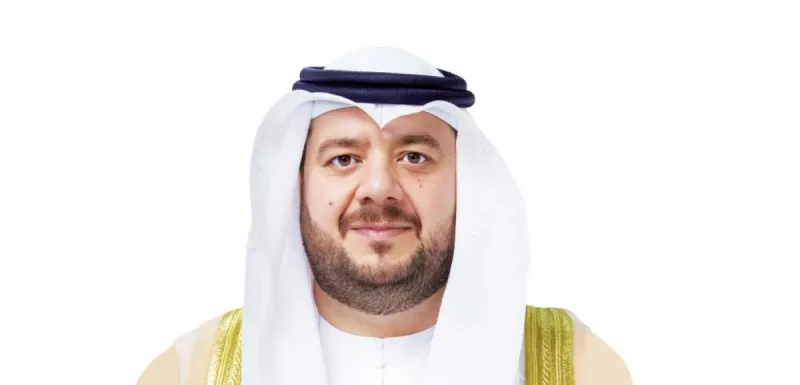
In this regard, His Excellency Mohamed Hassan Al Suwaidi, Minister of Investment, said: "Investment in the UAE continued to gain growing momentum in 2025. Over recent years, the country has recorded record levels of inward FDI flows, with a compound annual growth rate of 24% between 2021 and 2025, reflecting the country's sustained efforts in this domain.
The exceptional 2025 results are not limited to the volume of inward capital alone, but also encompass its composition — investments have grown more diverse across sectors, higher in quality, and broader in geographic origin.
We reaffirm our commitment to strengthening confidence in this trajectory by continuing to develop policies and regulations, reducing barriers to entry, improving the operating environment, and expanding global partnerships, in alignment with the National Investment Strategy 2031.
The strategy aims to consolidate the country's position among the world's foremost investment destinations, while increasing FDI inflows to $65 billion annually (AED 240 billion)."
His Excellency Saeed Al Hajeri, Minister of State, said: "Despite regional and global challenges, the UAE economy continues its growth and prosperity, affirming its high adaptability and entrenched stability.
The strength of the UAE's economy is founded on solid historical foundations, an extensive network of international relations, deep institutional depth, and the ability to rapidly adapt to market changes. This integrated ecosystem enables us to navigate the repercussions of current geopolitical shifts and emerge stronger and more resilient.
This strength is reflected in foreign investment indicators: 98% of foreign investments in the UAE maintained their stability over recent months, reflecting firm confidence in our economy, institutions, and long-term vision.
Today, the UAE's economy rests on strong and diversified foundations, with non-oil sectors accounting for approximately 79% of GDP in 2025.
This outstanding performance is built on world-class infrastructure, reliable financial institutions, and advanced capabilities in logistics and energy. Our sovereign assets are valued at approximately $2.49 trillion.
We have also concluded 37 Comprehensive Economic Partnership Agreements. The UAE has cemented its position as a leading global hub for capital, trade, and talent, and continues to top the list of the world's most competitive business environments.
Building on these established and pioneering fundamentals, our ambitions are not limited to preserving what we have achieved — we aim to accelerate the pace of achievement through investment in artificial intelligence, advanced industries, trade, finance, and digital infrastructure, opening new horizons for future generations.
The UAE today is home to more than 200 nationalities living and working within a diverse fabric, contributing to the building of a dynamic, globally interconnected economy, and enhancing its position as a leading destination for attracting talent and supporting innovation and entrepreneurship.
In this regard, we invite investors, companies, and partners from around the world to contribute to this pivotal new phase of growth and prosperity, which offers unique opportunities to access fast-growing sectors, global markets, and one of the most stable and competitive business environments in the world."
The report pointed to growing maturity in the country's investment ecosystem, with FDI sources broadening and a prominent presence of advanced economies among its leading sources, reflecting the strength of the country's regulatory frameworks and institutional resilience. The UAE has also expanded the scope of its partnerships and bilateral relations, reinforcing the flexibility and sustainability of its investment standing.
The report further showed a growing level of maturity in the structure and composition of investment flows. While greenfield FDI projects remain the most prominent type of inward FDI at approximately 45%, mergers and acquisitions grew to account for 8%, alongside reinvestment projects which constituted 11.2% of the total.
The startup ecosystem also matured in parallel, with funding rounds expanding to an average deal size of $9.2 million — approximately double the previous level — as companies transitioned from the founding stage to the expansion stage.
In terms of greenfield FDI, 1,562 projects were announced with total capital expenditure of $34.1 billion (AED 125.2 billion), equivalent to 1.8% of the global total.
Three sectors led this activity: manufacturing at 30%, driven by pioneering projects to develop the industrial base of the sector and attract future investment; telecommunications at 29%, supported by the UAE Stargate project — OpenAI's first international project, a 1-gigawatt AI computing complex being developed in Abu Dhabi in partnership with UAE-based G42 — alongside continued demand for digital infrastructure; and real estate at 7%, driven by wealth attraction and the UAE's growing appeal as a preferred destination for talented and skilled individuals worldwide.
Greenfield FDI in 2025 also created more than 65,000 job opportunities across diverse sectors including transport and storage, business services, software and IT services, automotive manufacturing, financial services, and telecommunications, directly supporting the country's economic diversification efforts.
The UAE maintained its FDI performance in an increasingly selective global investment environment. After three years of decline, global FDI flows returned to growth in 2025, reaching approximately $1.6 trillion (AED 5.9 trillion).
Capital during this recovery was concentrated in fewer economies and sectors, and in fewer but larger-value commitments. Regional performance varied markedly, with the Middle East, North America, and Western Europe leading growth, while other regions declined.
The Middle East topped global rankings in terms of growth in greenfield FDI capital expenditure at 72.4%, with the UAE as its primary driver, contributing 38% of regional expenditure.
The report affirmed that this performance rests on solid foundations built over decades of deliberate strategic policies, grounded in a long-term vision, forward-looking regulatory frameworks, world-class infrastructure, exceptional global connectivity, and a broad base of talent and expertise.
The report also estimates the scale of domestic direct investment contribution at between $100 billion and $119 billion (AED 367 billion to AED 437 billion), or approximately 2.0 to 2.5 times annual inward FDI flows.
Notably, the National Investment Strategy 2031 provides a roadmap for the UAE's future FDI ambitions, setting annual inward flow targets through 2031.
The strategy sets clear objectives: raising annual inward FDI flows to $65 billion (AED 240 billion), and growing the FDI stock to $600 billion (AED 2.2 trillion). In support of this direction, the Cabinet approved in November 2025 the establishment of the National Investment Fund with an initial capital of $10 billion (AED 36.7 billion), to help boost investment attraction.
The Ministry of Investment continues to lead this drive by supporting investment in priority sectors, providing a competitive and flexible environment for global capital, strengthening bilateral investment relations, and acting as a trusted partner for both international and domestic investors.
The ministry works in close cooperation with federal and local government entities, investment promotion bodies, the private sector, and international partners to develop future-ready policies, enhance the investment value proposition of the country, and create new opportunities for sustainable economic growth.