
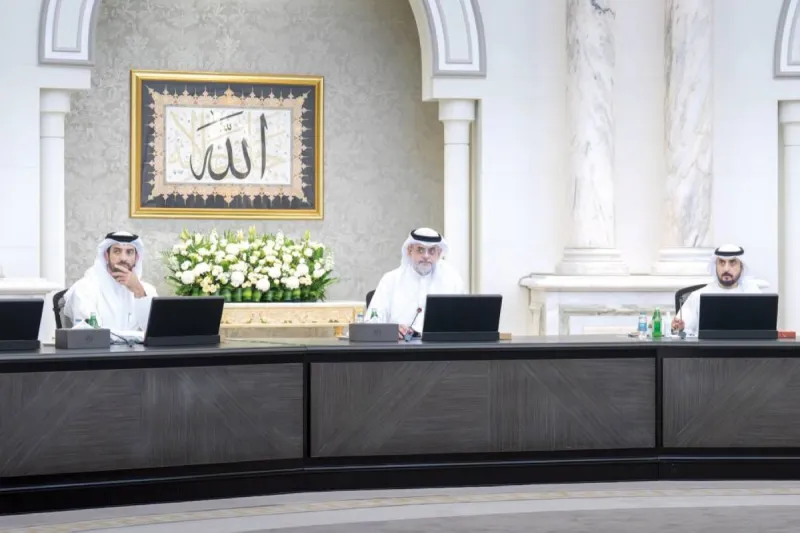
The Sharjah Executive Council held its meeting yesterday morning under the chairmanship of Sheikh Sultan bin Mohammed bin Sultan Al Qasimi, Crown Prince and Deputy Ruler of Sharjah and Chairman of the Sharjah Executive Council, in the presence of Sheikh Sultan bin Ahmed bin Sultan Al Qasimi, Deputy Ruler of Sharjah and Deputy Chairman of the Sharjah Executive Council, at the Ruler's office.
The meeting addressed a range of governmental matters aimed at developing the emirate's government work system, monitoring the performance of departments and authorities, and reviewing the progress of development projects across all cities and regions of Sharjah.
In implementation of the directives of Sheikh Dr Sultan bin Muhammad Al Qasimi, Member of the Supreme Council and Ruler of Sharjah — aimed at enabling government entities to perform their roles with greater efficiency and enhancing their institutional capabilities to achieve advanced levels of excellence and sustainability in government work — the Council approved the general organisational structure of the Department of Economic Development.
This approval comes within the framework of the emirate's government commitment to developing its government work system in line with best practices, in a manner that contributes to strengthening the business-stimulating economic environment, sustaining economic growth, keeping pace with developments across all fields, and enhancing the role of national cadres in the economic ecosystem. The Council directed its General Secretariat to submit the proposed organisational structure to the Ruler of Sharjah for his approval.
The Council also reviewed the 2025 report of the Sharjah Fisheries Authority, which highlighted the authority's efforts and key achievements in organising and issuing fishing permits, maintaining fishermen's records and archiving data, conducting field inspection rounds to raise compliance levels and reduce violations, and supporting the sustainability of fishery resources.
The report reviewed the growth in occupancy rates at the Fishermen's Village in Hamriyah, the governance of the fishermen's cooperative sector and the holding of electronic elections for boards of directors, and the authority's projects, which included the aquaculture farm and its implementation phases.
These also encompassed the development of fish stocks and sustainability through a project to lower artificial reefs at a number of aquatic sites across the emirate's cities, and the development of marine infrastructure by expanding the total capacity of marine berths to more than 270 marine berths, as well as improving the quality of services provided to marina users.
The authority's projects further included the replacement of Al Khan slipway, maintenance of Khor Kalba marina, maintenance of the ice plant in Dibba Al Hisn, maintenance of Al Louluyah marina, construction of a concrete pier in Kalba city, and upgrading of facilities.
The Council also reviewed a report on the efforts of the Roads and Transport Authority in supporting and developing public transportation, enhancing and facilitating access to services provided to the public, strengthening the transport network through multiple modes, and facilitating passenger transport to meet community needs and keep pace with population and urban growth.