
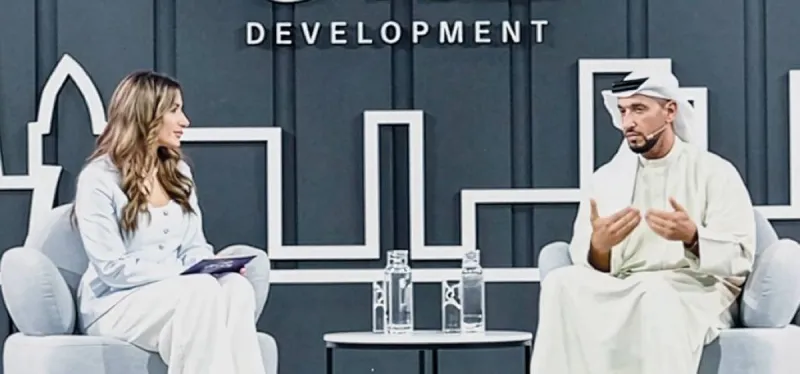
His Excellency Abdullah bin Mohammed bin Buti Al Hamid, Chairman of the National Media Authority, has affirmed that a cohesive national narrative is one that transforms economic achievements into a message understood worldwide.
He stressed that such a narrative has become the compass guiding the course of global investment flows and determining the direction of major capital toward the most trusted and stable environments, by presenting an integrated story that reflects the state's vision and its capacity to build the future.
He noted that UAE media is no longer content with conveying figures and results, but now presents a complete story of vision, stability, and opportunity — reinforcing the world's confidence in our economy and transforming achievement into value and impact. He pointed out that the decision to invest does not begin with numbers, but with the impression formed in the investor's mind before they open any spreadsheet.
The contemporary investor reads a newspaper, follows a report, and listens to an economics podcast — all of which shape the mental and psychological framework through which they will later read figures and data, as part of their constant search for an environment that nurtures their investment and for a country's story they want to be part of.
Speaking during a panel discussion at the Forbes Middle East Summit under the title "Building Tomorrow's Narrative: How Does Media Shape the Future of Nations, Cities, and Economies?", he said that media in today's world goes beyond being a mirror reflecting events to become a form of national infrastructure par excellence. Just as nations build their ports and airports to organise the movement of goods and people, they construct their media strategy to organise the movement of meaning, credibility, and the building of trust.
His Excellency emphasised that the power of nations has come to transcend traditional benchmarks based on economic and military capabilities, resting primarily on their strategic efficiency in building trust and conveying their story to the world in an influential and persuasive language — through a cohesive national narrative that transforms achievement into credibility, credibility into influence, and influence into a firmly established international presence.
He noted that nations today compete not only on infrastructure or economic facilitations, but also on their ability to build a mental image that makes them a preferred destination for living, working, and investing.
He added that the UAE's experience offers a clear model of how media can be employed as part of a development project, with the UAE narrative grounded in a tangible reality of projects, achievements, and transformations. He explained that our national media does not fabricate an alternative image of reality, but rather conveys a successful reality in a global language capable of reach and impact.
Speaking about national media identity, His Excellency affirmed that a successful national brand is not built through media campaigns and publicity, but through achievements that are transformed into a story the world can understand. He explained that the UAE's success in building its national media identity came as a result of the convergence of a clear vision for the future and an institutional performance capable of delivering results.
- Stability and development
- Tolerance and openness
- Investment in people and the future