
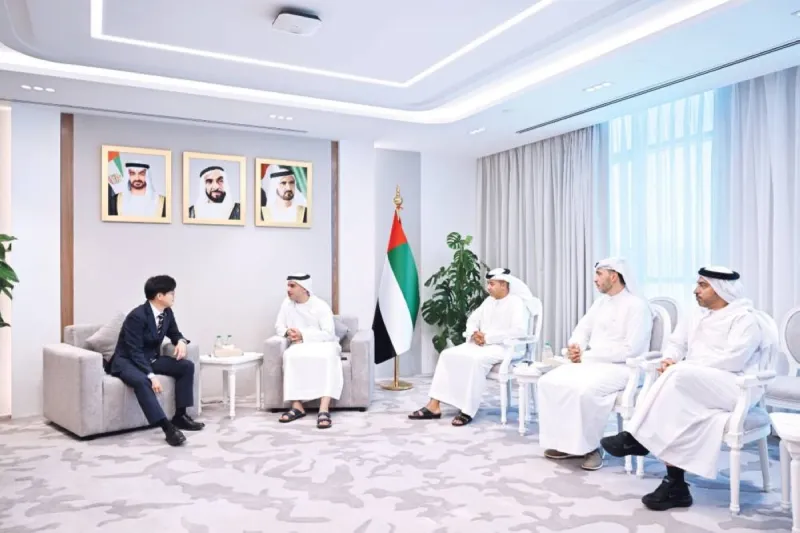
The United Arab Emirates and the Republic of Korea have discussed ways to strengthen strategic cooperation in the energy, nuclear energy, renewable energy, artificial intelligence, and advanced technology sectors, during a meeting between Engineer Sharif Al Olama, Undersecretary of the Ministry of Energy and Infrastructure for Energy and Petroleum Affairs, and His Excellency Junghoon Kim, Minister of Trade, Industry and Resources of the Republic of Korea.
Both sides affirmed the strength of the special strategic partnership between the two countries, praising the Barakah Nuclear Energy Plant as one of the most prominent models of successful international cooperation in the peaceful nuclear energy sector, and the achievements it has delivered in enhancing energy security and supporting the path of sustainable development.
The two parties discussed opportunities to build on the success of the Barakah project by exploring new areas of cooperation, including advanced nuclear technologies and small modular reactors, in ways that enhance both countries' global standing in the nuclear energy sector.
The meeting also addressed the future of global energy security and the importance of building resilient and diversified energy systems capable of keeping pace with rapidly evolving changes, alongside discussions on opportunities to expand cooperation in oil and gas, refining, petrochemicals, liquefied natural gas, and energy infrastructure.
Engineer Sharif Al Olama reviewed the UAE's targets in the energy sector, foremost among them raising renewable energy production capacity to 22 gigawatts by 2031, in addition to battery energy storage projects, and the importance of adopting a balanced energy mix combining renewable, nuclear, and conventional energy sources to enhance energy security and sustainability.
The two sides also discussed the growing role of artificial intelligence in developing the energy sector, particularly in the areas of data centres and energy efficiency, with the Ministry presenting its efforts to enhance data centre sustainability through the application of energy efficiency standards, the deployment of AI-powered smart cooling solutions, and the development of planning tools that support future digital infrastructure.