
A poll conducted by Al Bayan across its digital platforms on the university specialisation parents intend to steer their children towards has revealed a striking shift in family priorities when planning for academic futures.
Artificial intelligence topped the list of choices at 36%, ahead of medicine and health sciences, which came second at 28%, while business administration and media jointly ranked third at 20%, and engineering placed fourth at 16%.
The poll drew wide engagement from parents and educators, who affirmed that the choice of university major is no longer tied to a profession's social prestige as it once was, but is now guided by future employment prospects, the extent to which a specialisation keeps pace with economic and technological change, and its alignment with a student's inclinations and abilities.
Participants said that artificial intelligence topping the poll reflects a growing awareness of the scale of transformation the labour market will undergo in the coming years, and that mastering skills in this field will give graduates greater competitive opportunities.
Others, however, maintained that medicine will remain one of the most stable professions and most in need of qualified practitioners, while a number of participants noted that engineering and business administration remain vital specialisations, albeit ones now closely intertwined with digital technologies and artificial intelligence.
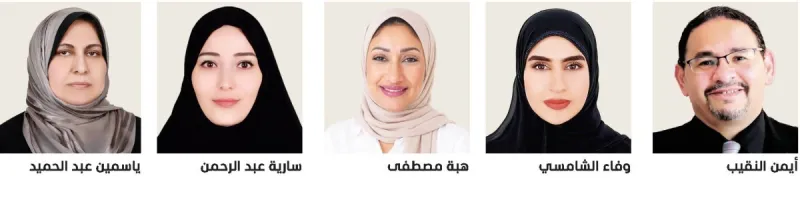
Educator Yasmin Abdel Hamid said the poll results reflect a genuine shift in how families view university education, explaining that recent years have seen a significant change in the nature of jobs in demand, prompting parents to seek out specialisations with future growth prospects rather than simply those with a long track record in the labour market.
She added that artificial intelligence is now present across all sectors — from education, health and engineering to media and financial services — meaning that studying this specialisation is not limited to work in programming but opens graduates up to a wide and diverse range of professional fields.
She stressed that families have become more diligent about following global reports on future jobs, which was clearly reflected in the poll results, noting that this awareness represents a positive step when paired with academic counselling that helps students choose a specialisation suited to their abilities and interests.
Educator Sariya Abdel Rahman said the poll results reflect a rise in parents' awareness, but she simultaneously emphasised the importance of not being swept along by trending specialisations without careful study.
She said a student may achieve greater success in a traditional specialisation if it aligns with their interests and potential, stressing that the university decision should rest on three main pillars: the student's abilities, their personal desire, and labour market needs.
She added that schools play a pivotal role through academic and vocational guidance programmes that help students discover their abilities, learn about the nature of different professions, and understand the skills each specialisation requires before they enrol at university.
She noted that early guidance contributes to reducing the rate of major changes or withdrawal from university study, and reinforces a student's conviction in the path they choose.
Educator Wafa Al Shamsi clarified that the poll results do not imply a decline in the importance of medicine, engineering or business administration, but rather reflect the digital transformation under way across all specialisations.
She said doctors now rely on artificial intelligence applications for diagnosis and medical imaging analysis, while engineers use intelligent modelling and digital simulation.
Business administration has also become increasingly dependent on data analytics and intelligent systems, while the media sector is undergoing a rapid shift towards digital content production and the use of artificial intelligence tools in editing and production.
She added that universities are required to continuously update their academic programmes to keep pace with this transformation and equip students with the practical skills the labour market demands, alongside theoretical knowledge.
Parent Heba Mustafa said she selected artificial intelligence for her son in the Al Bayan poll, based on her conviction that it will be among the most in-demand fields in the coming years, while stressing at the same time that the final decision must come from her son's own desire and interests.
She added that the family has become an essential partner in mapping out children's university futures, through attending education fairs, reviewing academic programmes, and monitoring labour market requirements before directing them towards any specialisation.
She noted that many families have begun discussing university options with their children from secondary school, rather than waiting for the announcement of secondary school results, which helps students make more mature and confident decisions.
Educator Ayman Al Naqeeb said the Al Bayan poll results reflect the beginning of a new phase in the culture of choosing university specialisations — one built on anticipating the future and linking education to the needs of the national economy and global transformations.
He affirmed that specialisations will not so much be in competition with one another as the advantage will lie with the graduate who combines academic knowledge with digital skills and possesses the capacity for continuous learning and adaptation to change, regardless of the field they choose.
He noted that artificial intelligence topping families' concerns today does not mean it is the most suitable choice for all students, as a student's success remains tied to the degree to which a specialisation aligns with their passion and abilities, and to the quality of academic counselling they receive before taking one of the most important decisions of their educational and professional journey.
28% of parents chose medicine and health sciences, 20% chose business administration and media, and 16% chose engineering.
Choices are shifting from traditional professions to the jobs of the future.