
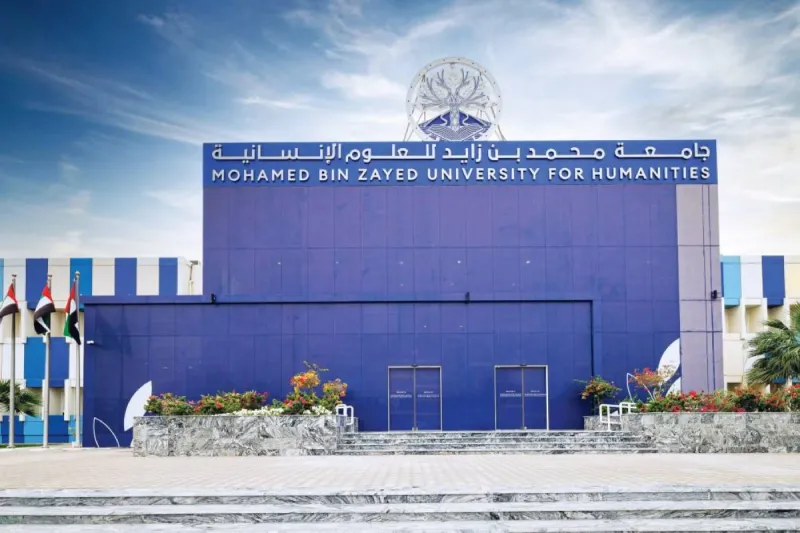
Mohamed bin Zayed University for Humanities has obtained the International Quality Accreditation (IQA), an institutional accreditation granted by the Quality Assurance Agency for Higher Education (QAA) of the United Kingdom, in a landmark achievement that adds to the university's distinguished record of successes.
The accreditation reflects the advanced standing the university has established as a leading knowledge institution that combines educational quality, rigorous scientific research, and a humanitarian mission that transcends borders — carrying to the world the values of tolerance, coexistence, openness, and moderation, and contributing to the building of bridges of dialogue and understanding between cultures and peoples.
The achievement embodies the university's commitment to the European Standards and Guidelines for Quality Assurance in Higher Education (ESG), which represent an international reference framework for institutional and academic excellence. The framework is built on 10 pillars of higher education quality assurance, covering the quality of academic programmes, the student experience, student-centred learning, resource efficiency, and continuous institutional improvement, thereby entrenching principles of governance and transparency and supporting the development of educational programmes and the enhancement of performance in line with best practices.
The accreditation is considered one of the most prestigious international credentials in the higher education sector. It follows a rigorous evaluation process covering the various components of the university institution, examining the effectiveness of its leadership, governance, strategic planning, academic programmes, quality management, and continuous development mechanisms — demonstrating the robustness of its institutional structure and its capacity to keep pace with the rapidly changing global educational environment.
The evaluation also encompassed the university's student services and campus life system, including student recruitment policies, admissions and registration procedures, university orientation programmes, academic advising, psychological and social support, and student welfare.