
Student success is no longer measured by the number of marks achieved in examinations or by the ability to memorise and recall information. It is now tied to possessing an integrated set of skills that help students manage their lives, adapt to change, engage with modern technology, build healthy relationships, and make informed decisions.
From this premise came the 'Skills for Life' framework launched by the Knowledge and Human Development Authority (KHDA) in Dubai, under the directives of Sheikh Hamdan bin Mohammed bin Rashid Al Maktoum, Crown Prince of Dubai, Deputy Prime Minister and Minister of Defence, and Chairman of The Executive Council of Dubai. The framework represents a qualitative shift in educational philosophy by embedding life skills across all academic stages — from pre-kindergarten through graduation and beyond — in alignment with the Dubai Education Strategy 2033 and the National Education Charter.
Educators believe the framework does not add a new subject to the curriculum but rather entirely reimagines the student's experience inside school, so that every lesson, every activity, and every daily situation becomes an opportunity to develop a more balanced personality better equipped to face future challenges. The significance of the framework extends beyond introducing new skills into the educational experience; it reaches into bringing about fundamental changes to the learning environment within schools, from teaching methods and the roles of family and teacher, to preparing students for university life and the job market.
They affirmed that the implementation of the framework will drive 7 key transformations, encompassing: developing practices inside the classroom, strengthening family partnerships, building student character, expanding academic and career guidance, entrenching a culture of safe digital life, promoting mental health, and instilling a culture of sustainability and social responsibility — making the school a comprehensive environment for developing human beings rather than merely an institution for transmitting knowledge.
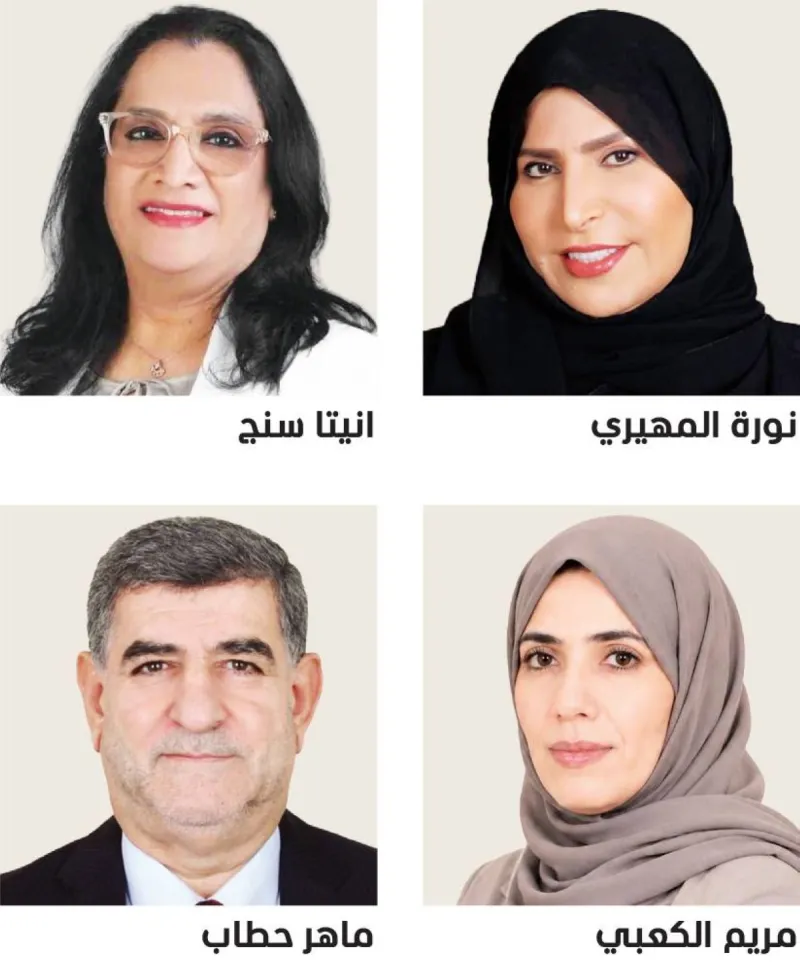
Anita Singh, principal of Global Indian International School in Dubai, believes the biggest change schools will witness will take place inside the classroom, stressing that the teacher's role will go beyond explaining the curriculum to building students' personal and social skills.
She said: "We will see a shift from asking the student: What did you memorise? to a more important question: What did you learn? And how will you use what you have learned in your life? This is the philosophy on which the new framework is built."
She added that classroom activities will rely more heavily on dialogue, project-based learning, teamwork, simulation, and real-world problem-solving, rather than being confined to traditional instruction.
Education expert Noura Al Muhairi affirmed that the framework has restored the family's natural standing as a principal partner in the educational process.
She said: "We cannot speak of an organised student if they have not learned organisation within their home, nor of financial responsibility if they have not practised it with their family, nor of respecting time if they have not seen it as a daily behaviour before them."
She added that the success of the framework requires the relationship between school and family to shift from tracking grades to tracking the development of the student's character and daily behaviour.
She noted that parents will be expected to participate in instilling healthy habits, time management, and the promotion of independence.
Educator Maryam Al Kaabi affirmed that the framework represents a transition from teaching curricula to developing human beings, and that schools are gradually transforming into environments that shape character rather than simply institutions that award certificates.
She said: "For many years, the focus was on what the student knows. Today, the question has become: who is this student? And can they face life with confidence and resilience?"
Career guidance
Dr Maher Hattab, Director General of Al Ahliya Charity Schools, believes the framework will change the concept of career guidance within schools, explaining that guidance is no longer confined to introducing students to university specialisations but has become a journey that begins from the early years to discover inclinations and abilities and link them to the skills the future demands.
Digital education specialist Mahmoud Farghaly believes the framework has come at a time of unprecedented acceleration in the use of artificial intelligence, explaining that the digital world has become the environment in which students live daily. It is therefore no longer acceptable to teach them only how to use devices; they must be taught how to think within this world. He noted that the framework focuses on developing critical thinking, distinguishing between accurate and misleading information, protecting privacy, and the ethical use of artificial intelligence.
Psychological expert Amal Al Hammadi believes that what most distinguishes the framework is placing mental health at the heart of the educational process. She pointed out that a student who feels safe, confident, and a sense of belonging learns better, is more creative, and is able to handle pressure without losing balance.
She added that psychological resilience has become one of the most important skills of the 21st century, as it helps students overcome setbacks, manage anxiety, and adapt to change. She explained that incorporating self-empowerment and emotional regulation into the framework will significantly reduce many behavioural problems within schools and strengthen positive relationships among students.