
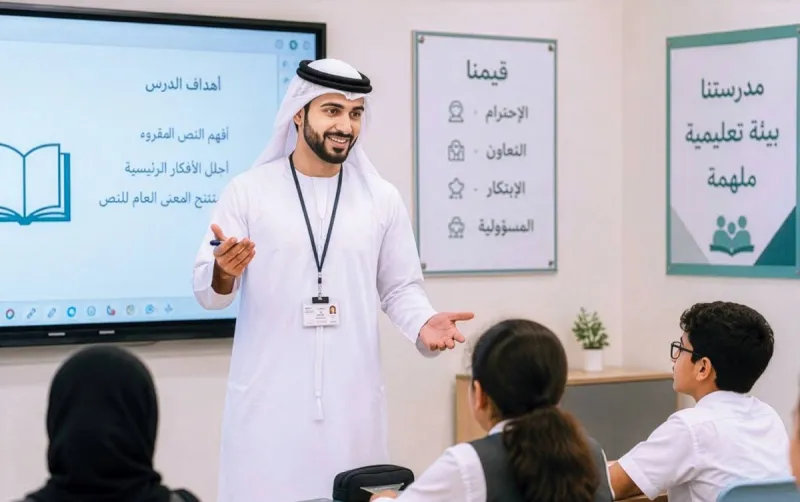
The targets of the Education Strategy 2033, issued by the Knowledge and Human Development Authority (KHDA) in Dubai, have revealed a drive to raise the proportion of Emirati teachers in private schools to 10% by 2033.
The plan forms part of a comprehensive strategy aimed at attracting and empowering national talent in the education sector, and strengthening the role of parents as active partners in the educational process, contributing to the development of a more cohesive and efficient education system.
The strategy seeks to place approximately 3,000 Emirati staff in private schools through an integrated framework targeting greater citizen participation in teaching and leadership roles, making the teaching profession more attractive to national talent, and supporting the professional stability of Emirati teachers — all of which is expected to have a positive impact on the quality of education in Dubai.
The Emirati Cadres Strategy is one of the key pillars of the Education Strategy 2033, focusing on building a sustainable system for attracting, qualifying, and empowering citizens to work in private schools through a package of quality initiatives, most notably the Emirati Teachers Academy, which is dedicated to preparing and qualifying teaching staff.
Also included is the 'Partners of Success' programme, which strengthens cooperation between the Authority and private schools to support Emiratisation, in addition to the Flexible Emiratisation Initiative, the Trial Teaching Programme, and a retiree employment pathway to draw on national expertise in the education sector.
The Authority has also identified a set of performance indicators to measure the strategy's impact, including the proportion of Emirati teachers in private schools, the retention rate of national staff in the sector, and the ratio of citizens working in educational roles compared to administrative ones — ensuring that initiative implementation is monitored and objectives are measured over the coming years.
The Education Strategy 2033 is built on five main pillars encompassing early childhood, school education, higher education, and post-education, with a focus on empowering teachers and parents within an integrated vision aimed at building a sustainable and interconnected education system that keeps pace with the requirements of the future and raises the quality of education.
Within this framework, the teacher empowerment pillar focuses on attracting national talent, developing its skills, and enhancing professional career pathways, thereby contributing to the improvement of educational practices within private schools. The parent empowerment pillar, meanwhile, works to strengthen the family's role as a key partner in the educational process and to consolidate school-family cooperation in support of student learning.
The strategy also includes 28 executive initiatives to be implemented in phases, targeting the development of various components of the education system, enhancing partnerships with private schools, supporting innovation, and empowering teaching staff — all of which serves to raise the quality of education and cement Dubai's standing as a leading centre in this sector.
The Authority affirmed that the Education Strategy 2033 represents a roadmap for developing the emirate's education sector by investing in national talent, enhancing citizen participation in private schools, and building an educational environment capable of preparing generations equipped with the skills and knowledge of the future, in line with Dubai's long-term vision for educational development.