
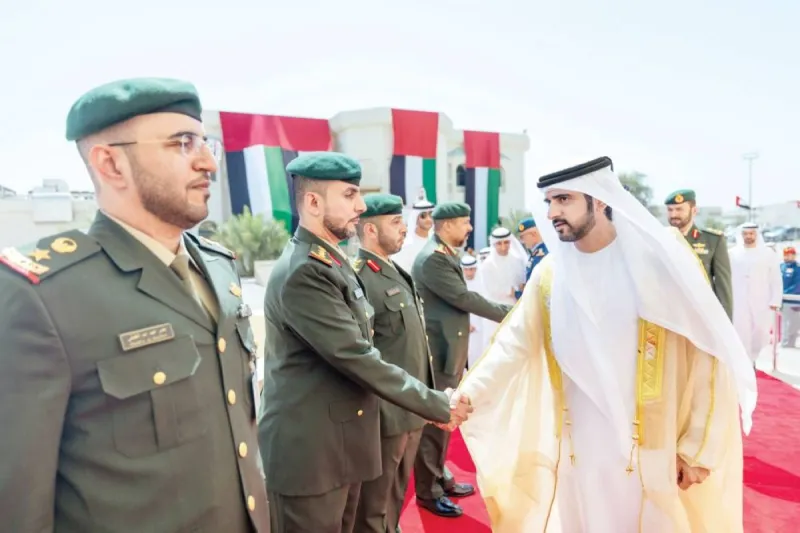
An exceptional and inspiring leadership school founded by Sheikh Mohammed bin Rashid Al Maktoum, Vice President and Prime Minister of the UAE and Ruler of Dubai, may God protect him — and one whose path has been followed by Sheikh Hamdan bin Mohammed bin Rashid Al Maktoum, Crown Prince of Dubai, Deputy Prime Minister, Minister of Defence, and Chairman of the Dubai Executive Council. Sheikh Hamdan represents a contemporary model of leadership that combines wisdom with ambition, authenticity with the making of the future, and the strengthening of national security with the protection of the country's gains and achievements. He has drawn from this school the principles of leadership, the art of governance, the importance of field follow-up, closeness to the people, and the building of the future with a clear vision and a will that knows no impossibility.
Over many years, Sheikh Hamdan bin Mohammed bin Rashid Al Maktoum has accumulated leadership experience through direct participation in various areas of government work, an understanding of decision-making mechanisms, and oversight of the strategic projects that helped transform Dubai into one of the world's most advanced and competitive cities. His closeness to Sheikh Mohammed bin Rashid Al Maktoum afforded him a unique opportunity to learn from an exceptional leader committed to creating hope and positive change, and who believes that success is only achieved through relentless work in anticipating the future — a quality clearly reflected in Sheikh Hamdan's character and distinctive leadership style.
Sheikh Hamdan bin Mohammed is committed to investing in national talent. He has accordingly placed great emphasis on empowering young people, preparing future leaders, and providing an environment that encourages creativity, entrepreneurship, and innovation. He believes that leadership is a constant presence, continuous follow-up, and direct engagement with all segments of society.
This characteristic is among the most prominent features of Sheikh Mohammed bin Rashid Al Maktoum's leadership school, which holds that a true leader is close to the people, listens to them, and works to fulfil their aspirations. Sheikh Hamdan's leadership is also distinguished by fieldwork and an insistence on monitoring development and service projects, understanding the needs of citizens and residents, and verifying the quality of services provided to them.
Two years ago, Sheikh Mohammed bin Rashid Al Maktoum, Vice President and Prime Minister of the UAE and Ruler of Dubai, may God protect him, announced — following consultation with, and the blessing and approval of, Sheikh Mohamed bin Zayed Al Nahyan, President of the UAE, may God preserve him — the appointment of Sheikh Hamdan bin Mohammed bin Rashid Al Maktoum, Crown Prince of Dubai and Chairman of the Executive Council, as Deputy Prime Minister and Minister of Defence of the United Arab Emirates. Sheikh Hamdan is a prominent model of youth leadership in the UAE, commands an active and influential presence at local, regional, and international forums, and reflects through his vision and leadership role the aspirations of the younger generation and its capacity to contribute to building the future.
Sheikh Hamdan continues the journey of development and excellence and the consolidation of the UAE's standing as a global model in governance, innovation, and quality of life. He does so by drawing on the leadership experience he has gained and the ambitious vision he holds for building the future through human development, investment in knowledge, and teamwork — all of which contribute to building prosperous nations and ensuring the sustainability of their success for coming generations.
Since assuming his duties as Deputy Prime Minister and Minister of Defence, Sheikh Hamdan bin Mohammed bin Rashid Al Maktoum has applied his leadership and administrative expertise to support federal work, grounded in a strategic vision that places the security and stability of the nation at the top of its priorities, as the foundation of economic development and prosperity.
Drawing on the approach he learned from Sheikh Mohammed bin Rashid Al Maktoum, he has worked to strengthen integration among various government institutions, entrench a national culture of swift achievement, and maintain readiness to face challenges.
In the defence sector, he has focused on developing the UAE's defence capabilities, increasing the readiness of the armed forces, and investing in modern technologies and innovation to keep pace with rapid developments in military and security fields.
He has also paid great attention to harnessing advanced technologies, artificial intelligence, and digital transformation across various sectors, supporting the country's ability to keep pace with global changes and enhancing its competitiveness in innovation, economic, and knowledge indices, alongside building and qualifying national competencies to the highest international standards.
He has worked to consolidate an advanced defence system capable of protecting national gains and achievements, safeguarding state sovereignty, and strengthening national security — in line with the vision of the wise leadership, which believes that security and development are complementary tracks, and that protecting the national achievements the country has realised requires strong institutions, qualified personnel, and far-sighted vision.
Last year marked a prominent milestone in the development of the UAE's military and defence system, as Sheikh Hamdan bin Mohammed bin Rashid Al Maktoum launched numerous initiatives, conducted field visits, and chaired meetings.
He oversaw military events that reflected the wise leadership's strong interest in enhancing the country's defence capabilities, raising the readiness of the armed forces, developing their capacities, continuing to invest in national talent, and advancing defence industries — keeping pace with regional and global changes and cementing the UAE's position as a leading country in the global defence arena.
During his chairmanship of Defence Council meetings, he stressed the importance of teamwork, enhancing cooperation and coordination among the various sectors of the Ministry of Defence, and developing military and institutional capabilities in order to achieve the state's strategic objectives. On 28 January of last year, he chaired the first Defence Council meeting of 2025.
He emphasised the importance of investing in national competencies, raising the readiness of the armed forces, and keeping pace with rapid developments in defence and military technology. He also chaired the second Defence Council meeting on 20 May 2025.
He was keen to stress the importance of collective action, investment in human capital, and leveraging innovation and modern technology to build an integrated defence system, while continuing to develop defence strategy in line with regional and international changes.
He chaired the third Defence Council meeting of 2025 on 23 September, where he affirmed that developing integrated defence capabilities represents a national priority, and that investing in national competencies and equipping armed forces personnel with the latest military sciences and technologies guarantees the maintenance of the highest levels of readiness and preparedness to meet all challenges.
During the past year, he was keen to conduct field visits to review permanent preparedness and equipment. On 8 January 2025, he visited Zayed Military City in Abu Dhabi and reviewed aspects of the ground forces' equipment, including weapons systems, materiel, vehicles, and modern defence technologies.
On 22 March 2025, he visited the 11th Mountain Infantry Battalion and reviewed training methods and military tactics specific to operations in mountainous terrain. He participated with battalion members in field exercises simulating combat operations in rugged terrain, embodying the field leadership approach.
He also visited the Reserve Forces Command in Abu Dhabi on 2 April 2025, reviewing the readiness of these forces and their achievements in supporting the country's defence capabilities and their role in strengthening the national defence system.
On 11 May 2025, he visited Al Dhafra Air Base to review the readiness of the air and air defence forces and to hear briefings on plans to develop air capabilities.
This visit came within the framework of supporting and encouraging the armed forces to continue operating at the highest levels of professionalism and discipline, and to strive to acquire the latest military technologies to guarantee the preservation of their superiority and readiness.
He reviewed the academic programmes of the National Defence College in Abu Dhabi and its approach to preparing military and civilian leaders during a visit to the college on 20 May 2025, where he stressed the importance of developing national leaders who possess strategic thinking and the ability to deal with future challenges.
On 17 November of last year, he visited the Dubai Airshow and reviewed the UAE-made light combat aircraft, the Calidus B-250. He praised the development being witnessed in national defence industries, which enhances the defence industrial capabilities that represent a fundamental pillar in protecting state security and cementing its global standing.
Sheikh Hamdan bin Mohammed bin Rashid Al Maktoum was committed throughout the past year to supporting military educational institutions and celebrating their graduates, in the belief that preparing nationally qualified cadres — scientifically and in the field — forms the foundation for building the armed forces and ensuring their excellence and permanent readiness to face all challenges.
On 5 February 2025, he attended the graduation ceremony of the 25th course of naval candidates at Rashid bin Saeed Al Maktoum Naval College, praising the scientific and military level attained by the graduates.
On 27 May, he attended the graduation ceremony of the 43rd course of university officers at Zayed II Military College in Al Ain, stressing the importance of preparing officers who possess the scientific and leadership competence to serve and protect the nation.
On 29 May 2025, he attended the graduation ceremony of the 34th course at the Joint Command and Staff College, which is considered one of the most important specialist military institutions for preparing and qualifying senior leaders.
On 31 May 2025, he attended specialised performances by national service personnel for the 2024–2025 training year, praising the discipline, readiness, and military and cognitive skills demonstrated by the recruits, reflecting the success of military qualification programmes.
He also attended the graduation ceremony of the second cohort of Zayed Military University candidates on 4 December, reinforcing the state's efforts to develop its human capital and build armed forces capable of protecting the nation and preserving its achievements.
He attended numerous important national military events, including the celebration on 6 May 2025 of the 49th anniversary of the unification of the armed forces — an occasion that embodies the legacy of the founding fathers and entrenches the values of federation and unity.
On 8 May, he witnessed the conclusion of the joint military exercise 'Desert Flag 10', which reflects the level of international military cooperation and exchange of expertise among the air forces of the participating countries. On 23 May, he met with more than 100 distinguished national service and reserve personnel as part of the 'Elite' programme, within the framework of the belief that investing in the Emirati individual represents the fundamental pillar for building the country's future and strengthening its security and stability.
The efforts of Sheikh Hamdan bin Mohammed bin Rashid Al Maktoum translate a comprehensive strategic vision for developing the defence system of the United Arab Emirates by enhancing its readiness and military capabilities, modernising weapons systems, and supporting national industries.
His commitment to preparing national cadres capable of leading the future has helped cement the status of the UAE Armed Forces as a model of efficiency and professionalism, in alignment with the wise leadership's vision of building a modern and sustainable defence system that keeps pace with the country's aspirations for the future.
The Crown Prince of Dubai continues — through the combination of strategic vision, effective management, and a focus on human development — to contribute to cementing the UAE's standing as a global model of sustainable development, enhancing its ability to protect its national gains, and achieving its future goals across all fields.
These efforts have been reflected in bolstering the UAE's international standing as a country that enjoys high levels of security and stability, an attractive investment environment, and a competitive economy based on knowledge and innovation.