
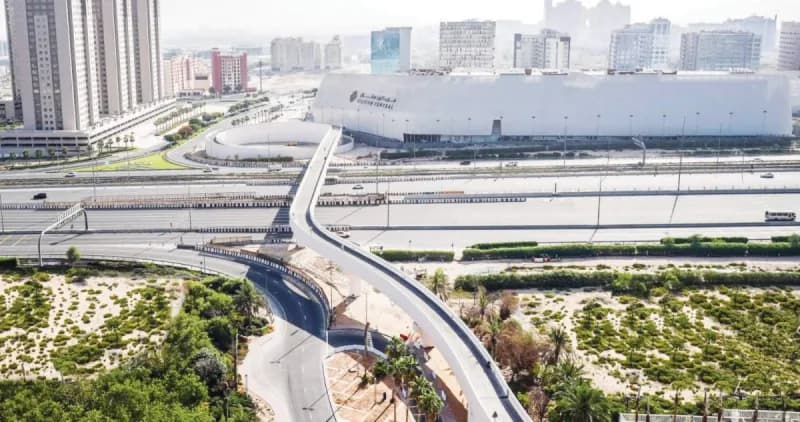
The Roads and Transport Authority (RTA) in Dubai has announced the success of its road safety strategy in reducing the rate of traffic accident fatalities per 100,000 residents by 94% over the period from 2007 to the end of 2025, bringing the rate down to 1.4 deaths per 100,000 residents — one of the best rates ever recorded in the emirate.
The RTA affirmed that these results are part of its efforts to achieve the "zero fatalities" vision and attain the best possible rates of deaths and serious injuries resulting from traffic accidents, in line with global best practices in road safety.
The authority explained that its road safety strategy is built on four main pillars: traffic control, road and vehicle engineering, awareness, and systems and management. These pillars encompass a range of initiatives aimed at reducing traffic accidents and lowering the number of serious injuries and fatalities.
It noted that traffic diversion management forms part of a broader set of efforts to enhance safety and maintain traffic flow during the implementation of road projects and maintenance works. The RTA ensures that comprehensive diversion plans are prepared before work begins, through the study and analysis of traffic movement and the identification of suitable alternative routes.
The preparation of traffic diversions is carried out in coordination with relevant departments and divisions, with ongoing monitoring of diversion performance after implementation and the introduction of necessary improvements to ensure traffic flow and minimise the impact on road users.
The RTA indicated that the identification of diversion locations and the timing of their implementation is based on specialised traffic and technical studies that take into account the volume and density of traffic at various times of day, with care taken to carry out works during periods of least impact — such as night-time hours or off-peak periods — whenever the nature of the project permits.
When works require diversions to be implemented during peak hours, additional studies are conducted to confirm that alternative roads can accommodate the traffic volumes, thereby ensuring the continued flow of traffic.
The authority affirmed its commitment to informing the public about traffic diversions and alternative routes through various communication channels, including official digital channels, social media platforms, its website, and media messages, with the aim of enabling road users to plan their journeys in advance and select appropriate routes.
The RTA noted that during the first four months of the current year it carried out preventive and corrective maintenance works covering roads, asphalt surfaces, road safety elements, and the resolution of operational observations, in addition to infrastructure works. It explained that some of these works required the implementation of temporary traffic diversions depending on the nature of the site and the requirements of execution, in order to ensure the safety of road users and workers at the work sites.
The RTA added that it continues to study and address high-risk locations and sites with recurring accidents, as well as providing elevated pedestrian crossings in areas where these are required, developing various sites to enhance the safety of flexible mobility users, conducting field visits to truck rest stops, organising awareness workshops for delivery service drivers, and running campaigns to promote pedestrian safety.