
Specialists and media professionals have affirmed that artificial intelligence has become a pivotal element in redrawing the contours of the contemporary media landscape, given the rapid advances it has brought to content production methods and the acceleration of access to information, alongside the challenges it poses regarding the spread of misleading content.
They noted that the advanced capabilities of these technologies in producing texts, images, and video clips with high precision have made it increasingly complex to distinguish between genuine and fabricated content, directly affecting the media work environment and reshaping its tools and methods.
Mohammed Al Jawker, a media researcher and historian, explained that artificial intelligence is no longer merely an auxiliary tool in media work, but has become an influential element in shaping the news production and circulation cycle. He noted that despite the enormous potential this technology offers in accelerating work and expanding access to information and archives, it has simultaneously redefined the concept of professional risk within media institutions.
He clarified that the fundamental problem lies not in the technology itself, but in the speed at which content is reproduced and amplified across digital platforms without sufficient verification, creating fertile ground for the spread of rumours.
He added that professional conscience has become more important today than ever before, given the ability of fabricated content to spread within minutes, stressing that journalists are now required to redouble their fact-checking and verification tools, and that self-regulation represents the first line of defence against this uncontrolled flow of information.
For his part, Ahmed bin Mohammed Al Rahoumi, Director of the Media and Public Relations Department at the Dubai Sports Council, said that the accelerating digital transformation has imposed a new reality on media practice, in which a deep understanding of artificial intelligence mechanisms has become an essential prerequisite for responsible professional practice.
He explained that the challenge is no longer limited to monitoring rumours alone, but extends to the ability to analyse the nature of artificially generated content and understand how it is constructed, directed, and disseminated through algorithms.
He stressed that possessing technical tools alone is insufficient unless accompanied by critical awareness and the capacity for evaluation and analysis, pointing out that media institutions are today required to rebuild comprehensive training systems that keep pace with this development, enabling journalists to combine professional instinct and technical knowledge simultaneously.
He also emphasised that source credibility will remain the most important standard no matter how production tools evolve, and that losing this principle means losing the very essence of media work.
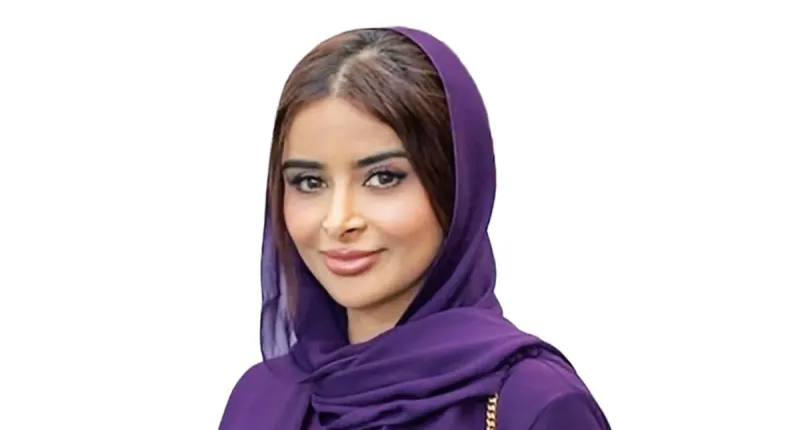
In this context, media professional Maitha Ibrahim affirmed that confronting the challenges of modern media — including the technological leap of artificial intelligence — does not rely on reactive responses, but proceeds from a clear forward-looking vision of the future and plans drawn up in advance during times of stability to anticipate all societal and technological shifts.