
The UAE Media Forum launches its 11th edition tomorrow, under the theme 'UAE is a Red Line', in Dubai. The event is a national platform bringing together media leaders and content creators to discuss the role of the media in protecting public awareness, confronting regional challenges, and safeguarding national achievements.
As geopolitical events escalated across the region, accompanied by a rapid influx of information, rumours, and targeted campaigns, national media institutions found themselves facing an exceptional test that went beyond the bounds of traditional journalism — one in which the media shifted from the role of transmitter and observer to that of a national partner in protecting gains and defending the truth.
The statement by His Highness Sheikh Mohamed bin Zayed Al Nahyan, President of the State, may God protect him, when he affirmed that 'the UAE is a red line', formed a clear national reference point upon which media institutions drew in reading the situation and dealing with rapidly evolving developments. That phrase was not merely a passing political message or a slogan repeated in times of crisis; it was transformed into a professional and ethical framework that defined the boundaries of the media's national responsibility and set the compass that should guide media performance in defending the nation and its achievements.
In light of this shift, media institutions reshaped their priorities and tools. Speed of reporting became coupled with accuracy of verification, countering rumours became an integral part of daily media work, and media platforms were turned into advanced lines of defence for protecting public awareness and reinforcing trust in national institutions — alongside their role in highlighting the epic of pride, honour, and solidarity around the wise leadership.
As these new roles crystallised and the scope of media responsibility broadened during the past period, deeper signs of transformation emerged in the philosophy and priorities of media work — a transformation that went beyond traditional media practice to redefine the role of the media in times of crisis and challenge. It embodies the slogan 'UAE is a Red Line' as a media philosophy that contributed to building a cohesive national model for crisis management and dealing with rapid changes, leading to a swift transition by the UAE media within a short period from the role of event transmitter to defender of national awareness and an active partner in protecting the home front, countering disinformation campaigns, and meeting the requirements of the coming phase and the level of readiness that media institutions must maintain.
Mohammed Abdullah Al Kaabi, Executive Director of the Ajman Government Media Office, affirms that the rapid transformations in the global media landscape have reshaped the role of the media, which is no longer limited to conveying news but has become an influential element in the national power system, contributing to strengthening the stability of societies and building their image before the world.
He said that UAE media in 2026 is witnessing a clear transition from its traditional news function to a more comprehensive role linked to protecting public awareness, confronting misinformation, and reinforcing trust in official sources, noting that the standard of media performance is no longer tied to speed of publication so much as to accuracy, credibility, and quality of content.
He explained that the modern digital environment has imposed growing challenges, with the widespread proliferation of social media platforms and the accelerating production of content — including misleading and fabricated content sometimes supported by artificial intelligence technologies — which requires media institutions to develop monitoring and verification tools and raise the readiness of professional cadres.
He added that protecting the nation in the digital age goes beyond the geographical dimension to encompass protecting national identity, international reputation, and societal trust, stressing that the national media has come to play a pivotal role in this framework by enhancing awareness and providing reliable content that supports societal stability.
He pointed out that the slogan 'UAE is a Red Line' has been translated into institutional practice inside newsrooms, and has been reflected in editorial policies, verification mechanisms, and the production of responsible content that balances speed of coverage with accuracy of information, while maintaining professionalism and credibility as two essential pillars of sustained trust and the enhancement of the media's role.
For his part, Dr Mohammed Al Hassan, an expert in institutional media, said that media work is founded in its essence on ethical responsibility before any other professional considerations, noting that the word carries responsibility, and that media platforms represent a covenant with the public grounded in trust and credibility.
He said that the current digital environment has reshaped the nature of media work, amid an enormous flow of content and the accelerating spread of rumours compared with accurate information, which requires media professionals to redouble verification efforts, strengthen professional content capable of confronting disinformation, and present a credible narrative to the public.
He added that 'UAE is a Red Line' formed a new professional perspective and reflected in its substance a deep commitment to protecting public awareness and preserving societal trust — it was not merely a media phrase but was transformed into an institutional framework and has become present in the daily practice of media professionals, through presenting the truth objectively and taking the national interest into account without compromising professionalism.
He called for entrenching 'UAE is a Red Line' as a sustainable professional and institutional framework within media institutions, so that it is reflected in editorial policies, verification mechanisms, and the production of responsible content in a way that enhances the protection of public awareness and preserves societal trust, pointing to the importance of transforming this concept into a daily practice that guides media work through providing accurate and reliable information and striking a balance between the requirements of professionalism and considerations of national interest, thereby contributing to reinforcing the media's role as an active partner in confronting disinformation and cementing societal stability.
Dr Al Sayed Bakhit, Professor of Journalism and Media at Zayed University, affirmed that the concept of 'UAE is a Red Line' did not remain within the framework of a national message or a moral slogan, but was transformed into a media working methodology and institutional practice that was reflected in editorial policies, content priorities, and mechanisms for dealing with national issues, noting that the UAE media succeeded rapidly in translating this concept into professional conduct based on protecting public awareness, safeguarding national gains, and enhancing trust in institutions.
He explained that 'UAE is a Red Line' has become a reference framework governing the performance of the national media in the digital age, where protecting the nation is no longer solely the responsibility of security bodies but has become a shared responsibility in which the media plays a fundamental role in countering rumours, disinformation campaigns, and attempts at undermining confidence — especially in a digital environment characterised by a massive flow of information and the difficulty of verifying its sources.
He noted that this concept does not conflict with professionalism or freedom of expression, but rather enhances them by entrenching national responsibility in addressing various issues, stressing that the real challenge is no longer confined to conveying the news, but lies in protecting the national narrative and building media narratives grounded in facts that defend the state's achievements and confront attempts at distortion and targeting.
He added that national media is no longer merely a follower of events, but has become a partner in entrenching the image of the UAE and enhancing its standing as a global model in development, innovation, and sustainability, by highlighting stories of national success and employing monitoring, analysis, and foresight tools to keep pace with rapid transformations.
He pointed out that the rapid development of artificial intelligence technologies and the expansion of their use in content production has increased the importance of the slogan 'UAE is a Red Line', as the media professional has become the first line of defence against fabricated content and misleading information, requiring the development of verification tools, raising the efficiency of media cadres, and enhancing skills in digital analysis and critical thinking.
Academic Dr Ali Obaid Al Zaabi, former Assistant Chancellor of the University of Kalba for Community Affairs, Relations, and Media, said that one of the most distinguishing features of the UAE media experience is its ability to absorb rapid transformations and reshape its roles without breaking with its core functions, explaining that media institutions succeeded in transitioning from a model focused on conveying events to a more dynamic model based on interpreting variables, anticipating their repercussions, and contributing to building a deeper societal understanding of them.
He noted that this transition came as a result of a flexible media environment that was able to keep pace with successive technical and digital transformations, as media institutions adopted new concepts linked to knowledge management, information analysis, and monitoring of general trends, rather than confining themselves to treating the news as a final product.
He added that regional and global variables pushed media outlets to develop their tools and working mechanisms, to become more capable of dealing with the enormous flow of incoming information, sorting it, and presenting it to the public in a context that facilitates understanding and the adoption of knowledge-based positions — which contributed to raising levels of societal awareness and enhancing trust in national media content.
He affirmed that the success of this experience is attributable to the existence of a clear vision that enabled media institutions to adapt rapidly to transformations without losing their professional equilibrium, becoming more capable of reading the general landscape, anticipating challenges, and dealing with them with flexibility and efficiency, in a way that enhances their role as an active partner in supporting societal stability and keeping pace with its aspirations.
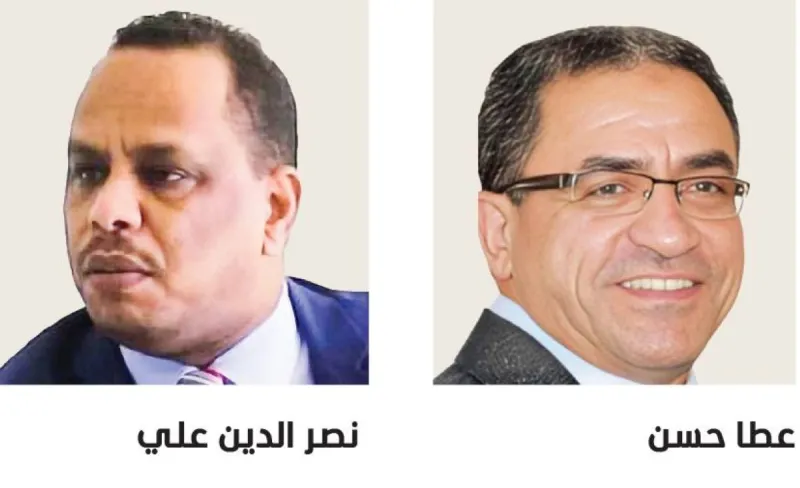
Prof Dr Atta Hassan Abdel Rahim, Director of the Centre for Continuing Education and Development at Al Qasimia University, affirmed that recent geopolitical events constituted a genuine test of the capacity of media institutions to perform their national role in an environment characterised by an unprecedented flow of information and a growing tide of attempts at disinformation and influencing public opinion, noting that the UAE media presented during this period an advanced professional model that reflected the level of maturity the media sector in the country has reached, benefiting from the transparency that characterised official government statements.
He noted that what stood out during the recent crisis was the ability of media institutions to transition swiftly from the stage of following events to the stage of managing the flow of information and presenting a narrative based on facts, which contributed to reinforcing public trust in national sources and raising levels of awareness regarding attempts at distortion and influence that spread through various digital platforms.
Dr Nasreddin Ali, Professor of Media at Ajman University, said that amid current and rapidly accelerating challenges and situations, the media has truly become the first line of defence for the nation. The battle today begins with a fabricated and inaccurate piece of information or a misleading video clip before it transforms into a societal issue — especially with the proliferation of the phenomenon of fake accounts on social media platforms, which are exploited to influence public opinion by spreading rumours, amplifying certain issues, and tarnishing reputations. The danger lies in the fact that the impact does not depend on the inaccurate information as much as it depends on the intensity of repetition and the extent and speed of its spread, as a limited group of fake accounts can create a stereotypical image and a false impression. This is where the importance of local and national media emerges as one of the most important tools for building awareness and enhancing trust in institutions.
He pointed out that the slogan 'UAE is a Red Line' must be entrenched as a working methodology based on professional responsibility and the protection of the state's reputation and national gains. Just as security bodies undertake the protection of borders, the media contributes to protecting the cultural and intellectual sphere from attempts at disinformation, distortion, and digital targeting, and also plays a pivotal role in entrenching the values of belonging and loyalty and enhancing societal cohesion.